

We may earn a small commission on some links at no extra cost to you. Learn more.
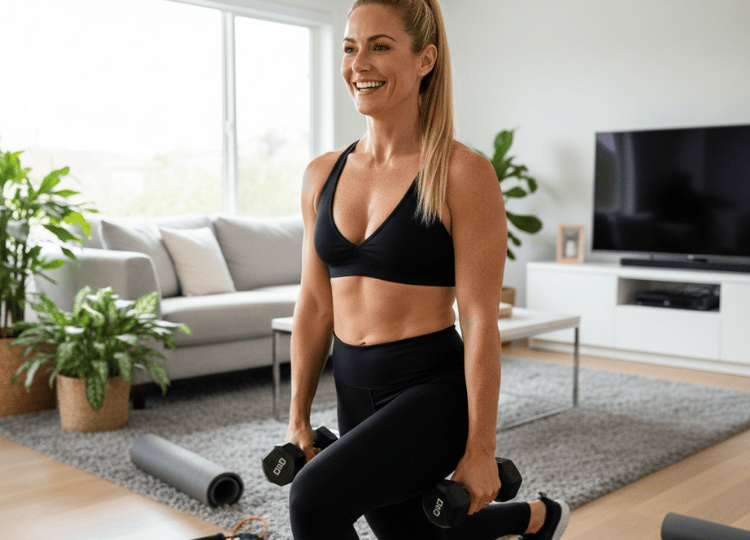
For years, the weight room felt like it belonged to someone else.
Women were quietly steered towards cardio machines and lighter loads… told that lifting heavy would make them bulky, or that their fitness goals were better served on a treadmill.
That narrative is finally, definitively, dead.
Strength training is one of the most powerful things a woman can do for her body. It builds lean muscle and burns fat more efficiently than cardio alone. It strengthens bones, critical for women, whose risk of osteoporosis accelerates with age. It improves posture, protects joints, regulates hormones, and delivers a kind of physical confidence that no spin class can replicate.
The science is overwhelming. The results are visible.
And the gym? Completely optional.
With a modest set of dumbbells, resistance bands, and occasionally a bench, you can follow genuinely progressive, professionally designed strength programs from your living room.
Whether you’re too busy to commute to a gym, prefer the privacy of training at home, or simply want to work out on your own schedule, I’ve tested the best options across every category, from highly structured 18-week programs to bodyweight skill-building, AI-coached training, functional strength assessment, and dedicated recovery, so you don’t have to wade through the noise.
Here’s what I found.
TOP PICKS FOR AT HOME STRENGTH WORKOUTS FOR WOMEN
SWEAT
Best overall.
STRENGTH WELL
Best for longevity.
SHRED
Best for AI Coaching.
Best Overall – Sweat
Price: $134.99/year or $24.99/month Trial: 14-day free trial Program length: 18 weeks Sessions: 5x per week, 35-50 minutes
SWEAT
30+ million downloads, 34,000+ 5-star reviews, quality workout programs, meal planning, and community.
Kayla Itsines has built her reputation on one principle: that women deserve serious, professional strength programming… not watered-down workouts dressed up as fitness. The Strength at Home program from Sweat is that principle applied to your living room. This is a pure strength training program. No jumping, no HIIT, no burpees, no gym membership required.
The 18-week structure is divided into three deliberate blocks. Weeks 1-6 build the foundation… learning key movement patterns, establishing baseline strength, and developing the technique that makes every subsequent week more effective. Weeks 7-12 keep the same workout structure but layer in supersets and trisets to increase time under tension and fatigue muscles in new ways. Weeks 13-18 introduce a new workout structure entirely, with deload weeks, drop sets, new exercise combinations, additional grip strength work, and optional finishers for those who want more.
Five weekly sessions target all major muscle groups: Glutes & Hamstrings, Upper Body Pull & Core, Upper Body Push & Core, with optional Legs and Glutes & Core sessions rounding out the week.
The repetition of exercises across weeks is intentional… it’s how you track progression and build genuine strength rather than just variety.
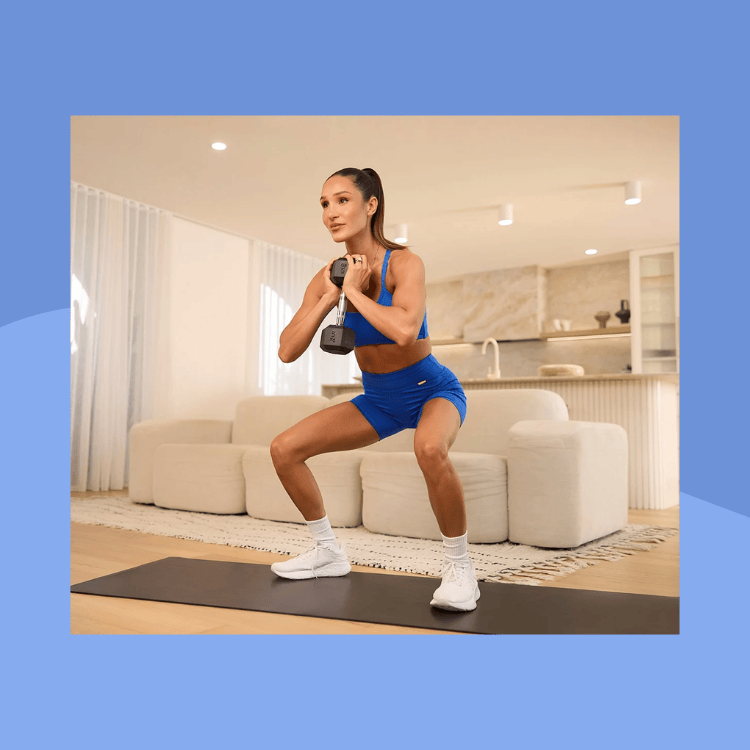
One of the most thoughtful design decisions is how Kayla handles progressive overload for home training. Knowing you may not have access to ever-heavier weights, she builds progression through increased reps, sets, and time under tension as well as heavier loads when available. It’s smart, realistic programming that doesn’t pretend everyone has a full home gym.
Equipment-wise, the full setup includes resistance bands, dumbbells, a barbell and plates, and a bench or step. If you’re working with less, dumbbells, a band, and a bench will get you through.
What stands out immediately when using this program is the structure. You’re not choosing workouts day-to-day or piecing together a plan yourself… Kayla’s done that thinking for you across 18 deliberate weeks. The repetition of exercises feels intentional rather than lazy; you genuinely notice yourself getting stronger at specific movements week on week.
The Sweat app is polished, video demos load quickly, tracking is clean, and the community forum adds an accountability layer that most home training setups lack. By week 7, when supersets are introduced, the workouts feel meaningfully harder without feeling longer. That kind of progression is exactly what you’d expect from a good personal trainer, delivered through an app.
With 60+ programs, 13,000+ workouts, and 500+ recipes across the Sweat platform, you’re also buying into an ecosystem, not just a single program. When you finish Strength at Home, there’s a clear next step waiting.
Best for Bodyweight Movements – Berg Movement
Price: Premium subscription Trial: 7 days free Format: 40+ programs, 5-week repeatable cycles

BERG MOVEMENT
Sondre Berg’s comprehensive calisthenics and handstand training app with over 1,200 exercises and skill-specific programs.
For women who want to build strength without any equipment whatsoever, Berg Movement is in a category of its own. Built by Norwegian calisthenics athlete Sondre Berg, the platform houses 1,200+ exercise progressions, 40+ programs, and a skill-based training philosophy that treats bodyweight training as a serious discipline… not a substitute for “real” weights.
Programs run on repeatable 5-week cycles across three content types: full Programs with day-by-day schedules, Modules for skill-specific deep dives, and standalone Workouts for days when you just need to move. Standout programs include Bodyweight STRONG for beginners and intermediates, Bodyweight Hypertrophy for those focused on muscle development, and specialist modules covering handstands, planches, and front levers for those drawn to skill work.
An onboarding quiz matches you to the right starting point, which removes the guesswork that trips up many beginners.
The community forum, where Sondre himself is an active presence, adds a surprisingly personal touch for a fitness platform and this is another great place to start if you’re unsure what program to choose.

Berg Movement makes you rethink what strength actually means. Rather than adding weight to a bar, you’re progressing toward skill, a cleaner push-up, a longer hold, a movement that demands genuine body control. The progression system is the app’s greatest strength: nothing feels random. Every exercise builds deliberately toward the next.
The honest caveat: if your primary goal is building visible muscle quickly, Berg will get you there, but more slowly than a weighted program. It rewards patience and process. For women who love movement as a discipline, not just a means to an end, it’s outstanding. Workouts are customizable to around 30 minutes, making it adaptable to even the busiest schedules.
Best for Tracking Progress – Alpha Progression
Price: Free version available; Pro ~$9.99/month or ~$49.99/year Trial: 14 days free Best for: Data-driven intermediate to advanced lifters
ALPHA PROGRESSION
Select what equipment you have access to and let the AI customize your workout plan for hypertrophy and muscle building.
If the most motivating thing in fitness is watching your numbers climb, Alpha Progression is your app. Built around hypertrophy science, it generates fully customized training plans and tracks volume, strength, and progressive overload with a precision that most platforms don’t come close to matching.
For home training specifically, the flexibility is excellent. Specify exactly what equipment you have… dumbbells up to a certain weight, a resistance band, nothing at all… and the plan generator builds a coherent, progressive program around that reality. Not a condensed gym program, but something actually designed for your setup.
Multiple gym profiles let you switch between home, gym, and travel configurations without losing your training history.
Per-set weight and rep recommendations update based on your logged performance. Volume charts, strength curves, and 10RM estimates build over time into a clear picture of where you’re improving and where you’re stalling. Periodization and deload support are built in, which is the kind of programming detail that most casual fitness apps ignore entirely.

After a few weeks of logging, Alpha Progression builds a detailed picture of exactly where you’re strong and where you’re lagging… and adjusts accordingly.
The plan generator is genuinely impressive for home training: tell it what you have, tell it your goals, and it produces something you can actually follow and progress through.
The honest limitation is that this isn’t a follow-along experience. There’s no instructor, no voice, no motivational energy, just a well-structured plan and your own discipline. That suits some people perfectly. For others who need encouragement alongside programming, it can feel like a very sophisticated spreadsheet. Know which type you are before subscribing.
Check out our full Alpha Progression review here.
Best for Longevity – Strength Well
Price: Free to start Best for: Women thinking about long-term strength, healthy aging, and functional independence
STRENGTH WELL
A unique app focused on measuring and improving your strengthspan for long-term health and functional fitness.
Most fitness apps ask one question: did you work out today? Strength Well asks something more important: are you building strength that will actually last?
Built around the concept of “strengthspan” (your overall strength capability across your lifetime) Strength Well is less a workout program and more an intelligence layer that sits on top of whatever training you’re already doing. It helps you understand your current strength across key movement patterns, identifies weaknesses you may not know you have, and provides personalized coaching to address them.
This matters for women specifically, and urgently. Hormonal changes during perimenopause and menopause accelerate muscle loss and reduce bone density and women can lose significant muscle mass per decade after 40 without active resistance training.
And more recently, the explosion of GLP-1 medications has added new dimension to the conversation. Research from ENDO 2025 found that approximately 40% of weight lost from semaglutide comes from lean mass including muscle, with women and older adults potentially at higher risk for this muscle loss.
Strength training, and crucially, monitoring that strength, has never been more important for women’s long-term health.
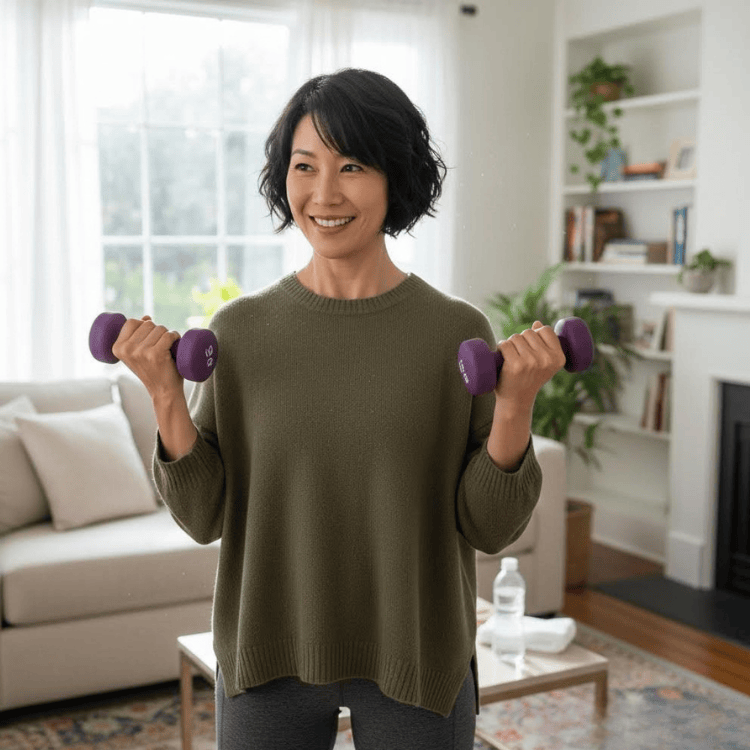
The platform uses benchmark exercises to assess your current strength, builds a picture of where you stand across muscle groups, and identifies imbalances that could be limiting your performance or increasing injury risk. The coaching element then builds personalized guidance based on what those assessments actually reveal… not generic programming, but direction that reflects your specific strengths and gaps.
Using Strength Well feels genuinely different from every other app on this list. Less about today’s workout, more about the bigger picture. Going through the strength assessments is illuminating — most people discover imbalances they didn’t know they had.
The coaching that follows reflects what was actually found, which makes it feel purposeful rather than algorithmic. For women in their 30s, 40s, and beyond who are thinking seriously about healthy aging… or for anyone currently on or considering GLP-1 medications… this kind of strength monitoring provides real direction and peace of mind. It’s asking the question the rest of the fitness industry consistently ignores.
Best for AI Coaching – Shred
Price: $119.99/year or $19.99/month Trial: 7-day free trial Users: 2M+ Featured in: Women’s Health, Apple, Rolling Stone, GQ
SHRED
AI-powered virtual trainer providing customized workouts with real-time adaptive coaching and comprehensive progress tracking.
Where most AI in fitness apps amounts to a plan generator that runs once and forgets about you, Shred’s coaching is genuinely dynamic. Real-time audio guidance during workouts directs your weight selection, rep pacing, and intensity in the moment. A two-way coaching chat lets you describe how a session felt, ask recovery questions, or flag that something wasn’t working — and receive responses that actually adjust what comes next.
For home training, the equipment flexibility is seamless. Specify what you have, dumbbells, bands, kettlebells, nothing, and workouts reconfigure instantly. Over 8,000 workouts span hypertrophy, strength, powerlifting, bodyweight, and studio formats including HIIT, yoga, and boxing. Apple Watch integration enables hands-free tracking during sessions.
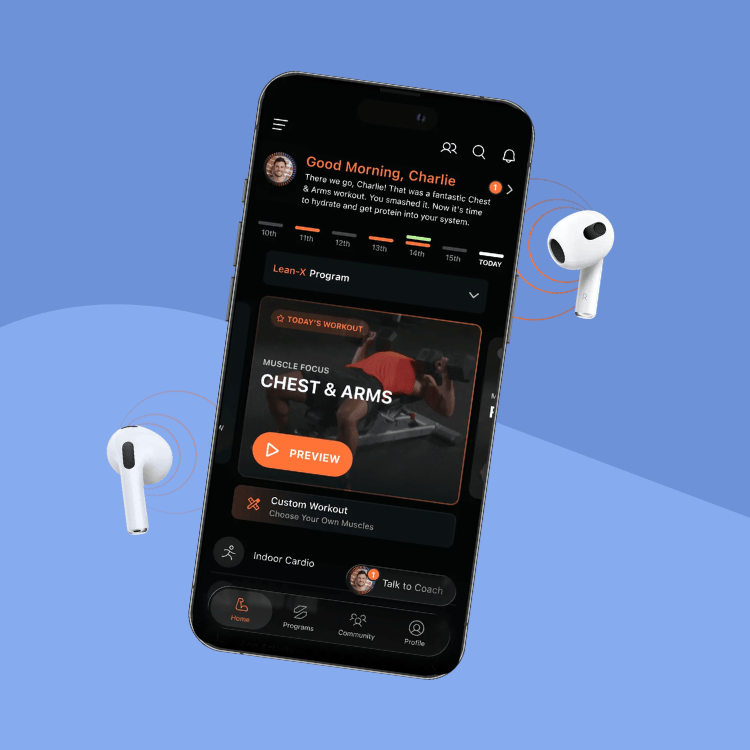
What makes Shred genuinely different is the voice coaching during workouts. It isn’t just a timer with instructions — the real-time audio creates the feeling of having someone in the room with you, which changes the home training experience significantly.
The CoachAI chat is more useful than expected; describing a session as too easy on upper body produces meaningful adjustments in subsequent workouts, not generic responses. The trade-off worth knowing: Shred leans toward circuits and supersets, which makes sessions feel energetic and well-paced, but it’s less precise for traditional progressive overload logging than Alpha Progression.
It’s the stronger choice if you want energy, guidance, and variety. The lesser choice if you want granular strength tracking above all else.
Best for Variety – BODi (formerly Beachbody on Demand)
Price: ~$119/year Programs: 140+ Workouts: 8,000+

BODi
140+ programs, 8,000+ workouts, and a trainer roster that consistently delivers. Most programs work with dumbbells and resistance bands.
BODi, formerly Beachbody on Demand, is the platform that mainstreamed at-home fitness through P90X and Insanity, and it remains the unmatched leader in sheer program variety. 140+ programs, 8,000+ workouts, and a trainer roster that consistently delivers. Most programs work with dumbbells and resistance bands, making them genuinely suited to home training without a full equipment setup.
Strength-focused highlights include LIIFT4 (lifting plus HIIT, four days per week), 645 with Amoila Cesar (a serious 45-minute strength program), 4 Weeks of Focus (30-minute, five days per week), and Belle Vitale — a hormone health program specifically designed for women navigating different life stages.
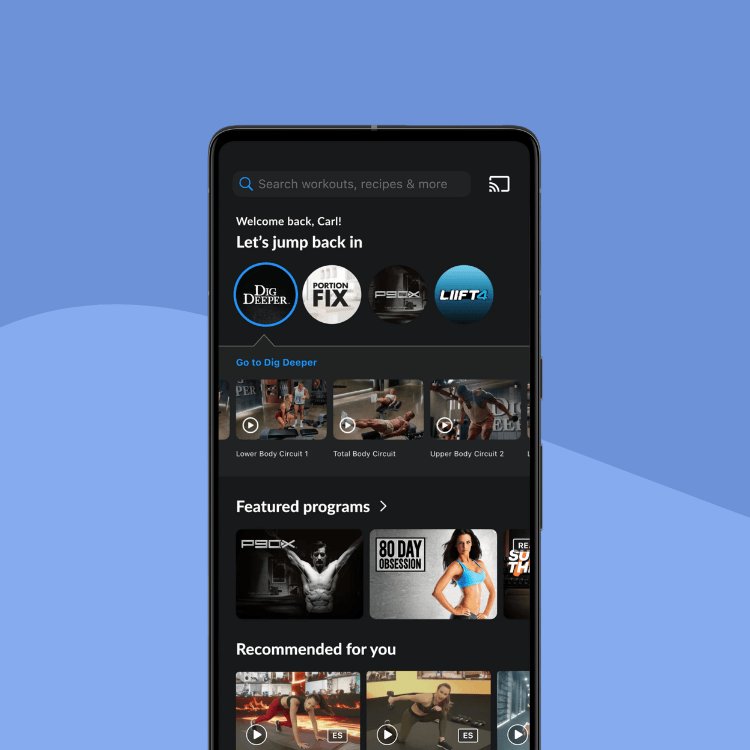
The variety is genuinely unmatched at this price point. Whatever your mood, your equipment, or your energy level on any given week… there’s a program for it. The trainer quality is consistently high, and production value makes workouts feel motivating rather than monotonous.
The honest downside is the paradox of choice: with 140+ programs, knowing where to start can be genuinely overwhelming. Progress tracking is also basic compared to Alpha Progression or Shred, BODi prioritizes program completion and motivation over data. For women who cycle through fitness phases, get bored easily, or want to explore different training styles without jumping between platforms, the value is exceptional.
Best for Beginners – Fitbod
Price: $15.99/month or $95.99/year Trial: 3 free workouts Library: 1,600+ exercises Integration: Apple Watch

FITBOD
Elegantly simple yet incredibly effective at crafting customized workouts perfect for those new to strength training.
The biggest barrier for most beginners isn’t motivation. It’s not knowing what to do. Fitbod removes that problem entirely. Open the app, see your workout, follow along. The algorithm generates personalized strength sessions based on your past performance, muscle recovery state, and available equipment, with no input required beyond your initial setup.
Specify your home equipment (dumbbells only, resistance bands, nothing at all) and set your experience level, and Fitbod builds appropriate, progressive workouts automatically.
Recovery tracking shows which muscles need rest between sessions, preventing the overtraining that beginners are particularly prone to when enthusiasm outpaces knowledge. An Ask A Trainer feature lets you submit questions to certified Fitbod trainers at no extra cost, a genuinely useful resource for anyone navigating strength training for the first time.
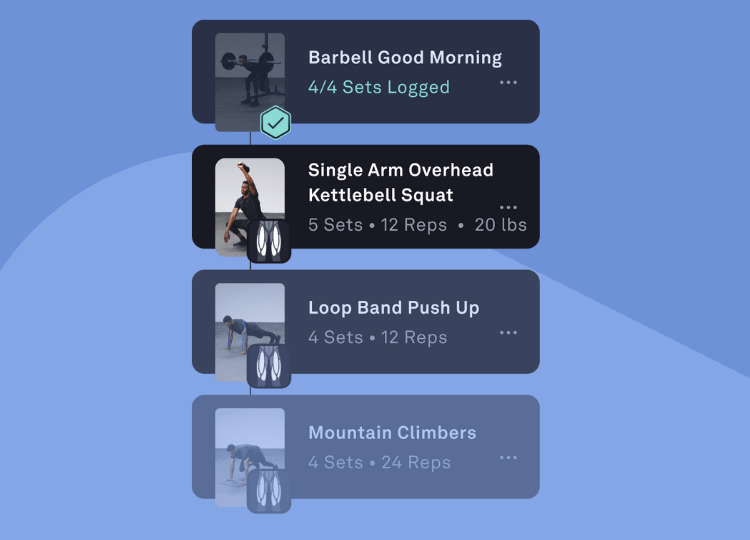
The most underrated thing about Fitbod is what it removes: the anxiety of not knowing whether you’re doing the right thing. For anyone new to strength training, that mental barrier is real, and often the thing that derails consistency before it even begins. The exercise demonstrations are among the clearest of any app tested, and the recovery visualization actively teaches good training habits without requiring you to already know them.
The limitations worth noting: the free trial covers only 3 workouts, which feels brief compared to competitors’ unlimited 7 or 14-day trials. And for more advanced lifters, the algorithm eventually feels less precisely tailored than a tool like Alpha Progression. But for beginners training at home, it does exactly what it needs to do.
For more info, check out our detailed Fitbod review that includes pros and cons and compares it against similar apps in the space.
Best for Recovery – Pliability
Price: $19.95/month or ~$14.99/month on annual plan Trial: 7 days free Library: 1,700+ mobility routines Official stretching partner: HYROX

PLIABILITY
Daily mobility routines, access 1500+ workouts, expert coaches, track progress, effective programming.
Recovery isn’t what you do instead of training. It’s part of training. Women working out at home without a coach to monitor movement quality are particularly prone to skipping it — which over time leads to tightness, reduced range of motion, and an increased injury risk that quietly undermines every strength session. Pliability makes recovery structured, trackable, and genuinely something you look forward to.
Formerly ROMWOD, Pliability houses 1,700+ guided stretching and mobility sessions, most running 12-20 minutes with no equipment required. A Mobility Test uses your phone camera to scan your movement patterns, delivers an instant mobility score, and builds a custom plan targeting your specific tight spots — the whole process takes around three minutes.
Dedicated Hubs cover Running, Training, Pregnancy, Desk Recovery, and HYROX (Pliability is the official stretching partner of HYROX). Integration with WHOOP, Garmin, Apple Health, and Apple Watch connects recovery data with your broader training picture. Sessions are downloadable for offline use.
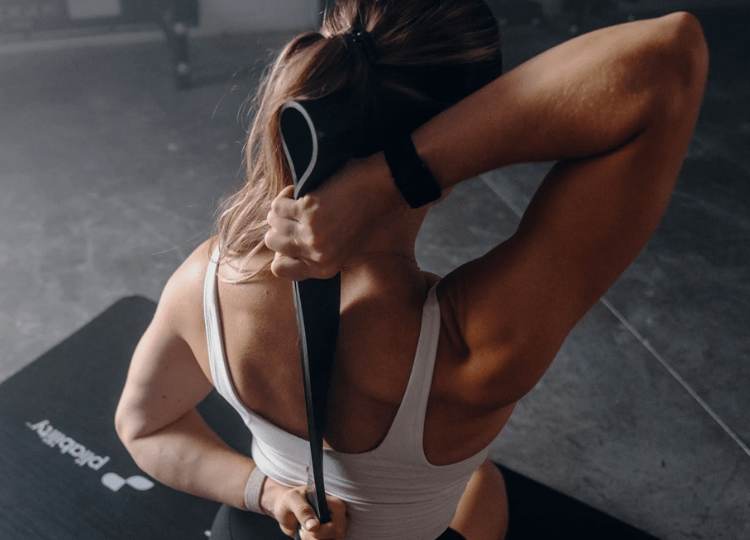
Pliability reframes recovery as training, not something you do instead of working out, but something you do because of it. The 12-20 minute sessions slot perfectly into rest days or post-workout cooldowns, and the mobility test is a clever onboarding tool that immediately surfaces where you’re limited. The position is honest: Pliability doesn’t replace a strength program and shouldn’t be expected to.
It’s the layer that makes your strength program more sustainable over time, reduces injury risk, and improves range of motion in ways that directly improve your lifting. For women training at home without professional eyes on their movement, that matters more than many people realize.
Our Pliability app review outlines everything you need to know about the experience.
One pairing worth highlighting: Sweat’s Strength at Home combined with Pliability is arguably the best combination on this list. Sweat provides the progressive 18-week strength program; Pliability handles the recovery and mobility work that makes that program more effective and sustainable long-term.
What Makes a Good At-Home Strength Training Program?
Not all programs are created equal, and the most popular option isn’t always the right one for you. Before committing to anything, here’s what to actually look for.
Progressive overload built in
This is non-negotiable. The whole point of strength training is to continually challenge your muscles beyond what they’re used to — more weight, more reps, more sets, less rest. A good program doesn’t leave this to chance or willpower. It builds progression into the structure so you’re always moving forward, even if incrementally.
Clear exercise demonstrations
At home, there’s no trainer to correct your form. Quality video demonstrations — ideally from multiple angles — aren’t a nice-to-have, they’re essential. Poor technique not only limits results, it increases injury risk. Any program worth following should show you exactly how each movement should look and feel.
Equipment honesty
Be realistic about what you have and what you’ll actually use. The best program for your situation is one designed around your actual equipment, not your aspirational setup. A good program adapts to what you have — whether that’s a full dumbbell rack or just a resistance band — rather than assuming a fully kitted home gym.
Structured recovery
Rest days and recovery aren’t laziness — they’re when your muscles actually rebuild and grow stronger. A well-designed program tells you when to push and when to rest, and ideally includes warm-up and cooldown work to protect your joints and improve range of motion over time.
Tracking and feedback
If you can’t see your progress, it’s hard to stay motivated. Whether that’s a simple workout log, in-app charts, or an algorithm that adjusts based on your performance, some form of tracking keeps you honest and helps you spot when something isn’t working.
A length you’ll actually commit to
A 12-week program you finish is infinitely more valuable than a 6-month program you abandon at week three. Be honest about your schedule, your current fitness level, and how much time you can realistically dedicate each week before choosing.
Your personality matters
Some people thrive with rigid structure — a program that tells them exactly what to do every day. Others do better with flexibility, choosing workouts based on energy levels and available time. Neither approach is wrong, but choosing the wrong one for your personality is one of the most common reasons people fall off.
Frequently Asked Questions
Can you build real strength at home? Absolutely. With progressive overload, compound movements, and consistent programming, home training delivers results that rival gym-based training. The barrier isn’t the location, it’s the quality of the program and the consistency of the person following it.
Do you need a lot of equipment? No. Some of the most effective programs require nothing more than your bodyweight. If you’re investing in home equipment, a pair of adjustable dumbbells and a resistance band covers the vast majority of what you’ll ever need to get started.
Will strength training make women bulky? No, and this myth needs to stop. Women have significantly lower testosterone levels than men, which makes it physiologically very difficult to build large amounts of muscle mass. What strength training actually produces is a leaner, more defined physique, alongside improvements in bone density, metabolism, posture, and long-term health.
How do you avoid plateaus? Track your workouts and increase the challenge consistently over time, more weight, more reps, more sets, reduced rest periods, or more complex exercise variations. Progressive overload is the engine of strength development. Without it, you’re maintaining, not building.
How do you know if you’re progressing? The simplest metric: are you lifting heavier weights, completing more reps, or finding movements noticeably easier than you were four to six weeks ago? If yes, you’re progressing. If not, something needs to change, either the program, the intensity, or the recovery.
What if I miss workouts? Consistency over perfection. Missing a session doesn’t derail progress. Missing three weeks because you feel guilty about missing a session does. Pick up where you left off and keep going.
Bottom Line
At-home strength training for women has never been more accessible, more varied, or more effective. The programs available today aren’t compromises on what you’d get in a gym… many are genuinely better, because they’re designed specifically for real life, real schedules, and real home setups.
The best program is ultimately the one you’ll actually do, consistently, over time. Not the most advanced, not the most talked about — the one that fits your life and keeps you coming back week after week.
The weight room was never really someone else’s. It was always yours.
Related Articles
Best Mobility Apps and Programs To Try This Year