

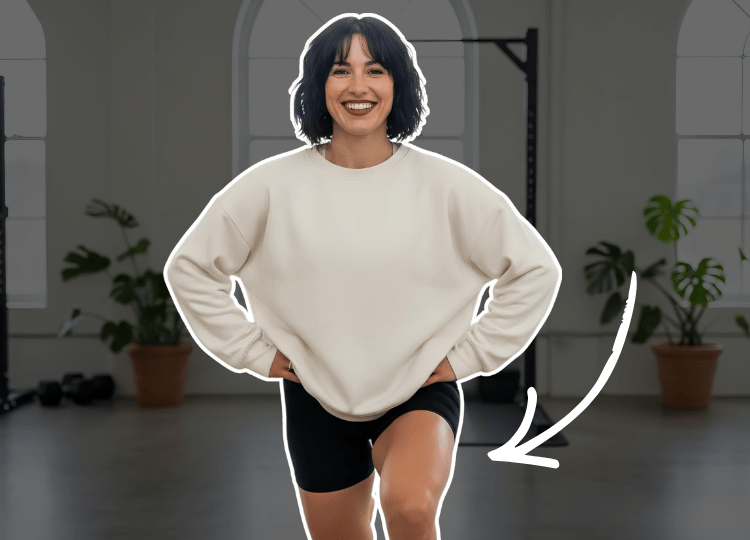
If you want stronger, more defined outer quads, or you’re chasing that coveted “quad sweep”, you need to be training the vastus lateralis directly. It’s the largest of the four quad muscles, running along the outer thigh, and it’s the one responsible for giving the legs that wide, sweeping shape from hip to knee.
The honest truth is that you can’t completely isolate the outer quad from the rest of the quadriceps… all four muscles work together during knee extension.
What you can do is choose exercises and stances that shift more emphasis onto the vastus lateralis, and combine that with overall quad development to build size and definition in this area.
Whether genetics has given you a head start or you’re building from scratch, the exercises below are the most effective tools for the job.
Leg Press
The leg press is one of the most effective exercises for overall quad development, and foot placement has a meaningful influence on which muscles take the most load.
A narrower stance shifts emphasis toward the quads and away from the glutes, making it a reliable choice for outer quad training.
Research shows the vastus lateralis reaches peak activation at around 90 degrees of knee flexion, so don’t cut the range of motion short. Lower to at least parallel, pause briefly at the bottom, then drive back up.
When testing new foot positions, start lighter than you think you need to. Small changes in stance can feel very different under load.
Seated Leg Extension
Seated Leg Extensions are an isolation exercise, focusing on the quads. Unlike squats, deadlifts and leg presses, which are compound movement, leg extensions mainly involve engaging the quads to lift the weight.
If you want to target your outer quads, then including exercises like leg extensions are a great place to start. This is because your glutes or hamstrings can’t compensate or support weak quads (like they can in other compound movements).
By doing such isolation exercises, you may discover your quads are weaker than your hamstrings and glutes… which not only would cause muscular imbalances that lead to injuries, but also the appearance of smaller quads (both inner and outer parts).
One useful technique note: performing leg extensions with your toes pointed very slightly inward can increase the emphasis on the vastus lateralis during the movement. This is a small adjustment, but worth experimenting with if outer quad development is specifically your goal.
Front Squat
The front squat is a great variation to the traditional back squat. It involves holding a barbell in front of your chest (which you’ll realize is directly above the quads).
This subtle change has a big impact on the distribution of weight. With the bar above your quads, it forces this muscle to push down harder to lift you up out of the squatting position.
For added difficulty, adopt quite a narrow squat too, which will really focus on the quads compared to the traditional squat.
Similar to some of the other exercises, if you suddenly discover that you struggle with front squats compared to back squats, it likely points to muscular imbalances, whereby your glutes, hamstrings or general technique has masked potential weakness in your quads.
Narrow Squat
If you want a break from using weights, the simple bodyweight squat with a narrow stance is certainly not to be ignored.
This can be incorporated into all sorts of workout styles… including higher repetition routines that focus more on building muscular endurance and definition (as well as cardiovascular benefits).
Eccentric Squats
Eccentric training, slowing down the lowering phase of a movement… is one of the most effective and underused tools for building quad size and strength. During a squat, it’s the quads that do the work on the way down, so extending that phase keeps the vastus lateralis and the rest of the quad muscles under tension for significantly longer than a standard tempo.
Try a 3–4 second descent on your squats, with a normal speed on the way back up. This can be applied to any squat variation in this list, narrow squats, front squats, Bulgarian split squats, making it a useful technique to layer on top of other exercises rather than treating it as a standalone movement.
Narrow Wall Sits
Wall sits is an isometric exercise… which means the muscles are engaged and contracted while in a static position (i.e. they are not moving). This differs from every other leg exercise in this list, whereby you are either moving at the hips or knees, to create resistance.
The wall sit is, nevertheless, still very effective, even without your muscles actually moving.
The weight of your body will force the quads (and glutes, hamstrings and calves) to activate in order to keep you from falling to the ground.
Wall sits are a very functional movement, that help translate into everyday uses… but they also help build endurance in the quads, which can benefit other strength training activities.
You can also add resistance to wall sits by having a training partner add weighted plates to your lap.
Bulgarian Split Squat
The Bulgarian split squat involves placing one foot behind you on an elevated surface, such as a bench or chair. This means that you are using one single leg to power yourself up from the squat.
This position places more emphasis on the quads, as well as requiring a good level of balance and stability to do it properly.
You can also add weight (barbell, kettlebell or dumbbells) to increase the difficulty.
You may need to experiment with the foot placement, as it will depend on your physique. Once you’ve found that sweet spot, it’s a good idea to place some tape on the floor so you can quickly get into the best position when you’re changing legs.
Decline Slant Board Squats
Elevating the heels whilst squatting is another effective way to put more emphasis on the quads.
By elevating the heel, you are increasing the range of motion at the knee and reducing it at the hips. This ultimately means the quads are activated for longer.
There are various way to elevate your heels… one of the easiest and most effective being the use of a slant board.
Slant board squats are also useful for those who struggle with ankle mobility, as you’re reducing the range of motion at the ankles too.
Sissy Squats
Sissy squats are one of the most effective quad isolation exercises available, and one that’s often overlooked outside of bodybuilding circles. By keeping the hips extended and allowing the knees to travel forward as you lean back, the movement puts the entire quad, including the vastus lateralis, under load in a lengthened position. This is something most other squat variations can’t replicate, making sissy squats a genuinely unique addition to an outer quad workout.
They require no equipment beyond something sturdy to hold for balance, though a sissy squat machine or bench can make the movement more comfortable as you build confidence.
A note on knees: sissy squats do place the knee under significant stress due to the forward knee travel involved. Start with a very limited range of motion and build up gradually. If you have existing knee issues, approach with caution or skip this one.
Tips for Targeting the Outer Quads and Thigh
Improving Ankle Mobility
Ankle mobility is often a factor holding people back from progress with various leg exercises. This mobility and flexibility in the ankles will impact the positioning of your body and can result in poor form if mobility is limited.
When you want to target the quads, you need your ankles to be mobile and flexible, ensuring you can keep an upright position to engage the quads more.
Asian squats are a great test of your ankle mobility. If you can’t adopt this stance comfortably, then it’s worth including ankle stretching into your weekly routine.
Training for Mass or Definition?
There could be any number of reasons why you want to target and train your quads/outer quads… from gaining muscle mass, to adding definition, to improving athletic performance.
Your goals should largely influence how you approach workouts, including quad exercises.
As a general rule, if you want to add muscle mass and size, focus on heavy weights and lower repetitions. If you want to lose weight or tone up, focus on lighter weights and higher repetitions.
Body Fat
Lots of people searching for the elusive “quad sweep” are those focusing on the aesthetics of the muscle, such as bodybuilding. A key component to this is body fat. As well as including the relevant exercises in your workout, your body fat percentage is going to influence the overall appearance of the quads.
Feet Positioning
Rather than dismissing foot positioning entirely, it’s worth being more specific.
The evidence for dramatically turning the feet inward during squats is limited and does carry a higher injury risk around the knee joint… so this isn’t something we’d recommend as a primary strategy.
However, during isolation exercises like seated leg extensions, a slight inward toe angle (rather than a dramatic internal rotation) can increase emphasis on the vastus lateralis without the same mechanical concerns. For compound movements, focus on the stance and exercise selection tips above instead.
Tight Hips
Along with stiff ankles, tight hips will also be a contributing factor to how well you can target the quads. If you have limited range of motion of your hips, your positioning during certain exercises may naturally put more emphasis on the glutes or hamstrings, for example.
If left unaddressed, this can mean with every workout, your glutes and hamstrings are continuingly taking the brunt of the weight, with your quads failing to ever be fully activated.
Genetics
Something we mentioned in the introduction that is worth highlighting for those following more of a bodybuilding routine, is that genetics may impact the shape of your quads… i.e. you may naturally have larger inner or outer muscles of the quad.
Bottom Line
Building stronger, more defined outer quads comes down to three things: choosing exercises that emphasise the quads over the glutes (front squats, leg extensions, narrow stance leg press), using training techniques that increase time under tension (eccentric tempos, full range of motion), and developing the quads as a whole through progressive overload over time.
Foot position and stance can make a difference at the margins, but exercise selection and consistent training are what move the needle. Include 3–4 of the exercises above in your leg sessions, train the quads 2–3 times per week, and remember that body fat percentage will ultimately determine how visible that outer quad definition becomes.
Related Articles