

We may earn a small commission on some links at no extra cost to you. Learn more.
The International Personal Training Academy (IPTA) is one of the newest NCCA-accredited personal trainer certifications available today. At $399, it’s also one of the most affordable.
That combination alone was enough to grab my attention.
Dig a little deeper, though, and IPTA’s story becomes more interesting. Long before launching their own certification, the company built study materials for NASM, ACE, ISSA, and NSCA candidates. After spending years helping students prepare for other providers’ exams, they eventually decided to create a certification of their own.
The result is a CPT that pairs recognized accreditation with a learning platform clearly built with online students in mind.
I followed the course, worked through the materials on both phone and desktop, tested customer support, and took the exam. Here’s how I got on.
In a hurry? Here’s the key takeaway…
IPTA-CPT is a strong choice for candidates who want NCCA-accredited certification without paying NASM or ISSA pricing, and who plan to study primarily online. The mobile-first platform, AI-driven study coach and tiered package structure compete directly with credentials that cost two to three times as much. The main tradeoff is brand recognition: NASM and ACE have decades of name recognition that IPTA has not yet built. For most candidates entering the field in 2026, that tradeoff is worth taking.
IPTA
The most affordable NCCA-accredited CPT on the market in 2026, with a mobile-first study platform, AI-driven study tools and unlimited exam retakes on the MVP tier from $399.

IPTA Scorecard
- Exam format – 5/5
- Accreditation/Reputation – 4/5
- Support – 5/5
- Study Material – 4.5/5
- Price – 5/5
- Overall Rating – 4.8/5
Learn more about our review scorecards as part of our editorial review guidelines.
- Price: $399 to $799 (Rookie, All-Star, MVP)
- Accreditation: NCCA accredited
- Exam format: 135 questions, three-hour limit, proctored
- Study time: 4 to 12 weeks depending on tier and background
- Prerequisites: 18 or older, high school diploma or GED, current CPR/AED
- Recertification: Every two years, first recertification free on MVP tier
- Trustpilot rating: 4.7 stars
Why Trust Us? Review Process Explained
Here at Fitness Drum, we believe in editorial integrity and providing genuine value to our readers. For this review, we used our experience of testing 10+ leading online personal training certifications (details at the bottom of the article), to provide a honest, balanced review of IPTA in comparison to the wider market.
Meet the “Reviewer”
I’m Jen, a certified personal trainer and fitness coach who has held certifications from multiple providers over the years. For this review, I was given access to the full IPTA program, worked through the study materials on phone and desktop, sampled the AI study coach, contacted support, and reviewed the textbook against the same criteria I used to evaluate NASM, ACE, ISSA and others.

What Is the IPTA-CPT?
The IPTA-CPT is a personal trainer certification offered by the International Personal Training Academy.
The team spent years building third-party study materials for NASM, ACE and ISSA candidates before launching their own credential. That history shows in the platform. They knew exactly what was frustrating about the legacy study experiences before they built their own, and those frustrations are what they addressed first.
The curriculum covers the standard CPT content areas: exercise science, anatomy and physiology, biomechanics, client assessment, program design, nutrition fundamentals, special populations, behavior change and the professional side of training.
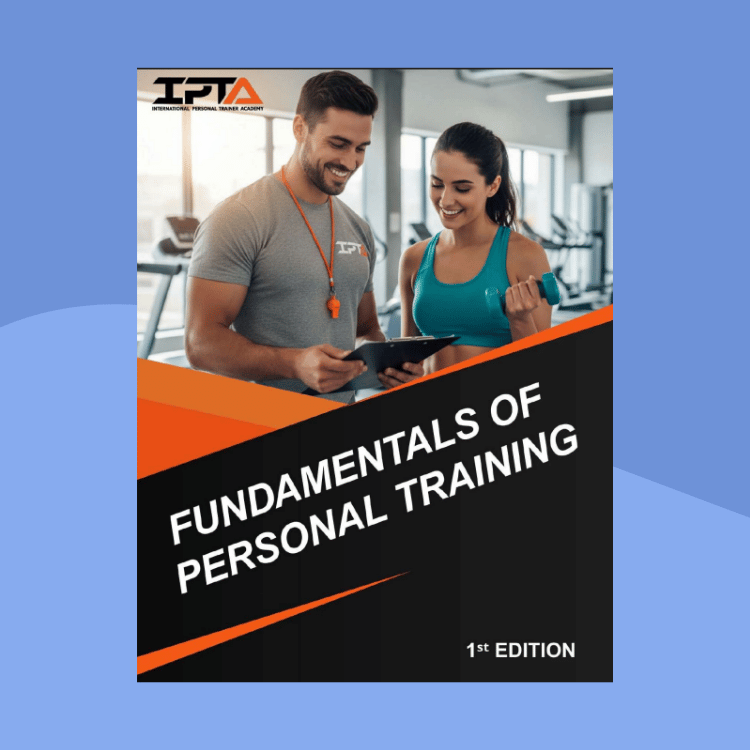
The textbook runs 30 chapters. The exam is 135 multiple-choice questions, with 110 scored and 25 unscored pilot items.
Pros
- Lowest entry price ($399) of any NCCA-accredited CPT in 2026
- Mobile-first study platform that works properly on a phone
- SurePass AI study coach shifts study time toward weak areas automatically
- Audio study guide suits candidates who study during commutes or daily tasks
- Free CPR/AED certification included at all three tiers
- Unlimited exam retakes on the MVP tier
- Free first recertification on the MVP tier, extending the credential to four years
- Lifetime free access to roughly 100 continuing education courses on MVP tier
- Free personal trainer website built and hosted for life on MVP tier
- Remote-proctored exam available as standard
- 4.7-star Trustpilot rating
- Job assurance guarantee on the MVP tier
Cons
- Newer brand with less name recognition than NASM, ACE or ISSA
- Smaller alumni network than providers with decades of history
- Textbook visuals are weaker than NASM or ACE
- Practice exam simulator and flashcards excluded from the Rookie tier
IPTA
The most affordable NCCA-accredited CPT on the market in 2026, with a mobile-first study platform, AI-driven study tools and unlimited exam retakes on the MVP tier from $399.
What I Like about IPTA-CPT
Affordable Pricing
The package structure is more transparent than most competitors. Each tier adds specific tools rather than vague bundles, which I appreciated. It makes it much easier to decide what you actually need.
Rookie ($399)
The base tier includes the NCCA-accredited exam, the full digital textbook, an interactive study guide and a free CPR/AED certification. This is the lowest-priced entry point of any NCCA-accredited CPT I have reviewed in 2026. It does not include the practice exam simulator, flashcards or AI study coach.
For candidates who already have a background in exercise science and mainly need the credential, the Rookie tier is a reasonable option. For complete beginners, the next tier up is usually the better fit.
All-Star ($599)
The All-Star package adds the practice exam simulator, the flashcard system with spaced repetition and free first recertification. The flashcard library covers roughly 500 cards across the major content areas and the practice question bank exceeds 800 items. For most candidates, this is the sweet spot: you get the tools that actually move the needle on exam readiness without paying for features you may not use.
MVP ($799, often discounted from $999)
The top tier is where IPTA genuinely separates from the legacy providers. Alongside everything in All-Star, you get the SurePass AI study coach, an audio study guide, performance tracking, unlimited exam retakes, a job assurance guarantee, lifetime free access to roughly 100 continuing education courses, and a free personal trainer website built and hosted for life through IPTA’s CoachesOnline partnership.
The bundle logic is also worth knowing about. IPTA runs a standing buy-one-get-one offer that pairs the MVP CPT with the MVP Nutrition Certification at no additional cost. If you already know you want both credentials, the math is almost impossible to beat anywhere else in the NCCA-accredited market. Comparable feature sets from NASM run past $1,399 without the hosted website or the lifetime CEU library.
If you are studying in short blocks between other commitments, the audio guide and AI coach alone justify the upgrade. The unlimited retake policy removes the financial penalty for sitting the exam before you feel completely ready, and the hosted website removes the largest non-certification expense most new independent trainers face.
Quality Study Platform and Material
This is where I found the biggest difference from the legacy providers, and it was more significant than I expected.
The Textbook
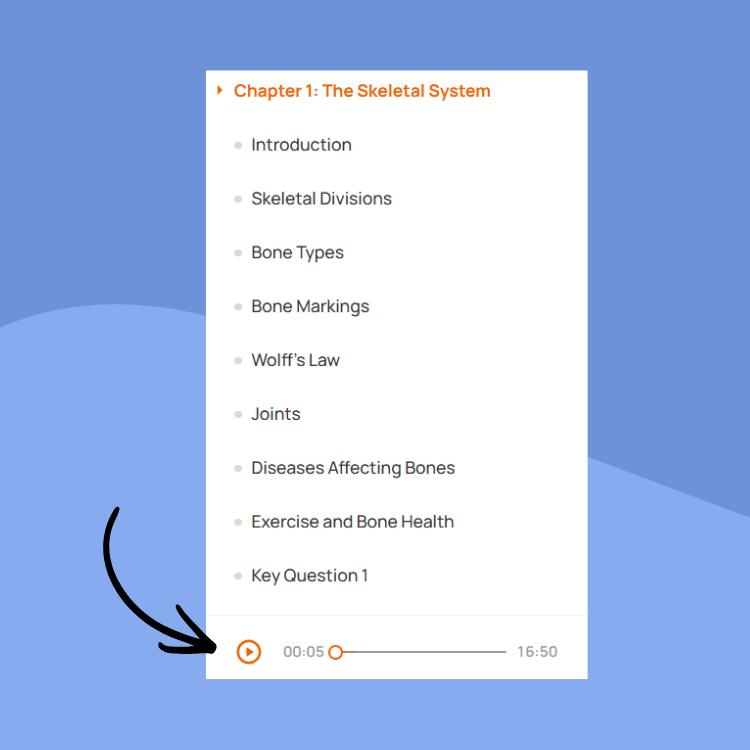
It reads cleanly on a phone or tablet, with proper responsive formatting rather than a PDF scaled down to fit a small screen. The structure is logical and the content is evidence-based with research references throughout. Where it is weaker is on diagrams, illustrations and infographics. NASM and ACE have richer visual content, and if you are someone who learns primarily from images, the IPTA textbook will feel text-heavy by comparison. The interactive study guide partially compensates but the core textbook itself is not as visually rich as the legacy providers.
(I mentioned it in another recent review, but you can use a tool like Google’s Notebook LM to create visuals for you based on each chapter or topic. It’s surprisingly good).
Practice Questions and Flashcards
The practice question library covers more than 800 items and the flashcard system uses spaced repetition logic to push weaker areas more often. Both work properly on a phone, which is not something I can say about all of the legacy provider tools I have tested. The exam simulator, available on All-Star and MVP, closely approximated the format and timing of the actual proctored exam.
SurePass AI
This is the feature that makes the MVP tier worth it for most people, and I was genuinely impressed by how specific it was. I tested it across roughly two weeks of study. When I deliberately performed poorly on a few biomechanics questions, the next session reweighted toward biomechanics rather than continuing with an even distribution. It is not just telling you to review your weak areas in general. It is actually doing it for you, session by session.
This is the main reason IPTA candidates are often exam-ready in four to six weeks rather than the eight to twelve weeks most other programs recommend.
Audio Study Guide
I used this during walks and while doing other tasks around the house, and it covered the same content as the textbook in a natural, professional-sounding narration. If you genuinely cannot find quiet desk time to study, this changes things. It turns time you would otherwise write off into productive review.
Simple Exam Format and Delivery
The exam is 135 multiple-choice questions, 110 scored and 25 unscored pilot items, with a three-hour time limit and a 70 percent passing threshold. It is closed-book and proctored, with both remote and in-person options.
Remote proctoring uses a standard check-in process: ID verification, a room scan, webcam and microphone required. The experience was straightforward and comparable to what NASM and ACE use for their online exams.
The MVP tier includes unlimited retakes until you pass. On Rookie and All-Star, retake fees apply if you do not pass on the first attempt, which is worth factoring in if your budget is tight.
Accreditation
IPTA holds NCCA accreditation from the National Commission for Certifying Agencies, the same body that accredits NASM, ACE, ACSM and NSCA. Accreditation is binary, not graded. A newer brand’s NCCA credential carries the same accreditation weight as a legacy brand’s. What varies is reputation and name recognition in specific job markets.
Recertification Pricing
IPTA requires recertification every two years at a $99 fee. The MVP tier includes the first recertification free, which effectively extends the initial credential to four years at no additional cost. MVP students also get lifetime access to roughly 100 continuing education courses inside the platform, which covers the 24-credit recertification requirement at no ongoing cost. For trainers who want to keep learning beyond the minimum, that library is there for as long as they hold the credential.
Friendly Customer Support
IPTA holds a 4.7-star Trustpilot rating, in the same tier as the highest-rated legacy providers. I tested support with a technical question about the practice exam simulator and received a same-day response from someone who clearly knew the product. That matches the pattern in the public reviews consistently.
The volume of reviews is lower than ISSA or NASM, which is simply a function of the brand being newer. The rating itself reflects a genuine pattern.
Things to Consider
The remote learning format means IPTA does not offer the same sense of community you get from providers that run in-person workshops, coaching cohorts or live study groups. That is a real tradeoff, and if that kind of structured peer environment matters to how you learn, it is worth factoring in.
The flipside is that the online experience is why the price is what it is, and for most trainers the accessibility and cost savings outweigh the lack of in-person touchpoints.
Being a newer brand, IPTA does not carry the same name recognition as NASM, ACE or ISSA. In my experience this is becoming less of a practical issue as more gyms and employers shift toward accepting any NCCA-accredited credential, but it is still worth checking what specific employers in your area expect before enrolling.
IPTA’s catalogue of specialist certifications is also smaller than something like ISSA, which offers a wide range of add-on credentials you can bundle at a significant discount. If stacking multiple specialities under one brand is part of your plan, ISSA’s bundle pricing is worth a serious look alongside IPTA.
IPTA
The most affordable NCCA-accredited CPT on the market in 2026, with a mobile-first study platform, AI-driven study tools and unlimited exam retakes on the MVP tier from $399.
Who Is the IPTA-CPT Best Suited To?
- Career changers on a budget. At $399, the Rookie tier is the lowest entry point in the market for an NCCA-accredited credential. Even the MVP tier at $799 undercuts NASM’s base price.
- Candidates who study on their phone. The mobile-first design is genuinely different from the legacy providers. If your study time happens in 20-minute blocks between other commitments rather than at a desk, this platform is built for that reality.
- First-time test takers who want safety nets. The MVP tier’s unlimited retakes, free first recertification and job guarantee remove a lot of the financial and career risk from the process.
- Trainers who already work full-time. Audio study, AI-driven review and self-paced delivery suit candidates who cannot block off weeks of dedicated study time.
Who Should Look Elsewhere?
- Trainers focused on strength and conditioning for athletes. The NSCA is the established credential in this space and offers the CSCS as a clear follow-up. If athletic performance coaching is the goal, start there.
- Trainers focused on special populations. ACE has the deepest catalogue on older adults, postnatal clients and clinical conditions.
How IPTA Compares
| Certification | Base Price | NCCA | Online Exam | Study Time |
|---|---|---|---|---|
| IPTA | $399 | Yes | Yes | 4 to 12 weeks |
| NASM | $899 | Yes | Yes | 8 to 12 weeks |
| ACE | $494.50 | Yes | Yes | ~3 months |
| ISSA | $868 | DEAC; NCCA via NCCPT | Yes | 8 to 12 weeks |
| NSCA | $435 (exam only) | Yes | No | 8 to 12 weeks |
FAQs
Is IPTA a legitimate personal trainer certification?
Yes. IPTA holds NCCA accreditation, which is the standard most gyms and insurance providers recognize. The credential is accepted on the same terms as NASM, ACE and NSCA.
How much does the IPTA-CPT cost?
The Rookie tier is $399, the All-Star tier is $599 and the MVP tier is $799. All three include the NCCA-accredited exam and a free CPR/AED certification. IPTA also runs a standing buy-one-get-one bundle pairing the MVP CPT with the MVP Nutrition Certification at no additional cost.
How long does it take to get certified through IPTA?
Most candidates complete the certification in 8 to 12 weeks. MVP candidates using the SurePass AI study coach often report being exam-ready in 4 to 6 weeks.
Can I take the IPTA exam from home?
Yes. Remote proctoring requires a webcam, microphone, ID verification and a private quiet space. In-person testing is also available.
Is IPTA worth it compared to NASM or ACE?
For most candidates, yes. IPTA offers the same NCCA accreditation at a significantly lower price, with a more modern study platform. The honest tradeoff is brand recognition. If a specific job posting names NASM or ACE, that matters. Otherwise, the credential parity is real.
Does IPTA offer a job guarantee?
Yes, on the MVP tier, bundled alongside unlimited exam retakes, the SurePass AI study coach, lifetime access to roughly 100 free CEU courses and a free CoachesOnline personal trainer website.
What are the prerequisites?
You must be at least 18 years old, hold a high school diploma or GED equivalent and have a current CPR/AED certification. IPTA includes a free CPR/AED certification with all three tiers.
How often do I have to recertify?
Every two years. The MVP tier includes the first recertification free, extending the initial credential to four years at no additional cost. MVP students also get lifetime free access to roughly 100 CEU courses, which covers the 24-credit renewal requirement at no ongoing cost.
Methodology
For this review, we evaluated the following certification providers: ISSA (International Sports Sciences Association), IPTA (International Personal Training Academy), NASM (National Academy of Sports Medicine), ACE (American Council on Exercise), NCSF (National Council on Strength & Fitness), Precision Nutrition, AFPA (American Fitness Professionals & Associates), NESTA (National Exercise & Sports Trainers Association), Sports Nutrition Association (SNA), and, National Academy of Metabolic Science (NAMS).
Bottom Line
I came into this review sceptical and came out of it genuinely impressed, with one clear caveat.
The IPTA-CPT delivers NCCA-accredited certification at the lowest entry price in the 2026 market, paired with a study platform that is better designed for online learners than anything the legacy providers currently offer at a comparable price point. The MVP tier in particular, with its AI study coach, audio guide, unlimited retakes, lifetime CEU library and hosted trainer website, is a package NASM and ACE cannot match without spending significantly more.
The caveat is brand age, and it is a real one. If you are applying to a gym chain that names NASM or ACE specifically in its job posting, that brand recognition matters. For the broader market where any NCCA-accredited credential clears the hiring bar, and for independent and online coaches where results matter more than logos, IPTA is the certification I would tell a trainer to look at first in 2026.
IPTA
The most affordable NCCA-accredited CPT on the market in 2026, with a mobile-first study platform, AI-driven study tools and unlimited exam retakes on the MVP tier from $399.
Related Articles
Best Personal Trainer Certifications – ISSA, NASM, ACE and More