

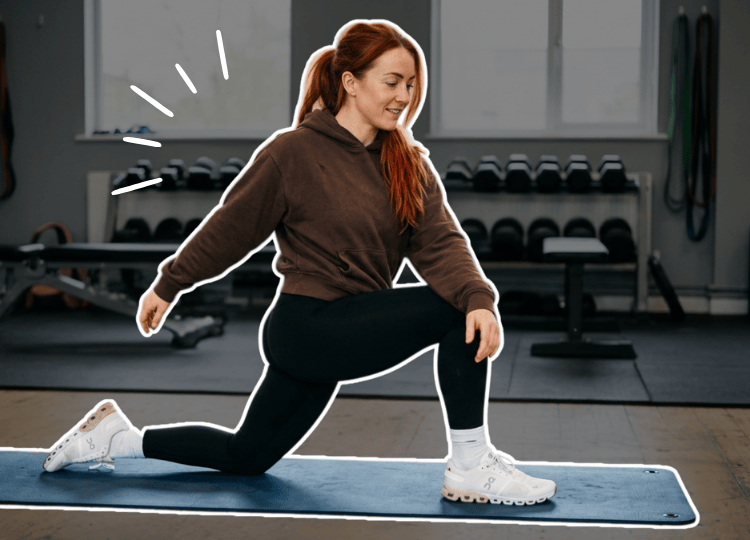
Most people only think about injury prevention after they have already been injured. That is the wrong order. By the time a niggle becomes a problem, the underlying weakness or imbalance that caused it has usually been building for months.
Prehab, short for prehabilitation, flips that script. It is a proactive approach to keeping the body resilient: identifying and addressing vulnerability before it becomes injury.
It is not glamorous, it does not make for impressive training footage, and it rarely gets prioritised in the way that heavier lifts or cardio sessions do.
But the case for it is genuinely compelling, and the prehab exercises themselves are accessible enough that almost anyone can start adding them to their week immediately.

Quick Summary
- Prehab is a structured programme of exercises designed to reduce injury risk by targeting areas of weakness, instability or restricted mobility before they cause a problem.
- In practice, prehab typically means 10 to 20 minutes of targeted, low load exercises performed 2 to 3 times per week, either as a standalone session or bolted onto the end of a regular workout.
- Some effective prehab exercises include; face pulls, band external rotations, clamshells, single leg glute bridge, Copenhagen plank, Spanish squat, Nordic hamstring curl, weighted dead bug and side plank.
What are Prehab Exercises?
Prehab is a structured programme of exercises designed to reduce injury risk by targeting areas of weakness, instability or restricted mobility before they cause a problem. It focuses primarily on the smaller stabilising muscles and connective tissues that conventional training tends to neglect, the rotator cuff, the hip abductors, the deep core, the hamstrings and the muscles around the knee joint.
The concept was originally applied in a surgical context, where research showed that patients who trained specific movements ahead of an orthopaedic procedure recovered significantly faster and with better outcomes than those who went into surgery without preparation.
That logic was then adopted by sports physiotherapists and applied to injury prevention in active populations, where the goal is not recovery from surgery but avoidance of injury altogether.
In practice, prehab typically means 10 to 20 minutes of targeted, low load exercises performed 2 to 3 times per week, either as a standalone session or bolted onto the end of a regular workout.
Prehab vs Rehab vs Warm-Up
These 3 things often get confused, and they are genuinely different.
- Rehab is what you do after an injury has occurred. It is reactive, clinical and focused on restoring function that has been lost.
- Warm-up is what you do immediately before a training session. It is designed to elevate heart rate, increase core temperature and prepare the body for the work ahead. The effects are immediate but temporary.
- Prehab is neither of these. It is a consistent, ongoing practice performed 2 to 3 times per week regardless of whether you are training that day. Its effects accumulate over weeks and months, building the structural resilience that a warm-up cannot and the rehabilitation process is designed to restore.
Why It Matters More Than Most People Think
The most common sports and training injuries are not freak accidents. They are overuse injuries: gradual accumulation of stress on tissues that were not strong enough, stable enough or mobile enough to handle the load being placed on them. Knee injuries account for roughly 41% of all sports injuries. Rotator cuff problems are among the most common reasons people stop lifting. Hamstring strains and lower back pain are near-universal complaints among active adults.
These are not inevitable. Research consistently shows that targeted prehabilitation programmes significantly reduce injury rates in both athletic and general populations. The FIFA 11+ programme, developed for football players and one of the most studied injury prevention protocols in sport, demonstrated a 30 to 50% reduction in overall injury rates in players who followed it consistently.
Beyond injury prevention, prehab strengthens the movement patterns that make every other exercise safer and more effective. Better hip stability improves squatting mechanics. Stronger rotator cuff muscles protect the shoulder during overhead pressing. Improved single-leg balance reduces the risk of ankle sprains. The benefits compound across your entire training programme.
Best Prehab Exercises
The exercises below cover the 4 areas most commonly associated with training injury: the shoulder, the hips and glutes, the knees, and the core. They require minimal or no equipment and are deliberately chosen for their accessibility.
Face Pulls
Face pulls target the rear deltoids, external rotators and mid/lower trapezius – the muscles most commonly neglected by people who spend a lot of time pressing.
Attach a rope to a cable at roughly chin height and pull toward the face, separating the rope as you draw it toward you. The elbows should flare outward and finish above the level of the hands. This directly counteracts the muscle imbalances created by bench pressing, overhead pressing and any activity that involves a lot of forward arm reach.
Sets and reps: 3 sets of 15 reps.
Band External Rotation
One of the most fundamental rotator cuff exercises, used routinely by physiotherapists both for rehabilitation and for prevention. Anchor a light resistance band at elbow height.
Standing side-on to the anchor, hold the band with the outer arm, elbow tucked at 90 degrees and forearm pointing toward the anchor. Rotate the forearm outward away from the body, keeping the elbow pinned to the side throughout. The movement is small and controlled. If the elbow is drifting or the shoulder is compensating, the band is too heavy.
Sets and reps: 3 sets of 12 to 15 reps each side.
Clamshell
The clamshell is staple of hip prehab and one of the most effective exercises for targeting the gluteus medius, a muscle that plays a critical role in pelvic stability during walking, running and any single-leg movement.
Lie on your side with hips and knees bent to roughly 45 degrees, feet stacked. Keeping the feet together, rotate the top knee toward the ceiling without allowing the pelvis to rock backward. Lower with control. Adding a resistance band around the thighs increases the demand as strength improves.
Sets and reps: 3 sets of 15 reps each side.
Single-Leg Glute Bridge
The standard glute bridge is useful but becomes too easy too quickly. The single-leg variation requires the working side to do all the work while the core resists rotation, making it a significantly more demanding exercise.
Lie on your back, one knee bent and foot flat on the floor, the other leg extended. Drive through the planted heel to raise the hips until the body forms a straight line from shoulder to knee. Pause at the top, then lower with control.
Sets and reps: 3 sets of 10 to 12 reps each side.
Copenhagen Plank
The Copenhagen plank is of the most effective exercises for the adductors (inner thigh), which are chronically undertrained and a common source of groin injury in runners and team sport athletes. Set up in a side plank position with the top foot elevated on a bench or box.
Lift the lower leg to meet the upper leg and hold. The intensity can be modified by bending the top knee rather than keeping the leg fully extended.
Sets and reps: 3 sets of 20 to 30 second holds each side.
Spanish Squat (Isometric)
The Spanish squat is an isometric squat hold that loads the quad and patellar tendon without the joint compression of a standard squat, making it particularly effective for those managing knee pain or wanting to build tendon resilience.
Loop a strap or resistance band around a fixed point at roughly knee height. Facing the anchor, hold the band behind you at hip height and sit back into a squat until the thighs are parallel to the floor. The shins should remain roughly vertical. Hold the position.
Sets and reps: 3 sets of 30 to 45 second holds.
Nordic Hamstring Curl
One of the most evidence-backed injury prevention exercises available, with research showing significant reductions in hamstring strain rates in athletes who include it regularly. Kneel on a padded surface and have a partner hold your ankles down, or secure your feet under a fixed object.
From an upright kneeling position, lower the torso toward the floor as slowly as possible by allowing the knees to extend, using the hamstrings to control the descent. Catch yourself with your hands, then push back to the start. This is a challenging exercise and should be progressed gradually.
Sets and reps: 2 to 3 sets of 4 to 6 reps to begin, building over several weeks.
Weighted Dead Bug
Weighted dead bugs are one of the most effective core stability exercises available, specifically designed to train the deep stabilising muscles that support the lumbar spine during movement.
Lie on your back with arms pointing toward the ceiling and knees bent at 90 degrees, shins parallel to the floor. Simultaneously lower one arm overhead and extend the opposite leg toward the floor, keeping the lower back pressed flat throughout. Return to the start and repeat on the other side. The lower back lifting off the floor means the core has lost position.
Sets and reps: 3 sets of 8 to 10 reps each side.
Side Plank
Targets the lateral core, specifically the quadratus lumborum and obliques, which are essential for resisting lateral forces during movement and protecting the lumbar spine.
Support the body on one forearm and the side of the lower foot, keeping the hips stacked and the body in a straight line. Hold the position without letting the hips drop. Progress to a hip dip variation, or elevate the feet for added difficulty.
Sets and reps: 3 sets of 20 to 30 second holds each side.
How to Fit Prehab Into Your Routine
The most common reason people do not do prehab is not lack of awareness — it is lack of a clear moment in the week to fit it in. A few approaches that work well in practice:
Tack it onto the end of your existing sessions. After a lower body session is a natural time for clamshells, single-leg glute bridges and the Nordic curl. After upper body work is a natural time for face pulls and band external rotation. The core exercises fit anywhere.
Or treat it as a standalone session. 15 to 20 minutes, 2 to 3 times per week, done at home with a resistance band and a mat. Many people find this works better because it gives the exercises the full attention they deserve rather than treating them as an afterthought after the main session.
What does not work is doing prehab once after reading an article and then forgetting about it. The benefit is cumulative. Like most things worth doing in fitness, the results come from repetition over weeks and months, not a single session of good intentions.
Bottom Line
Prehab is not exciting. It will not add weight to your lifts or knock time off your run. What it will do, done consistently, is reduce the likelihood of the injury that sets you back 6 weeks and undoes months of progress.
The exercises above are targeted at the areas most commonly responsible for training injuries: the shoulder girdle, the hips and glutes, the knee joint and the deep core. None of them require significant equipment, none take long, and all of them have genuine physiological justification for being there. Pick the areas most relevant to your training, do them consistently, and think of the injuries you do not have as the result.
Related Articles:
Hip Adductor Stretches for Better Hip Mobility