

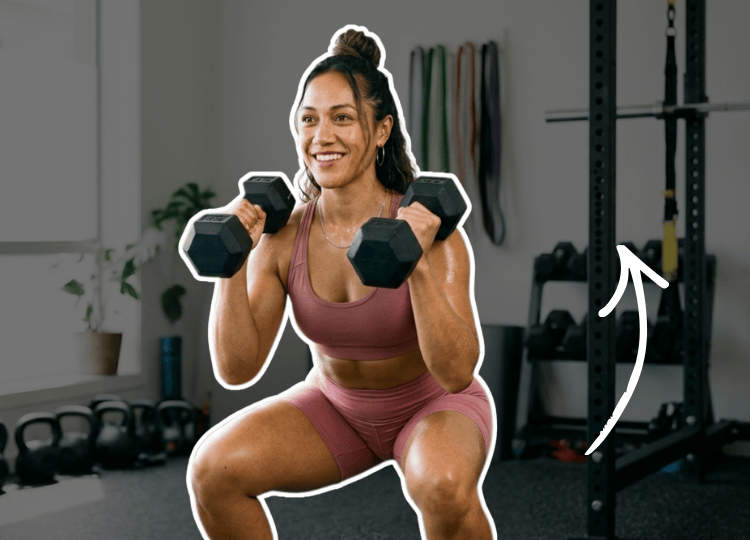
4 minutes. That is all the Tabata protocol asks of you.
And yet somewhere around circuit 5 or 6 of a properly executed Tabata set, most people stop finding 4 minutes quite so reassuring.
Tabata is one of the most researched and genuinely effective short-duration training formats in exercise science. It is also one of the most misunderstood and most poorly executed. Most workouts that get called Tabata are not really Tabata at all. And while that is not always a problem, understanding what the protocol actually is, where it came from, and what it demands of you makes it significantly more effective in practice.
This guide covers all of it: the science, the structure, how it compares to other training formats, who it suits, what exercises to use and at what level, and 3 ready-to-follow workouts you can put into action today.

Quick Summary
- Tabata is a specific high intensity interval training format: 20 seconds of all-out effort followed by 10 seconds of rest, repeated 8 times for a total of 4 minutes.
- Research shows it improves both aerobic and anaerobic fitness simultaneously, which no other single training format has been proven to do.
- It suits people short on time, those looking to accelerate fat loss, and anyone wanting to add variety and intensity to their training.
What is Tabata?
Tabata is a form of high intensity interval training that follows a fixed, non-negotiable protocol: 20 seconds of work at maximum effort, followed by 10 seconds of rest. That cycle repeats 8 times, making one complete Tabata round a total of 4 minutes.
The format was developed and researched by Dr Izumi Tabata, then a training coach for the Japanese Olympic speed skating team in the 1990s. The head coach, Irisawa Koichi, had developed the interval structure for his skaters and asked Tabata to analyse its effectiveness scientifically. The result was a landmark 1996 study published in Medicine and Science in Sports and Exercise that changed how exercise scientists understood the relationship between aerobic and anaerobic training.
What makes Tabata structurally distinct from most other interval training is the work-to-rest ratio. 20 seconds of work followed by only 10 seconds of rest is a 2:1 ratio, which is far more demanding than most HIIT protocols that allow equal or longer rest periods. That short rest window is what drives the distinctive physiological response that the research captured.
The Warm-Up Is Non-Negotiable
Because Tabata demands near-maximal effort from the very first interval, arriving cold is one of the fastest ways to get injured. Even 3 minutes of light movement before you start is enough to raise core temperature, increase blood flow to the muscles and reduce joint stress, all of which make those first 2 rounds significantly safer.
The Science Behind It
The original 1996 study compared 2 groups of young male athletes over 6 weeks. 1 group performed 60 minutes of moderate intensity cycling 5 days a week. The other performed the 20/10 interval protocol on a stationary bike at roughly 170% of their maximum oxygen uptake, an intensity described as supramaximal.
The results were significant. The moderate intensity group improved aerobic capacity but saw no change in anaerobic capacity. The Tabata group improved aerobic capacity by a comparable amount and simultaneously increased anaerobic capacity by 28%. No other training format had demonstrated both adaptations in the same study.
A follow-up ACE-sponsored study at the University of Wisconsin found that a 20-minute Tabata-inspired session burned an average of 15 calories per minute, comparable to fast-paced running. The other key mechanism is excess post-exercise oxygen consumption (EPOC), the afterburn effect, whereby high intensity exercise creates a metabolic debt the body continues to repay for hours after the session ends. Research suggests this can persist for up to 24 hours.
One honest caveat: the original study used elite athletes at supramaximal intensity on cycle ergometers. Most people doing Tabata with bodyweight exercises are not replicating those exact conditions. The results will reflect a version of the protocol, but the underlying mechanisms remain the same.
Tabata vs HIIT vs Steady State Cardio
Tabata is a subset of HIIT. All Tabata is HIIT, but not all HIIT is Tabata. The distinction matters in practice.
- Tabata follows a rigid 20/10 structure with an 8-round minimum. The work intensity should be at or near maximal effort. It is short, precise and uncompromising. There is no flexibility in the format.
- HIIT is a broad category that includes any interval-based training with alternating periods of high effort and lower effort or rest. Work periods can range from 10 seconds to several minutes. Rest periods can be equal, longer or shorter than the work period. HIIT is more adaptable and more accessible for beginners because the variables can be adjusted.
- Steady state cardio involves sustained moderate intensity effort, typically for 20 to 60 minutes. It is the training format Tabata was directly compared to in the original research. Steady state builds aerobic fitness effectively but does not develop the anaerobic system, and does not produce the same afterburn effect.
The key practical difference is this. HIIT can be modified to suit any fitness level. Tabata, done properly, cannot be substantially modified without changing what it is. The 10-second rest window is non-negotiable in the true protocol, and the effort during the 20-second intervals should be maximal. That makes it one of the more demanding and less beginner-friendly formats in existence.
For most people, a Tabata-inspired workout using the 20/10 structure but at a sustainable rather than truly maximal effort is a practical middle ground that delivers most of the benefits while being realistic to execute.
Who is Tabata Suited For?
Tabata works well for a specific range of people. It is not the right fit for everyone.
- People short on time. If you genuinely only have 15 to 20 minutes, a well-structured Tabata session can produce meaningful cardiovascular and metabolic benefit in that window. This makes it one of the few formats that actually delivers on the promise of short workouts.
- Those with an existing base of fitness. Because the protocol is demanding and requires maintaining form under fatigue at near-maximal intensity, it is better suited to people who are already reasonably fit. Beginners can use the format, but with lower impact exercises and reduced expectations around intensity.
- Anyone wanting to break a plateau. If your current training has become familiar and results have slowed, the intensity of Tabata provides a different physiological stimulus that can restart adaptation.
- People who enjoy variety. Because the protocol works with almost any exercise, there is genuine variety available within the format. You are rarely doing the same workout twice if you rotate the exercises.
- Those focused on fat loss or cardiovascular fitness. The combination of high intensity work and extended afterburn makes Tabata particularly effective for these goals.
Tabata is less suited to complete beginners who have not yet established good movement patterns, people with certain joint conditions where high impact exercise is not appropriate, or anyone whose primary goal is building maximum strength or muscle mass, where progressive overload with heavier loads is a more effective strategy.
What Makes a Good Tabata Exercise?
Not every exercise works well with the Tabata format. The best Tabata exercises share a few key characteristics.
They should be movements you can perform at high intensity for 20 seconds without needing to set up or adjust equipment. The rest period is only 10 seconds, which means any exercise that requires repositioning, adjusting a machine or picking up different weights between intervals simply does not work at this pace.
They should use large muscle groups or multiple muscle groups simultaneously. Small isolation exercises like bicep curls do not elevate the heart rate or metabolic demand high enough to make Tabata effective.
They should be exercises you have already mastered at a comfortable pace. Performing a movement you are unfamiliar with at near-maximum speed under fatigue is a reliable way to get injured. Master the form first, then add the intensity.
Low impact modifications are valid. If jumping movements are not appropriate for your joints, marching in place, step-based movements or resistance-based alternatives can replace plyometric exercises without losing the cardiovascular benefit, provided the intensity is there.
Best Tabata Exercises
Bodyweight Exercises
These require no equipment and are ideal for home training or as a starting point before adding load.
- Burpees are the most demanding total body exercise on this list. From standing, drop to the floor, perform a push-up, jump the feet back to the hands and explode upward. They target the legs, chest, shoulders and core while maximising cardiovascular demand.
- Jump squats begin in a standard squat position and finish with an explosive jump at the top. Landing should be soft through the knees. They build lower body power and get the heart rate up quickly.
- Mountain climbers are performed from a high plank position, alternately driving each knee toward the chest at speed. They target the core, hip flexors and shoulders while providing intense cardiovascular stimulus.
- High knees involve running in place while driving the knees as high as possible with each step. Pumping the arms in opposition increases the overall effort.
- Push-ups are a reliable upper body option that works the chest, shoulders and triceps. Modify to an incline push-up on a surface if standard push-ups are too demanding to maintain form across 8 rounds.
- Jumping jacks are lower skill than most options and ideal for beginners or as a warm-up exercise. They are total body and easy to sustain.
- Lunge jumps alternate legs in a jumping lunge pattern. They develop explosive lower body power and are more demanding than standard lunges.
- Plank jacks begin in a high plank and jump the feet out and back like a horizontal jumping jack. Core stability and cardiovascular demand make them a strong floor-based option.
With Weights
Adding dumbbells or kettlebells to Tabata increases the strength stimulus and total metabolic demand. Only add weights once you are comfortable with the bodyweight version of any exercise.
- Kettlebell swings are one of the most effective weighted Tabata exercises. The hip hinge pattern, explosive drive and grip demand make them a full posterior chain exercise with strong cardiovascular benefit.
- Dumbbell thrusters combine a front squat with an overhead press in one fluid movement. They tax the legs, core and shoulders simultaneously and are genuinely exhausting across 8 rounds.
- Goblet squats hold a dumbbell or kettlebell at chest height throughout the squat. Slower and more controlled than jump squats, they suit those who want the lower body stimulus without the impact.
- Renegade rows are performed in a plank position, alternately rowing each dumbbell to the hip. They challenge the core, back, biceps and shoulders simultaneously.
- Box jumps or step-ups can be performed with or without added weight. Step-ups are the lower impact alternative for those managing knee or hip discomfort.
3 Tabata Workouts
Workout 1: Beginner Full Body (12 Minutes)
This session uses 3 Tabata rounds with 60 seconds of rest between each one. Choose low impact exercises and focus on movement quality.
Warm-up: 3 to 5 minutes of light movement, arm circles, leg swings, gentle squats.
| Round | Exercise | Work | Rest | Rounds | Rest After |
|---|---|---|---|---|---|
| 1 | Bodyweight Squats | 20 sec | 10 sec | 8 | 60 sec |
| 2 | Incline Push-Ups | 20 sec | 10 sec | 8 | 60 sec |
| 3 | High Knees | 20 sec | 10 sec | 8 | Done |
Cool-down: 3 to 5 minutes of light walking and static stretching.
Workout 2: Intermediate Total Body (20 Minutes)
This session uses 4 Tabata rounds with 60 to 90 seconds rest between each. All bodyweight, no equipment required.
Warm-up: 3 to 5 minutes of light cardio and dynamic stretching.
| Round | Exercise | Work | Rest | Rounds | Rest After |
|---|---|---|---|---|---|
| 1 | Burpees | 20 sec | 10 sec | 8 | 90 sec |
| 2 | Jump Squats | 20 sec | 10 sec | 8 | 90 sec |
| 3 | Mountain Climbers | 20 sec | 10 sec | 8 | 90 sec |
| 4 | Push-Ups | 20 sec | 10 sec | 8 | Done |
Cool-down: 3 to 5 minutes of stretching, focusing on the quads, chest, and hip flexors.
Workout 3: Advanced With Weights (20 Minutes)
This session uses 4 Tabata rounds with weighted exercises and 90 seconds rest between rounds. Have your weights selected before you begin.
Warm-up: 5 minutes of light cardio and dynamic mobility work.
| Round | Exercise | Work | Rest | Rounds | Rest After |
|---|---|---|---|---|---|
| 1 | Kettlebell Swings | 20 sec | 10 sec | 8 | 90 sec |
| 2 | Dumbbell Thrusters | 20 sec | 10 sec | 8 | 90 sec |
| 3 | Renegade Rows | 20 sec | 10 sec | 8 | 90 sec |
| 4 | Lunge Jumps (or Goblet Squats) | 20 sec | 10 sec | 8 | Done |
Cool-down: 5 minutes of stretching and controlled breathing.
How Often Should You Do Tabata?
Because of the demands Tabata places on the cardiovascular and muscular systems, it requires more recovery than moderate intensity training. 2 to 3 sessions per week is the well-supported recommendation, with at least 48 hours between sessions. The original study ran 4 to 5 days per week, but those were elite athletes in a research setting with supervised recovery.
For most people fitting Tabata into a broader training week, 2 sessions is a sensible starting point. If your legs are still sore from Monday, Thursday is a better choice than Wednesday.
One honest reminder: Tabata sessions do not replace a complete training programme. They work very well as a cardiovascular and metabolic tool, but if your goals include building meaningful strength or muscle, progressive resistance training should remain the foundation of your week, with Tabata used to complement it.
Things to Keep in Mind
Intensity is everything
A Tabata session performed at 60% effort is just a short workout with unusual timing. The protocol only delivers its promised results when the effort during each 20-second interval is genuinely high. If you could hold a conversation throughout, you were not working hard enough.
Form should not collapse
The most common criticism of high intensity formats is that technique deteriorates as people fatigue. If your form is breaking down in rounds 5, 6, 7 and 8, the weight is too heavy, the exercise is too advanced, or the session is too long. Scale back before scaling up.
The warm-up is not optional
Asking your body to perform at near-maximal intensity from a cold start is a reliable way to injure yourself. Even a 3-minute warm-up makes a significant difference to how the first round feels and how safely you move through it.
Use a timer
Trying to count 20 seconds in your head while working at maximum effort is unreliable. A dedicated Tabata timer app, most of which are free, handles the counting and alerts you to transitions so you can focus entirely on the work.
Be honest about your baseline
The original Tabata study used young, fit male athletes working at 170% of their maximum oxygen uptake. That is a genuinely extreme intensity. If you are newer to training, the format still works, but the intensity relative to your own baseline is what matters. Push hard for you, not for someone else’s version of hard.
Bottom Line
Tabata is one of the most time-efficient training formats with legitimate science behind it. The 1996 study that gave it its name demonstrated something exercise science had not established before: that a single short protocol could simultaneously develop both aerobic and anaerobic fitness. That remains its defining advantage over other short-duration training formats.
In practice, it suits people who are already reasonably fit, have limited time, and are willing to actually push hard for those 20-second intervals. It is not a beginner’s workout in its true form, though modified versions using lower impact exercises and reduced intensity give newer exercisers a way into the format safely.
The 3 workouts above give you a practical entry point at each level. Start with the beginner session, focus on the intensity rather than the exercise selection, and add variety and load as the format becomes familiar. The 4 minutes will not get easier. But you will get better at them.
Related Articles: