
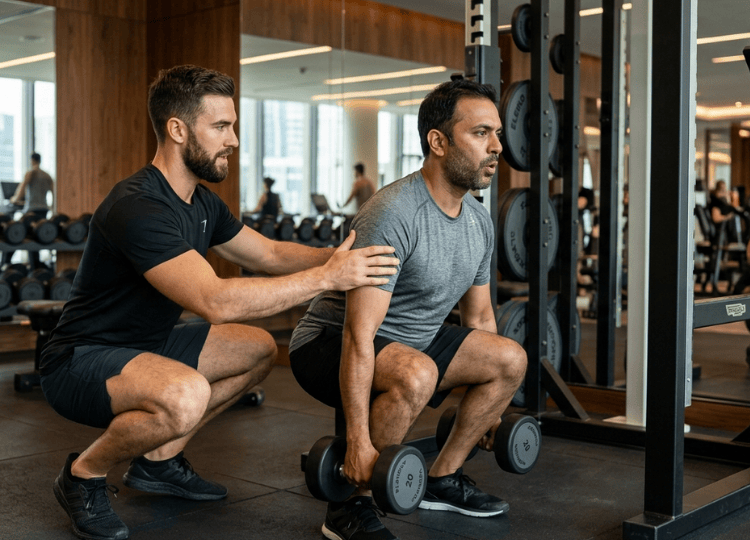
In the fitness and rehabilitation world, we’re used to solving almost everything with movement. When a patient shows up with back pain, the default plan is familiar: improve core stability, clean up hip mechanics, add mobility work, and reinforce better patterns under load. Most of the time, that approach works. Trainers and therapists see people get stronger, move better, and stay out of the doctor’s office, and it reinforces the idea that conservative care is always the answer.
Every professional encounters patients who do not make progress. These are the individuals who can’t stand for more than ten minutes, experience numbness in their legs during warm-ups, or lose strength despite following all the recommended protocols. At this point, the issue isn’t related to programming; it’s structural. When structural damage occurs, such as severe spinal stenosis, high-grade spondylolisthesis, or progressive nerve compression, no amount of mobility drills or core exercises can reverse the problem. This is when trainers need a medical plan B and know where to find the best available spine surgery.
When Conservative Care Stops Working
Most people with back pain can get better with conservative care, better movement, targeted strength, and consistent training. But some patients show up, do the work, are consistent, and they still get worse. They can’t stand up through a warm-up; their leg goes numb on a walk; they lose strength in ways that don’t match effort or technique. It is evident at this point that the problem is not functional.
Some conditions do not respond to care based on movement:
- Severe spinal stenosis, when the canal is so narrow that every minute spent upright feels like a neurological stress test.
- High-grade spondylolisthesis occurs when a vertebra has slipped significantly, leading to true mechanical instability.
- Large herniations that result in neurological deficits, especially with weakness or foot drop.
- Post-traumatic instability, when the spine cannot maintain its position under load.
- Progressive myelopathy, in which spinal cord compression gradually erodes coordination and balance.
These aren’t just “tight hips” or “weak glutes” problems. They are failures in structure. Conservative treatment can help relieve symptoms, but doesn’t address the mechanical issues. It’s important to know when the spine needs surgery rather than just movement-based treatment.
The Data: Why Trainers Need a Medical Plan B
When conservative care fails, it’s rarely because the patient didn’t try hard enough. More often, the underlying structure simply will not support improvement. And the numbers back it up. According to the North American Spine Society, up to 30% of patients with severe lumbar stenosis eventually require surgical decompression after exhausting non‑operative options.
The same is true for spondylolisthesis. A 2023 study in The Spine Journal found that patients with grade II–III spondylolisthesis had a 68% failure rate of conservative treatment. After the vertebra has slipped enough, the segment is no longer stable enough to fix itself with exercise alone. Strength helps, but it can’t realign bone or relieve pressure on a nerve root that’s already compromised.
Why Germany Leads in Complex Spine Surgery
When conservative care fails, surgical infrastructure is decisive, and Germany is always a forerunner. According to OECD data, there are over 1,000 spine surgeries per million people annually. This is the outcome of a system designed for high-volume, high-precision spine care, not fame.
Germany’s Federal Joint Committee (G-BA) has strict volume thresholds, reporting rules, and equipment standards. Hospitals must meet these criteria to be allowed to operate, creating a network of true Spine Centers of Excellence – dedicated units in which surgeons perform hundreds of identical procedures per year. With this repetition, it leads to mastery and predictability.
Germany’s other advantage is its technology. Techniques such as navigation, neuromonitoring, and full-endoscopic surgery became standard practices there long before they gained popularity in other regions. Motion-preserving implants are commonly used and supported by extensive long-term follow-up data. High-precision equipment is standard practice rather than a luxury.
What “Centers of Excellence” Actually Mean
In Germany, a Spine Center of Excellence isn’t just a strong orthopedics department. It is a unit that has been set up to perform complex spine surgery in the same way, every time, with dedicated teams and dedicated equipment. These centers run spine‑only operating rooms and rely on coordinated multidisciplinary teams, including top spine specialists in Germany with 20–30 years of single‑field experience.
Standardized care pathways from imaging to rehab reduce variability and risk. The strict requirements of the G-BA and the high annual procedure volumes ensure that the complication rates in these centers are always below the EU average. A German spine center is not a hospital that performs spine surgery. There’s a hospital built around it.
Why Trainers Should Care
Often trainers and rehab professionals are the first to recognize that symptoms are no longer due to training issues. Signs like numbness when walking, trouble standing through warm-ups, and a loss of strength that doesn’t match the effort are signs of trouble below the surface. Usually, these warning signs are evident long before the person goes to the doctor, right there in the gym. This puts trainers in a special position: not to diagnose, but to recognize when movement can’t solve a structural problem and to refer the patient to proper medical evaluation.
When surgery becomes the likely next step, it’s crucial to know where high-level spine care is available. Patients trust their trainers, and this guidance can prevent delays, frustration, and worsening neurological symptoms. Caring about surgical pathways isn’t stepping outside the role – it’s protecting patients when the spine needs more than strength and mobility.
Once a patient reaches the point where conservative care is no longer enough, the next challenge is knowing where to send a patient. The difference between a general orthopedics department and a high‑volume spine center is significant – outcomes depend on specialization, surgeon experience, and the infrastructure behind the procedure.
Cross-border care can seem complicated, but really it’s a matter of having the right information. Trainers need to know whether a surgeon is qualified for complex decompressions or fusions, whether a hospital specializes in conditions like stenosis or spondylolisthesis, and how costs differ across countries. It is also important to know whether there are modern methods available, e.g., endoscopic surgery or motion-preserving implants.
In modern health care, a reliable medical navigation tool can be useful. Trainers can send patients to a platform that aggregates all relevant information in one place, rather than relying on piecemeal reviews or hospital marketing pages. A good example is Airomedical, a cross-border healthcare hub that provides comprehensive information, including profiles of surgeons, details on hospital specializations, outcome statistics, and cost comparisons. It is a resource that professionals use a lot. This provides a solid starting point for patients, which is often missing when making decisions about healthcare options abroad.
For patients experiencing progressive neurological symptoms, having access to this kind of structured information can reduce the time between “I think something is wrong” and “I’m finally getting the right treatment.” And for trainers, it’s a way to work within their scope while leading patients to the right level of care for their condition.
Case Examples
Trainers see certain patterns repeat themselves. One patient with lumbar stenosis tried everything – strength work, mobility, careful progressions – but standing still became almost impossible. After a decompression surgery at a specialized spine center, he returned to training without the neurological symptoms that had been plaguing him.
Another patient had a significant disc herniation causing significant weakness. Therapy provided comfort but did not enhance strength. Minimally invasive endoscopic discectomy relieved the nerve compression and the weakness gradually improved during post-operative rehabilitation.
These stories are common scenarios. They show the moment when structural problems stop responding to conservative care and when surgery becomes the right next step.
FAQ
When does conservative care reach its limit?
When a patient does everything right, follows the program, stays consistent, and symptoms are still getting worse. The clearest red flags are neurological ones: weakness, numbness, loss of reflexes, difficulty standing or walking.
What are the signs that it’s time to see a doctor, rather than just tweaking the program some more?
Non-exertional symptoms are pain that gets worse when standing, unexplained loss of strength not due to fatigue, or changes in coordination. These signs are more suggestive of a structural compression than of a functional failure.
How can I tell whether surgery is actually necessary?
That decision belongs to the surgeon, but trainers often see the early clues. If a patient follows a well‑designed program and still deteriorates, anatomy – not effort – is the limiting factor. In those cases, a surgical evaluation is appropriate.
What should a patient look for in a spine surgeon or center?
Patients should seek a spine surgeon or center that specializes in their specific condition, has a high volume of procedures performed annually, offers access to neuromonitoring, utilizes endoscopic or motion-preserving techniques, and provides transparent data on complications.
How can trainers help patients to safely navigate cross‑border care?
By providing them with reliable information. Many professionals use cross-border tools that give access to surgeon profiles, hospital specializations, outcome statistics and cost comparisons. These resources help patients to explore their options and choose a hospital that is suitable for their condition.
References
- North American Spine Society (NASS). Evidence-Based Clinical Guidelines for Multidisciplinary Spine Care: Diagnosis and Treatment of Degenerative Lumbar Spinal Stenosis. North American Spine Society. 2020.
- Kozina J. & Dr. Ahmed F. Ranking Best Neurosurgeons for Spine Surgery in Germany. Airomedical. 2026.
- Moller H., Hedlund R. “Nonoperative Treatment Failure in Grade II–III Spondylolisthesis: A Prospective Cohort Analysis.” The Spine Journal. 2023.
- Organization for Economic Co‑operation and Development. OECD Health Statistics 2022: Procedures per 1,000,000 Population. OECD Publishing. 2022.
- Dr. Volvak Marta & Dr. Ahmed F. Best Hospitals In Germany – TOP 25. Airomedical. 2025.
- Federal Joint Committee (G‑BA). Richtlinie zur Qualitätssicherung: Mindestmengenregelung für Wirbelsäulenchirurgie. Gemeinsamer Bundesausschuss, Berlin. 2021.