

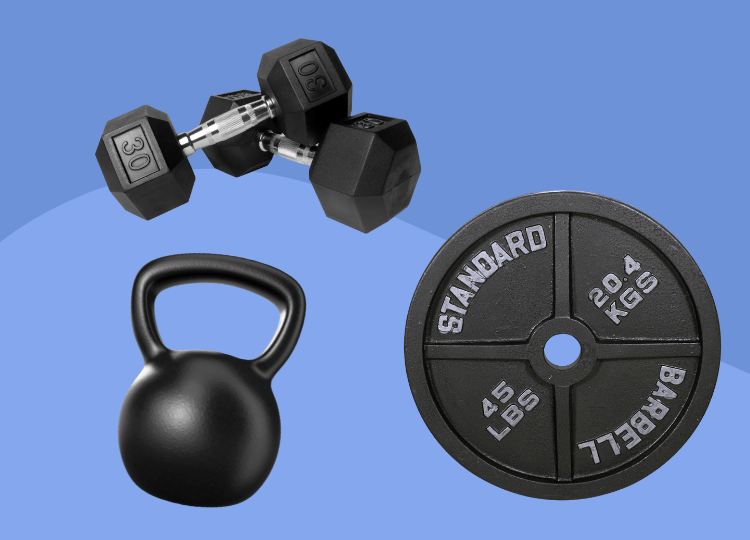
Walking into the free weights section of a gym for the first time can be genuinely intimidating, and most gym inductions don’t cover it well enough. There’s a wide range of equipment, it’s not always obvious what each piece is for, and there’s an unspoken culture around it that can make beginners feel out of place before they’ve even picked anything up.
This guide cuts through that.
Below we cover the 8 most common types of free weights you’ll find in a gym, what each one is best suited for, and what to be aware of when using them, whether you’re training in a gym or building out a home setup.
Is it just easier to stick with cardio equipment?
It can definitely be a bit overwhelming trying to get your head around the free weights section of a gym… but the benefits free weights and resistance training offers everyone is too good to ignore. Hopefully this gym equipment guide will help you feel more confident in what equipment to use, whether you’re in the gym or buying gear to use at home.
Selecting the Right Weight
Ultimately, regardless of the types of free weights you choose, the actual weight of the equipment is going to play a vital role in achieving your goals.
Light free weights will be better suited to HIIT and high-rep workouts. In contrast, heavy free weights will be better suited to strength and muscle-building workouts. If you’ve ever visited a gym equipment factory, you’d see firsthand how weights are designed for different training styles—from compact dumbbells perfect for fast-paced circuits to heavy-duty barbells built for serious lifting, and the same thinking carries over when you’re choosing gym equipment for personal training spaces. Understanding this can help you select the right equipment to match your training needs.
At a Glance – Navigating Popular Free Weights at the Gym
- Dumbbells
- Barbells with Olympic Plates
- Kettlebells
- Medicine Ball
- Slam Ball
- Battle Ropes
- Sled
- Sandbags
What Do We Mean By “Free Weights”?
What Do We Mean By “Free Weights”?
The term “free weights” describes equipment that isn’t fixed to a machine, meaning you can pick it up, move it freely, and use it across a wide range of exercises. Dumbbells, barbells, kettlebells and the like all fall into this category.
Gym machines, by contrast, use rails, pulleys, and fixed movement paths that guide the exercise for you. This removes much of the balance and stabilisation demand, which is often presented as a limitation, but is actually a genuine advantage in certain situations.
The honest picture on free weights versus machines is more nuanced than the gym floor debate suggests. Research confirms that free weights produce greater muscle activation during exercises, largely because the body has to work harder to stabilise the weight.
However, a systematic review and meta-analysis found no significant difference between free weights and machines for overall strength gains or muscle hypertrophy when measured in neutral tests, with improvements tending to be specific to whichever modality was trained. In practice, the best approach for most people is to use both: free weights for compound movements and functional strength, machines for isolating specific muscles or training safely around an injury.
One honest caveat for beginners: free weights do carry a higher learning curve than machines, and most reported injuries relate to poor technique or weights being dropped rather than the movements themselves. Starting light, learning the basics, and progressing gradually is the most important thing.
Types of Free Weights in the Gym (with Pictures)
Dumbbells
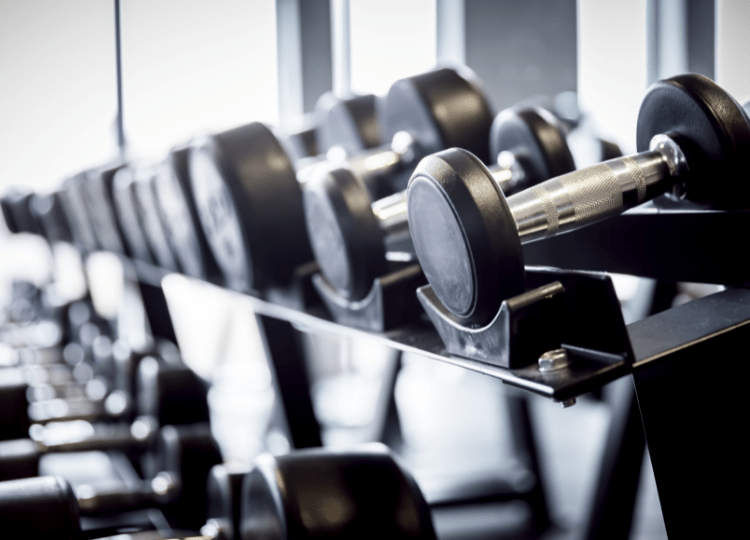
Dumbbells could well be our favourite equipment in the gym. Dumbbells provide a simple yet effective way to add resistance to all sorts of exercises and movements.
They’re a great option for beginners and allow you to just get started quickly.
Dumbbells are incredibly versatile and can be used in all sorts of ways. From using heavy dumbbells for a shoulder press, to selecting lighter dumbbells and doing tone and sculpt workouts, you’ll never get workout-boredom with dumbbells.
Our main advice for using dumbbells is firstly, to just go for it! Don’t feel scared to pick some up and start using them. Secondly, if in doubt, start light. Many seasoned weight lifters will still opt for very light dumbbells to warm up the muscles and get the body ready for heavier sets. Just because someone is lifting a lot of weight next to you, it shouldn’t put you off doing your own thing and starting with some light dumbbells and seeing how you get on.
Similarly, slowly increase the weight if you’re ready to up the resistance. Making big jumps in weight between sets when using dumbbells might mean you suddenly can’t complete the exercise in full.
Most dumbbell exercises will involve holding a dumbbell in each hand, which means you avoid one side of your body over-compensating for the other. You’ll also develop better stability and balance during any sort of lift too, compared to using a barbell, for example.
You can also use dumbbells on a bench to help support certain exercises like a dumbbell chest press.
Dumbbell Friendly Exercises:
- Renegade Row
- Shoulder Press
- Dumbbell Chest Flyes
- Sumo Deadlift
- Single Arm Bent Over Row
- Lateral Raise
Dumbbells = DB
Some fitness apps and workout programs will refer to dumbbell exercises as “DB”.
Our guide on the best dumbbells for women includes a selection of popular dumbbells ideal for home use. If you’re looking for free weights to buy, dumbbells will be cheaper than many other options (especially considering the versatility they offer).
Dumbbells come in a range of shapes, sizes and features. We’ve listed 3 of the common variations to the classic rubber dumbbells.
Hex
Hex dumbbells have 6 flat edges, which provides some additional benefits…namely, you can rest the dumbbells on the floor, without them rolling.
Beyond this just being convenient, it also opens up more exercises, such the devil press, renegade row, and dumbbell push-up.
Adjustable
Adjustable dumbbells are those where you can adjust the weight. These can either be all-in-one dumbbells, which are great for home use, or ones that use plates, whereby you can add or remove plates to make the dumbbells heavier or lighter.
Barbells with Weighted Plates
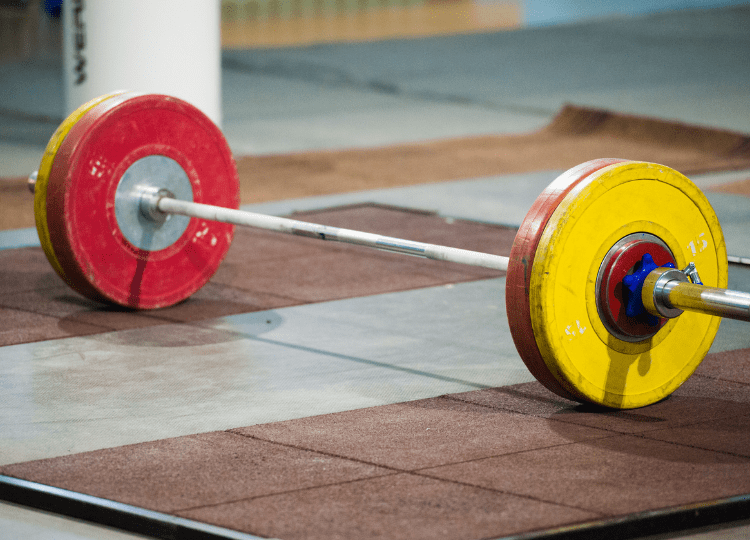
Arguably the most iconic piece of weight lifting equipment, the barbell (and accompanying plates) is the ideal solution for those looking to focus on power and strength.
Barbells make it easy to continuously load on more plates and up the weight (perfect for progressive overload training). This is a really effective way to build strength, power and muscle mass.
The barbell is probably the most popular choice for the big 3 compound exercises – deadlift, squat and bench press.
These exercises engage lots of muscle groups and together, you can actually train your whole body pretty effectively without adding in any other movements.
There’s absolutely nothing wrong with opting for lighter weights on a barbell, but traditionally, this equipment has been associated with heavier lifts. Whether you decide to go for light or heavy repetitions, the main thing to remember when using a barbell is that technique is incredibly important.
To add weight to a barbell, you can load up the required plates. Plates vary from gym to gym. Some gyms may opt for iron plates, but most modern gyms will use rubber plates.
Olympic plates are usually colour-coded, indicating the weight (Olympic plates get the name because they are the type of plates used in Olympic lifting).
Alternatively, other gyms may use barbells that come with handles for easy loading.
Barbell Friendly Exercises:
- Back Squat
- Deadlift
- Overhead Press
- Bent Over Row
- Bench Press
Barbell = BB
Some fitness apps and workout programs will refer to barbell exercises as “BB”.
You’ll see people use barbells on the bench press, squat rack and on the floor.
A Smith Machine is basically a barbell built into a squat rack. Although this somewhat restricts the natural movement (and so does draw criticisms), it does provide an effective way to get used to barbell exercises, so that might be an option if you’re a beginner.
If you’re buying a barbell for your home gym, you just want to ensure you’re buying plates that will fit the barbell you’ve selected. Most websites will make this very clear and most barbells are standard, but this is just something to be aware of. This is why we tend to opt for Olympic barbells and plates to standardize the size.
There are actually a few variations to the barbell, as discussed below.
Standard Straight Barbell
This is the regular, straight barbell. This is ideal for bench press, deadlifts and squats.
EZ-Bar
The EZ-bar is basically a type of bar designed predominantly for bicep curls. If you want to focus on your biceps, this will allow for a more natural grip when curling, as opposed to using a straight bar.
It also tends to be much shorter than a regular barbell.
Trap Bar
The trap bar is a variation popular for deadlifting. It puts less pressure on your spine compared to deadlifting with a regular straight bar and many say it is easier for beginners.
Thick Grip Bars
Thick grip bars are thicker than regular barbells. This is useful for those who want to improve their grip strength as they do compound lifts.
Kettlebells
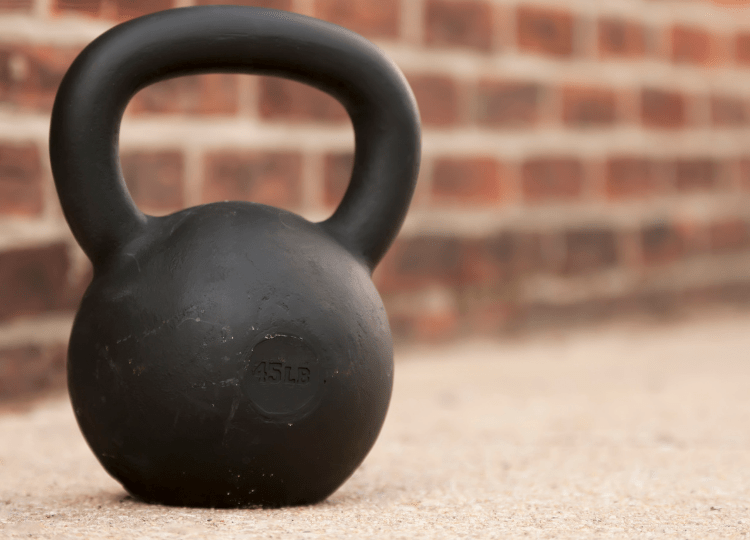
Kettlebells have gained an almost cult-like following in recent years, with many opting for this type of free weight when exercising.
Kettlebells are popular in CrossFit workouts, and open up lots of different exercises to try. As well as developing functional strength, kettlebells can often lead themselves better to cardio HIIT workouts compared to using barbells, for example.
Kettlebell swings are probably the most iconic exercise for this equipment.
Where people go wrong with kettlebells is often just by selecting the wrong weight. Unless you’re experienced, you’re always better off opting for a light kettlebell to ensure your technique and form are correct.
Kettlebell Friendly Exercises:
- Goblet Squat
- Kettlebell Swing
- Kettlebell Row
- Kettlebell Straight Leg Deadlift
- Turkish Get Ups
The drawback to kettlebells is that certain exercises, like the kettlebell swing, really does need perfect technique… otherwise you risk injury. Also, if you’re buying for home use, you’ll need to decide what weight kettlebell to get, and if you actually would benefit from kettlebells of varying weights.
Medicine Ball
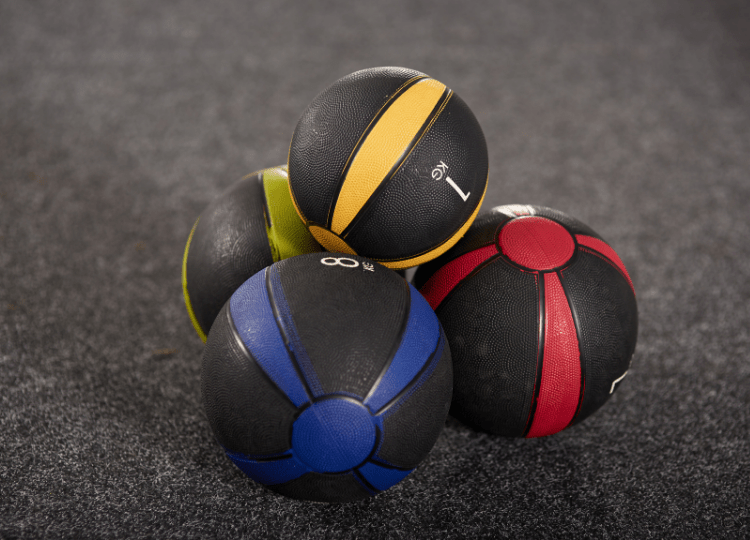
Medicine balls are another simple but effective piece of fitness equipment.
Medicine balls are basically heavy soccer balls – usually going up to 50 lbs.
Based on this weight limit, they don’t support the type of strength training exercises like barbells, dumbbells or kettlebells could. Instead, they are better for functional movements and rehab.
They can also help in training athletes, by improving strength as well as coordination and other ball skills.
Medicine Ball Friendly Exercises:
- Russian Twists
- Wall Balls
- Goblet Squats
As far as strength training goes, medicine balls are unlikely to be the main equipment used, but it could be something that you use to supplement some workouts, especially if you play sport and want to improve coordination and ball skills.
Slam Ball
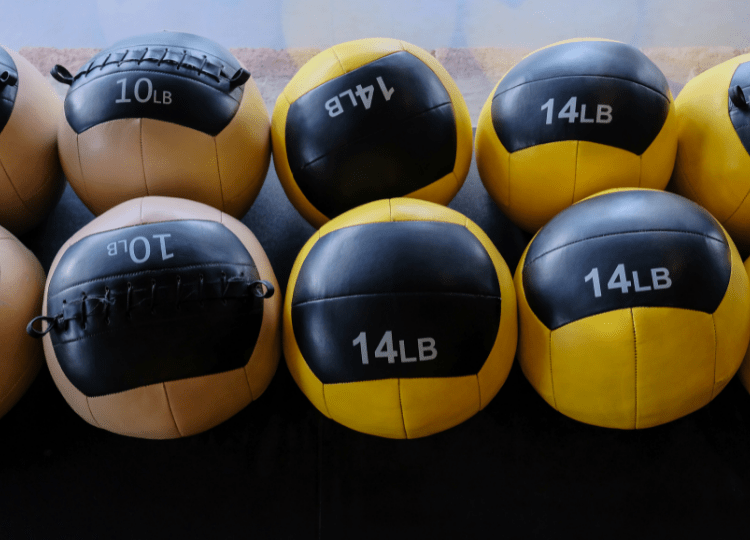
Slam balls are a popular piece of functional fitness equipment and something you’ll see in circuit training and gyms like CrossFit and 45 Training.
They often look very similar to medicine balls but have one very clear objective… not to bounce!
This ability to prevent any bounce, means you can “slam” them on the floor… which makes for quite a fun and effective workout.
Slam Ball Friendly Exercises:
- Ball Slams
- Overhead Squats
- Squat Ball Throw
Battle Ropes
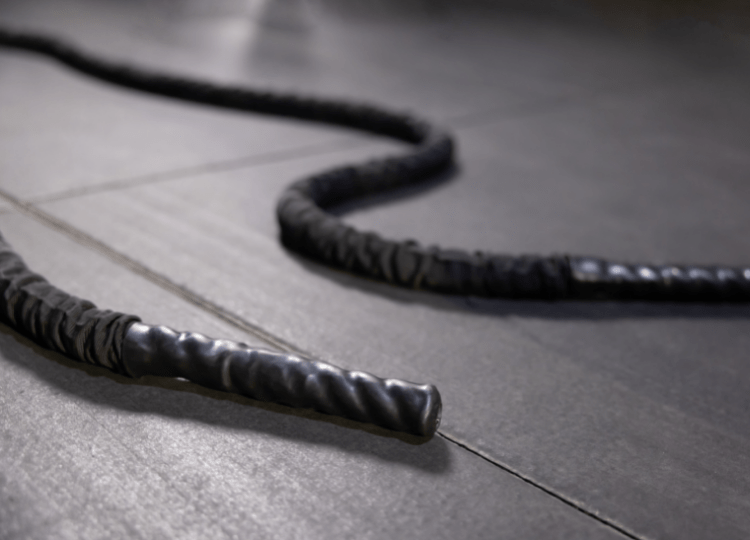
Battle ropes are quite a new addition to gyms, but well worth using if you’re into functional HIIT style workouts.
Battle ropes are basically just thick, heavy ropes. By looping them around a fixed point, you can perform all sorts of movements.
Although it may look quite straight forward to shake the rope in a “wave” motion, you’ll soon feel an almighty burn in your shoulders, arms and back.
Battle ropes are also often underrated and seen just for shoulder or HIIT workouts, but you can get very creative with them and target a variety of muscle groups. We often use them as a replacement for a slam ball… as you can “slam” them down on the ground without them bouncing up.
A few minutes using battle ropes will undoubtedly get your heart rate up and muscles fatigued… so if you’re short on time, this is a great piece of equipment to use.
Battle Rope Friendly Exercises:
- Jumping Rope Slams
- Coordinated Arm Waves
- Alternating Waves
- Wide Circles
Sled
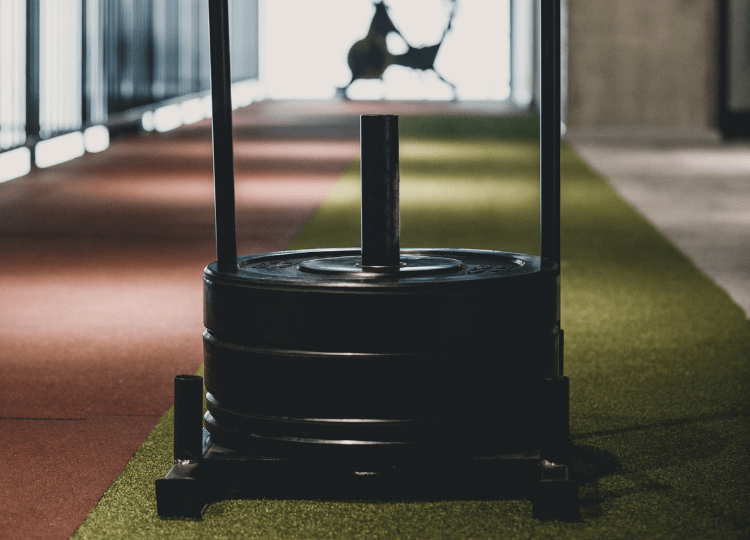
You need a bit of space to fully enjoy the benefits of a sled (and many gyms simply won’t have the space), but this equipment is great for functional workouts, especially for those who want to train the legs without doing common exercises like squats or lunges.
You can push and pull a sled… but you can also attach a battle rope to it, and pull it whilst sitting to turn it into an upper body workout.
Sleds usually allow you to simply load on barbell plates – so you can adjust the difficulty.
A lighter sled is better for more of a cardio focus workout, whilst a heavier sled will require more strength and power.
Sled Friendly Exercises:
- Forward Push
- Backward Pull
Sandbags
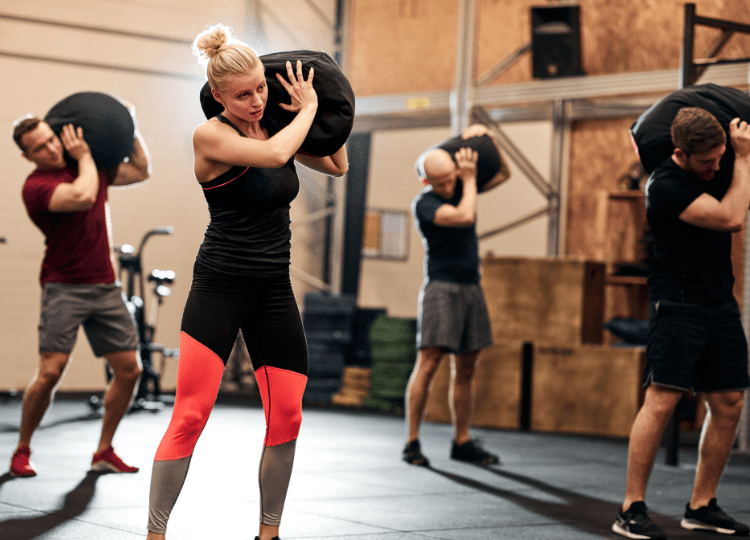
Sandbags are another versatile piece of equipment you may want to use in the gym.
Sandbags are quite self explanatory… they are literally bags (usually a cylindrical shape) filled with sand. These come in varying weights so you can select one most appropriate to your fitness level.
If you’re bored with, or simply don’t like using, the more common free weights like barbells and dumbbells, sandbags offer quite a different workout experience and you may find it brings some new energy to your workouts.
Sandbag Friendly Exercises:
- Squat
- Lunge
- Overhead Squat
- Deadlift
Bulgarian bags are also very similar to this as well. These are less common and better for grip and upper body functional strength.
Bottom Line
Free weights are versatile, effective, and worth getting comfortable with, but they’re not categorically better than machines, and you don’t have to choose between the two.
Research suggests that both produce similar results for overall strength and muscle growth when programmed properly. What differs is how those results are achieved: free weights demand more stabilisation and coordination, which builds functional strength and transfers better to sport and daily life.
Machines offer more guided, controlled movement, which makes them safer for beginners and more effective for isolating specific muscles.
A good programme will typically use both. Use free weights for compound movements like squats, deadlifts, rows and presses, where the stability demand adds value.
Use machines to supplement, isolate weaker muscle groups, or train safely around discomfort. And if you’re new to the weights section entirely, starting with machines to learn basic movement patterns before transitioning to free weights is a perfectly sensible approach that the research supports.
Related Articles
How to Combine Yoga and Strength Training