

Most of my clients over 40 don’t come to me wanting a six-pack. They come with a stiff lower back, a heel that screams with the first steps out of bed, or a shoulder that suddenly can’t reach the top shelf.
And nearly all of them say the same thing: “I don’t have an hour a day to stretch.” I know. Neither do I.
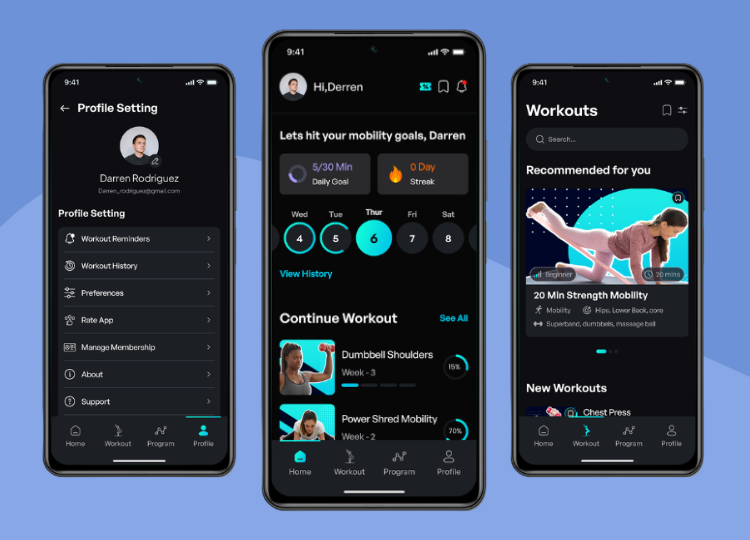
That’s the problem the Sporty Doctor app is trying to solve. It’s a mobility app built by a board-certified sports medicine doctor, with a short “Daily Dose” routine every day and paid programs for common aches like plantar fasciitis, tennis elbow and chronic back pain.
For this Sporty Doctor app review, I used both the free and paid versions and followed a variety of workouts and programs.
In a hurry? Here’s the tl;dr…
I love mobility apps and find a few minutes of targeted stretching and mobility work a day to be incredibly transformative for most people. Sporty Doctor is a great app with a generous free plan and a paid version for more structured programs. With a 7 day free trial on the Plus version, it’s definitely worth a try.
Sporty Doctor at a glance
If you just want the quick facts, here they are.
| Made by | Mission Demand LLC (Dr. Kristina DeMatas and Darren DeMatas) |
| Platforms | iPhone (iOS 15 or later) and Android |
| Price | Free; Plus is $19 a month or $99 a year; single programs $39 one-time |
| Free trial | Yes – 7 days of Plus (card required) |
| App Store rating | 4.9 out of 5 (16 ratings, November 2026) |
| Workout length | 5 to 30 minutes |
| Equipment | None needed; optional bands, dumbbells or a chair |
| Best for | Adults over 40 with stiffness or common, mild aches |
Pros
- A free 5-minute routine every day, no card needed
- Feels very personalized based on equipment, target areas and your goals
- High quality programming, designed to get results
- Created by a real, board-certified sports medicine doctor
- Gentle programs and seated options for all levels
- Quality video exercise demonstrations that show setup and common mistakes
- $99 a year is cheaper than most mobility apps with similar features
Cons
- Requires an internet connection (no offline mode)
- No exercise swaps
Who’s behind Sporty Doctor (and is she a real doctor?)
These days every second fitness app seems to be “doctor-approved,” so this was the first thing I checked.
The good news… this one is the real deal. Sporty Doctor was created by Dr. Kristina DeMatas, DO. According to her Mayo Clinic profile, she’s a sports medicine specialist and family physician at Mayo Clinic in Jacksonville, Florida, and an Assistant Professor of Family Medicine at Mayo Clinic College of Medicine and Science.
She’s board-certified by the American Board of Family Medicine in both Family Medicine (2011) and Sports Medicine (2012), after a sports medicine fellowship. Her areas of expertise include assessing athletic injuries and preventive care. So yes, she spends her working week looking at exactly the kind of aches this app targets.
Quick explainer on “DO”: a Doctor of Osteopathic Medicine is a fully licensed physician, just like an MD. DOs receive training in the musculoskeletal system and osteopathic principles, including approaches to assessing and treating problems affecting muscles, bones and joints.
How Sporty Doctor works
Getting started is refreshingly quick. The app asks about your goals, the areas you want to work on and the equipment you have. I picked hips and lower back (my own desk-day stiffness has been creeping up lately) and said I had a resistance band. The whole thing took a couple of minutes.
From your answers, it picks ten moves “matched to you.” Those ten moves become the building blocks for your free daily routine.
The Daily Dose
The Daily Dose is the heart of the app, and it’s free forever. Every day you get a fresh short routine built from your matched moves. The website says 5 minutes; but give yourself a few minutes extra to get in and out of positions if your movement is limited.
It’s bodyweight only and gentle enough for days when you feel stiff, tired or just not in the mood. I did mine first thing in the morning, before coffee (a big ask, I know), and it became a habit faster than I expected.
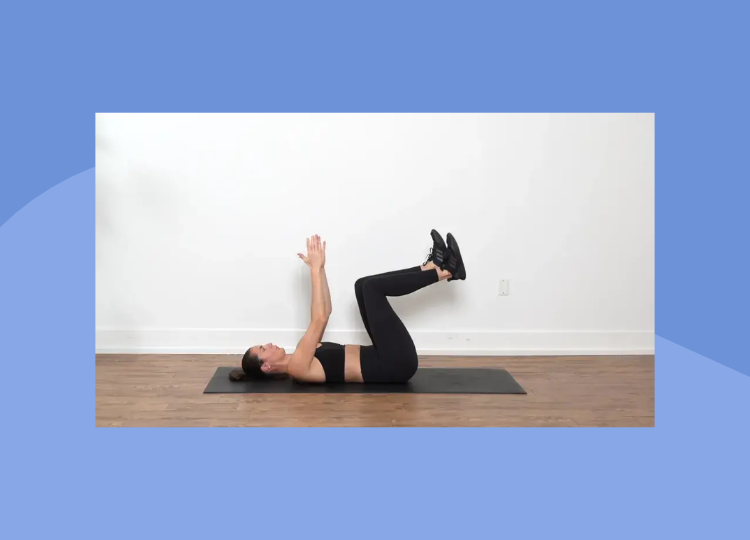
Every move has a guided video with voice cues on form and pacing. My favorite part? Each video shows how to set up and a common mistake to avoid. That’s exactly what I’d be correcting if I were standing next to you. You can preview a move first, add rest time between exercises and pause whenever you need.
And there are no long intros. You press start, and you’re moving.
Workouts and programs
Once you’ve outgrown the Daily Dose, the library mixes 5 styles: mobility, stretching, pilates, yoga and strength. Workouts run from 5 to 30 minutes and are labeled from Gentle to Hard. You can filter by length, difficulty, focus and equipment.
Most workouts are bodyweight, and some add a band, dumbbells or a chair. There are seated and standing options too. On one particularly busy day I did a seated routine from a kitchen chair, and my hips still felt looser afterward. If you like working from a chair, these seated stretches for posture and flexibility are a good add-on.
Then there are the premium programs, which are multi-week plans for specific problems:
- Plantar Fasciitis Protocol
- Tennis Elbow Recovery Protocol
- Chronic Back Pain Reset (six weeks, three short sessions a week)
- Strong & Steady Hips
- Posture Power and Everyday Posture Reset
- Sweat-Free Mobility
- Bodyweight Mobility Mastery
- Total Body Strength Builder
During my trial I tried Strong & Steady Hips and part of the Chronic Back Pain Reset. Both felt carefully put together: slow progressions, nothing that made me wince, and clear cues on which muscles should be doing the work.
Tracking and streaks
The app keeps a daily streak, a full history of your workouts and some simple stats. You can save favorite workouts too.
I’ll admit I rolled my eyes at the streak at first. Then, on a couple of mornings, it was the only reason I got on the mat. Fine. It works.
On iPhone, it connects to Apple Health to show steps, distance, active energy and flights climbed. If you wear an Apple Watch, it logs heart rate and energy burned during workouts.
Sporty Doctor programs: what the evidence says
A program with a name like “Chronic Back Pain Reset” makes a big promise, so I wanted to see whether exercise actually helps with each of these problems. Here’s what the research says.
| Program | What the evidence says |
|---|---|
| Plantar Fasciitis Protocol | More than 90% of people improve within 10 months with simple treatments, with calf and plantar fascia stretches a core part of that, according to the American Academy of Orthopaedic Surgeons (AAOS). |
| Tennis Elbow Recovery Protocol | The AAOS says 80% to 95% of people get better without surgery, and forearm strengthening exercises help. Cleveland Clinic says it usually takes about six months to recover, and up to 18 months for some. |
| Chronic Back Pain Reset | The American College of Physicians recommends starting with non-drug treatments like exercise, yoga and tai chi for chronic low back pain. |
| Strong & Steady Hips | The American College of Rheumatology strongly recommends exercise for people with hip and knee osteoarthritis (the “wear and tear” kind of arthritis). |
| Shoulder and posture work | Frozen shoulder usually improves within one to three years, and range-of-motion exercises are the first-line treatment, according to Mayo Clinic. It’s most common in people over 40, especially women. |
So Sporty Doctor’s approach lines up with mainstream medical advice, but if you have any current injuries or pain, it’s always recommended to speak to a healthcare professional first, before starting any new exercise program, even stretching.
Sporty Doctor price: free vs Plus
Here’s the bit everyone scrolls down to. This is what you get with each option:
| Free | Plus | |
|---|---|---|
| Daily Dose | Yes | Yes |
| Recommended moves | 10 | Unlimited |
| Guided video for every move | Yes | Yes |
| Streaks and history | Yes | Yes |
| Full workout library | No | Yes |
| Longer workouts | No | Yes |
| Premium programs | No | All, plus new ones as they launch |
| Price | $0 | $19 a month or $99 a year |
The annual plan works out to about $8.25 a month, so it’s much better value than paying $19 monthly. Plus comes with a 7-day free trial. You need to enter a card to start it, but you won’t be charged until the trial ends, and the company says it emails a reminder on day 6.
If you’ve only got one problem, you can buy a single program for $39 as a one-time purchase. That’s the cheaper route if you just want, say, the Plantar Fasciitis Protocol and don’t care about the rest of the library. If you’d use two or more programs, the $99 annual plan wins.
There’s also a coaching add-on. “All Access + Personal Training” costs $99 a month and includes monthly one-on-one video calls with coach Dallas Girolamo, plus a custom plan.
A few things to know before you hand over your card:
- Where you buy matters for refunds. The 30-day money-back guarantee only covers your first purchase made directly on sportydoctor.com. If you subscribe through the App Store or Google Play, you’ll need to ask Apple or Google for a refund.
- Deleting the app doesn’t cancel your plan. Cancel in your account settings (or through Apple or Google if you bought there). You keep access until the end of the billing period.
What I liked
There’s a lot to like here, especially for the people I coach.
- It’s short enough to actually do: Five minutes is a promise most people can keep, and that matters more than it sounds. In my experience, and in rehab research, home exercise programs get skipped a lot, usually because they take too long. The best routine is the one you’ll actually do.
- A real doctor is behind it: Knowing a board-certified sports medicine physician chose every move gave me far more confidence than an app fronted by someone with a ring light and a discount code.
- It meets you where you are: Gentle levels, seated options and no equipment make it realistic for people coming back to exercise or feeling creaky.
- The coaching cues and video demonstrations are great: Showing the setup and a common mistake for each move is exactly what’s missing from most free stretching videos. Each move is also clearly labeled so you know what it works and how it benefits you.
- The free version stands on its own: You could use only the Daily Dose and still get real value.
- The price is fair: At $99 a year, Plus costs less than most of the bigger mobility apps.
Things to Consider
No app is perfect, and the main things I’d hope to see on the next update would be addressing:
- Requires an internet connection (no offline mode): When testing on an Android device (Apple may be different), I couldn’t actually open or use the app without signal. Most of the time, this wasn’t an issue for me as I was using the app at home, but if I wanted to use it in a gym that had poor signal, it might have been more of a dealbreaker.
- No exercise swaps: It could be useful in some instances to swap exercises for similar ones. You can make the whole experience feel very personalized already, but this would take it to another level.
Who Sporty Doctor is for (and who should see a professional first)
This is where I’d be picky if you were one of my clients.
Sporty Doctor is a good fit if you:
- Are over 40 and feel stiffer than you used to
- Sit at a desk most of the day
- Are getting back into exercise after a break
- Have a mild, recurring ache, like heel pain in the morning or a stiff lower back (if it’s your heel, start with these exercises and stretches for plantar fasciitis)
- Want something you can do in five to ten minutes
It’s not the best pick if you’re an athlete chasing advanced mobility goals like the splits, or you want long, flowing yoga classes. Other apps do that better (more on those below).
And please see a doctor or physical therapist before you start if you have a new injury, numbness or tingling, pain that’s severe or getting worse, or you’ve had recent surgery. The app’s own medical disclaimer also says to check with your doctor first if you have a chronic condition, are pregnant or postpartum, take medication, or are over 65 and not currently active. Stop and get help right away for chest pain, dizziness or shortness of breath.
Tip: The Daily Dose is a great start, but it isn’t a full workout plan. The CDC recommends adults over 65 do muscle-strengthening activities at least two days a week, plus balance work and 150 minutes of moderate activity like brisk walking. The American College of Sports Medicine suggests stretching at least two to three days a week, and notes that older adults may benefit from holding each stretch for 30 to 60 seconds rather than the usual 10 to 30. We also lose muscle with age, as much as 3% to 5% per decade after 30, so the strength workouts in Plus are worth using, or pair the app with a simple strength training program for over 50s.
Sporty Doctor vs alternatives
I’ve spent time with Pliability and GOWOD in the past, so here’s how Sporty Doctor stacks up. For a wider look, see our roundup of the best mobility apps.
| App | Price (US) | Best for |
|---|---|---|
| Sporty Doctor | Free; $99/year for Plus | Adults over 40 with stiffness or common aches |
| Pliability | $19.99/month or $179.99/year | Athletes; huge library of 1,500+ videos |
| GOWOD | About $16.49/month or $144.99/year | CrossFit and functional fitness; mobility test |
| StretchIt | $19.99/month or $159.99/year | Flexibility goals like splits and backbends |
| Bend | Free, with paid Pro | General stretching |
Sporty Doctor app review verdict: is it worth it?
Overall, I think Sporty Doctor is a great mobility and stretching app, priced very well in comparison to similar apps. If you’re over 40, stiff and short on time, Sporty Doctor is one of the easiest ways I’ve found to build a daily mobility habit.
With a free version available, it’s definitely worth trying for yourself at the very least.
If they release some more programs and increase the exercise library, there’s also no reason why it couldn’t compete against bigger names in the space like Pliability too.
Related articles