
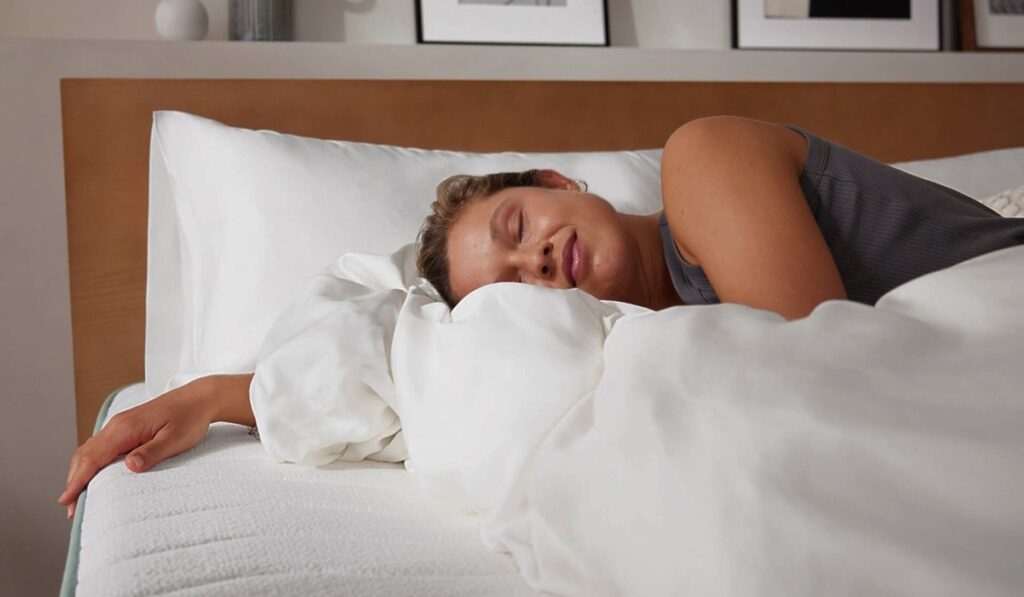
Photo from Koala
When an athlete plateaus, the first instinct is to tweak programming or nutrition. Yet one of the most powerful performance multipliers is often hiding in plain sight: high-quality sleep.
During the first stages of non-REM sleep, growth-hormone secretion peaks, muscle protein synthesis accelerates, and cortisol levels nosedive. These are all essential ingredients for faster recovery and bigger performance gains.
1. Establish a Rock-Solid Sleep-Hygiene Routine
A consistent sleep schedule is foundational for athletic recovery. Research shows that inconsistent bedtimes can shorten an athlete’s slow-wave sleep, which impairs glycogen restoration and delays tissue repair.
Simply put, the body cannot recover efficiently if it does not know when to shut down. Establishing a disciplined routine signals to your body that it is time to begin the restorative process.
Here are some key action steps to build better sleep hygiene:
- Choose a target bedtime and wake time and stay within a 30-minute window, even on weekends, to regulate your internal clock.
- Create a 30-minute wind-down ritual involving dim lights, focused nasal breathing, and light mobility drills to signal sleep is approaching.
- Set a “digital sunset” at least 60 minutes before bed. While blue-light filters can help, abstaining from screens is the superior solution.
- Aim for a cave-like environment: your bedroom should be dark, quiet, and cool, ideally between 18–20 °C.
For an enhanced effect, add 15 minutes of low-intensity mobility paired with slow nasal breathing to your routine. The slight drop in core temperature and heart rate that this produces can nudge the body toward deep sleep more effectively.
| Pro Tip: A digital sunset 60 minutes before bed is nonnegotiable for regulating your internal clock. Consistency, even on weekends, turns good sleep habits into real performance gains. |
2. Optimise Your Sleep Environment
Your sleep surface is a critical yet often overlooked factor in recovery. A mattress that traps heat or lacks adequate support can trigger micro arousals, elevate cortisol, and pull you out of deep sleep. This directly affects your power output and focus the next day.
Look for mattresses with helpful features such as zoned support foam to maintain spinal alignment. Some models, such as Koala’s expertly engineered mattress, also use open-cell construction to improve heat dispersion, addressing key factors that disrupt restorative sleep.
Your environment checklist should include:
- A supportive, pressure-relieving mattress that keeps your spine in a neutral position.
- Blackout curtains or a quality eye mask to eliminate light pollution.
- A white-noise or pink-noise app to mask disruptive sounds.
- A room temperature set between 18–20 °C to facilitate a drop in core body temperature.
- The bedding weight is appropriate for the climate to avoid overheating.
| Key Insight: Every time you toss and turn from heat or discomfort, you risk being pulled from deep restorative sleep. An optimized sleep environment is about minimizing these hidden, recovery-killing micro-arousals. |
3. Sync Your Circadian Rhythm & Outsmart Jet Lag
A misalignment in your body’s internal clock, also known as the circadian rhythm, can dramatically hinder peak athletic performance. When your internal clock is out of sync with your training schedule, you may experience a noticeable drop in power output, impaired decision-making capabilities, and slower reaction times.
Aligning your internal clock with the external world’s light and dark cycles is crucial. This synchronization ensures that vital recovery and performance hormones, such as cortisol and melatonin, are operating precisely on the schedule your demanding training regimen requires.
To solidify your internal clock at home and prepare for optimal performance, integrate the following habits into your daily routine:
- Morning Light Exposure: Securing sunlight exposure within the first 30 minutes of waking is a powerful way to anchor your circadian rhythm. This early light signals to your brain that the day has begun, helping to regulate melatonin production later that evening.
- Implement a Caffeine Curfew: Avoid all stimulants, especially coffee, energy drinks, and pre-workouts, for at least eight hours before your targeted bedtime. Caffeine has a long half-life, meaning it stays active in your system for many hours, disrupting the quality and duration of your deep sleep cycles.
- Proactive Sleep Banking: Consider a strategic approach called sleep banking. This involves deliberately extending your nightly sleep time by 60 to 90 minutes for three consecutive nights before a high-stress event or a major competition. This practice can help build a reserve of alertness and rest, mitigating the impact of any acute sleep loss on the night before the event.
When traveling across time zones, actively manage your body clock well before you depart. Start shifting your sleep and wake schedule by 30 to 60 minutes each day in the direction of your destination’s time zone. Use two primary tools to help you adjust to the new time zone quickly and effectively:
- Meal Timing: Strategic eating can influence your body’s clock. For example, delaying or advancing a major meal to match the new time zone helps cue your digestive and metabolic systems to the new schedule.
- Light Exposure: This is the most potent environmental cue. Seek out bright light when the local time is morning and strictly avoid it in the evening hours when you are trying to initiate sleep.
Research provides strong evidence that prioritizing rest significantly enhances athletic precision and power.
A notable Stanford University study examined men’s basketball players and the impact of extended rest. The researchers found that when the athletes extended their nightly rest to ten hours, there were direct, measurable improvements in their performance metrics. Specifically, their sprint times improved, and their shooting accuracy jumped by a substantial 9%.
These findings align with extensive other research that has repeatedly shown that even mild sleep deprivation can significantly decrease athletic precision, reaction time, and motor skill execution. Adequate sleep is not merely downtime; it is a crucial performance enhancer.
Putting It All Together
When sleep hygiene, environment, and circadian alignment work in concert, they create a powerful synergistic effect. This integrated approach amplifies growth hormone release, speeds up glycogen replenishment, and sharpens cognitive control.
While upgrading one pillar is a good start, optimizing all three acts as a true force multiplier for your recovery. Making small, consistent changes will yield significant returns on your training investment.