

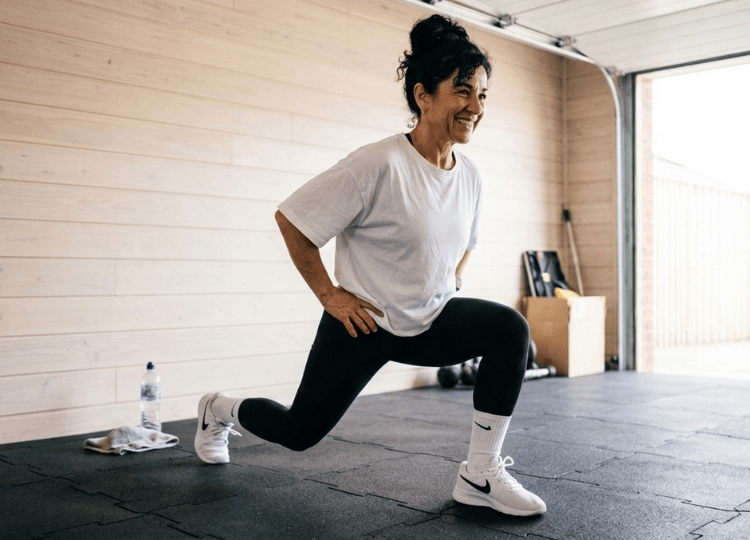
HIIT has a reputation for being intense, fast and unforgiving. For many people over 50, that reputation alone is enough to put them off. That is understandable, but it also misses the point of what HIIT actually is.
The research on HIIT for older adults is compelling. Studies consistently show meaningful improvements in cardiovascular fitness, muscle preservation, metabolic health and VO2 max, one of the strongest single predictors of longevity, with regular HIIT training.
The key is that intensity is always relative to you. Working at a 7 out of 10 effort during a brisk walk is HIIT. So is a fast-paced bodyweight circuit. It is not about jumping or sprinting, it is about pushing your body in a way that is safe, manageable and appropriate for your current level.
That said, HIIT is not for everyone and there is no obligation to do it. Consistent strength training and regular walking are both exceptionally well-evidenced approaches to health and longevity in their own right. If HIIT does not appeal, do not force it.
But if you are curious, this guide gives you 3 HIIT workouts of increasing difficulty, all built around low-impact movements you can do at home with no equipment, alongside everything you need to do it safely and effectively.
What is HIIT and How Does it Work?
High-intensity interval training alternates between periods of higher-effort exercise and periods of rest or lower-intensity movement. The work intervals push the cardiovascular system and muscles harder than they would be challenged during steady-state exercise. The rest intervals allow partial recovery before the next effort begins.
This structure is what makes HIIT time-efficient. Research shows that shorter, harder efforts followed by recovery can produce cardiovascular and metabolic benefits comparable to or greater than much longer moderate-intensity sessions. For those who do not have an hour to spend on a treadmill, HIIT offers a practical alternative.
A typical beginner interval structure for over 50s is 30 seconds of work followed by 30 to 45 seconds of rest, repeated for 3 to 4 rounds of a circuit. As fitness improves, the work interval can increase, the rest interval can decrease, or both.
Looking for more support?
Our guide to the best fitness and workouts apps for over 50s includes programs that focus on HIIT, strength training, cardio, yoga and more.
Low-Impact vs High-Impact HIIT
This distinction matters significantly for over 50s and most HIIT guides for this audience fail to address it clearly.
High-impact HIIT involves movements where both feet leave the ground simultaneously, such as jumping jacks, squat jumps, burpees and high knees. These movements place considerable stress on the knees, hips and ankles, which for many over 50s carries a meaningful injury risk, particularly for those with existing joint issues.
Low-impact HIIT replaces these movements with alternatives that keep at least one foot on the ground at all times, such as step touches, march in place, squats and step-back lunges. Research comparing low-impact and high-impact HIIT has found comparable cardiovascular and metabolic benefits when the effort level is matched, meaning you do not need to leave the floor to get an effective HIIT session.
The workouts below are built around low-impact movements with high-impact progressions offered for those who are comfortable with them.
How to Measure Your Effort
HIIT is defined by effort relative to your own capacity, not by speed or the specific exercises used. A useful guide is the Rate of Perceived Exertion scale from 1 to 10. During work intervals, you should be working at around a 7 to 8 out of 10, meaning you could not hold a full conversation but could say a few words.
During rest intervals, effort drops to a 3 to 4. If the work intervals feel easy enough to chat through, increase the pace or range of motion.
HIIT Workout 1: Beginner
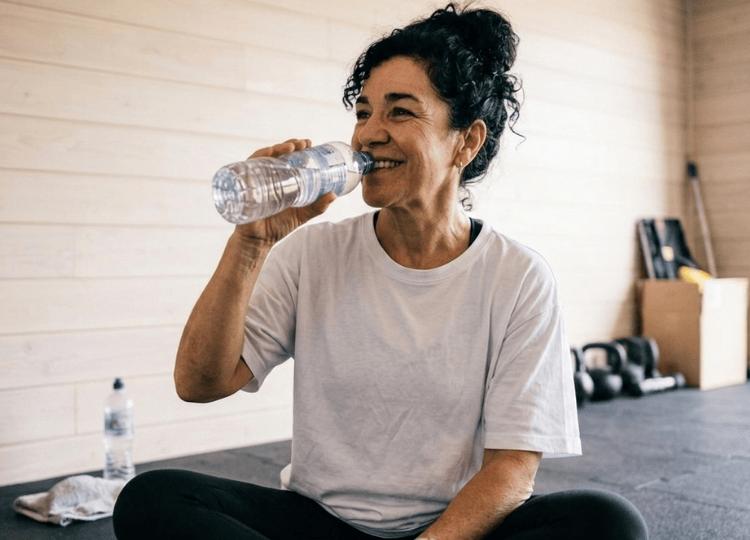
This session is designed for those new to HIIT or returning after a break. All movements are low-impact and can be modified further if needed. The total session including warm-up and cool-down takes around 20 minutes.
Warm-up: 3 to 5 minutes of gentle marching, shoulder rolls and hip circles.
Format: 30 seconds work, 45 seconds rest. Complete 3 rounds of the full circuit with 90 seconds rest between rounds.
| Exercise | Work | Rest |
|---|---|---|
| March in Place | 30 sec | 45 sec |
| Bodyweight Squat | 30 sec | 45 sec |
| Standing Side Tap | 30 sec | 45 sec |
| Step-Back Lunge (alternating) | 30 sec | 45 sec |
| Seated Knee Lift | 30 sec | 45 sec |
Cool-down: 3 to 5 minutes of gentle walking, quad stretch, hamstring stretch and slow deep breathing.
Coach’s Tip: Focus on the quality and range of motion of each movement rather than the speed. A slow, full-range squat at genuine effort is more effective than a fast, shallow one. The rest periods are there for a reason, use them fully before the next interval begins.
HIIT Workout 2: Intermediate
This session builds on the beginner workout with movements that require slightly more coordination and lower body strength. All movements remain low-impact but the effort demand is higher. Total session time is around 25 minutes.
Warm-up: 5 minutes of marching, leg swings, arm circles and bodyweight squats.
Format: 35 seconds work, 35 seconds rest. Complete 3 to 4 rounds with 90 seconds rest between rounds.
| Exercise | Work | Rest |
|---|---|---|
| Squat to Alternating Side Tap | 35 sec | 35 sec |
| Step-Back Lunge with Knee Drive | 35 sec | 35 sec |
| Lateral Step Touch (wide and fast) | 35 sec | 35 sec |
| Push-Up (full or incline) | 35 sec | 35 sec |
| Mountain Climber (slow, controlled) | 35 sec | 35 sec |
Cool-down: 3 to 5 minutes of full body stretching, focusing on hip flexors, hamstrings and chest.
Coach’s Tip: The step-back lunge with knee drive, where you step back into a lunge and then drive the rear knee forward and up as you return to standing, is the most technically demanding movement in this session. If balance is a challenge, skip the knee drive and simply step back to standing until confidence builds.
HIIT Workout 3: Advanced
This session is for those who have built a solid foundation with the first two workouts and want to increase the challenge. It introduces the option of high-impact progressions for those whose joints are comfortable with them, alongside low-impact alternatives for those who prefer to stay grounded.
Warm-up: 5 minutes of progressive movement including jogging on the spot, dynamic lunges, arm swings and torso rotations.
Format: 40 seconds work, 20 seconds rest. Complete 4 rounds with 90 seconds rest between rounds.
| Exercise | Low-Impact Option | High-Impact Option |
|---|---|---|
| Squat | Bodyweight squat | Jump squat |
| Lateral movement | Fast side tap | Skater bounds |
| Lunge | Step-back lunge | Jumping lunge |
| Upper body | Push-up | Explosive push-up |
| Cardio burst | Fast march | High knees |
Cool-down: 5 minutes of full body stretching and slow breathing.
Coach’s Tip: Even in the advanced session, there is no obligation to use the high-impact options. Performing the low-impact versions at a genuinely high effort level produces comparable cardiovascular benefits. Choose based on how your joints feel on the day, not on what looks more impressive.
How often should you do HIIT workouts?
Allowing at least 48 hours between HIIT sessions gives the body adequate time to recover and adapt. On the days between sessions, Zone 2 cardio, strength training, or active recovery are all appropriate complements to a HIIT routine.
Benefits of HIIT for Over 50s
Improves Cardiovascular Fitness
HIIT induces favourable adaptations in cardiorespiratory fitness, physical fitness, muscle power, cardiac contractile function and reduced blood triglyceride and glucose levels in older individuals, which may help maintain aerobic fitness and slow the process of sarcopenia. VO2 max, the most reliable single predictor of longevity, improves meaningfully with consistent HIIT training at any age.
Preserves Fast-Twitch Muscle Fibres
As we age, fast-twitch muscle fibres, which are responsible for speed, power and quick reactive movements, decline faster than slow-twitch fibres. HIIT is one of the few training modalities that specifically targets and preserves these fibres, which has direct relevance to fall prevention and the ability to react quickly in everyday situations.
Builds and Maintains Muscle Mass
HIIT can increase fat-free mass, which includes muscle, by 1% to 3%, which is important for older adults who begin to lose muscle at increased rates as they age. While this effect is more modest than dedicated resistance training over 50, it is a meaningful additional benefit for a time-efficient workout format.
Supports Metabolic Health
HIIT improves insulin sensitivity and blood glucose control, both of which become increasingly relevant after 50. The short, intense efforts of a HIIT session trigger metabolic adaptations that continue for hours after the workout ends, a phenomenon known as excess post-exercise oxygen consumption.
Time Efficient
Three of the workouts above take between 20 and 30 minutes including warm-up and cool-down. For those with busy schedules, this makes HIIT one of the most practical ways to achieve meaningful cardiovascular and metabolic benefits without a significant time commitment.
Things to Consider
- Check with your doctor first. Harvard Health and the research consistently recommend that those over 50, particularly those with cardiovascular conditions, hypertension or joint problems, seek medical clearance before beginning HIIT. This is especially important if you have been sedentary for a prolonged period.
- Start with Workout 1 regardless of your fitness level. Even those who are already active should spend at least two to three weeks with the beginner session before progressing. This allows the body to adapt to the interval structure and reduces the risk of doing too much too soon.
- Joint discomfort is a signal to modify. Any sharp or persistent pain in the knees, hips or ankles during or after a session should prompt a reduction in range of motion or a switch to a lower-impact alternative. Some muscular soreness after sessions is normal. Joint pain is not.
- Warm-up and cool-down are not optional. Older adults take longer to reach optimal muscle temperature and require more thorough recovery after intense exercise than younger people. Skipping the warm-up increases injury risk meaningfully. Skipping the cool-down slows recovery and can leave heart rate elevated for longer than necessary.
- Progression should be gradual. Moving from Workout 1 to Workout 2 after two to three weeks of consistent sessions is appropriate for most people. Moving too quickly through the progressions before the body has adapted is one of the most common mistakes in HIIT training at any age.
Build Your Own HIIT Workout
Once you are comfortable with the three sessions above, the table below gives you a broader pool of exercises to rotate in and keep your workouts fresh. Pick one or two from each category to build a balanced circuit, and swap them out week to week to avoid the routine feeling stale.
All no-equipment options can be done with or without a low-impact modification. Dumbbell exercises work equally well with kettlebells if that is what you have available.
| Category | No Equipment | With Dumbbells |
|---|---|---|
| Lower Body | Bodyweight squat | Goblet squat |
| Step-back lunge | Dumbbell Romanian deadlift | |
| Lateral lunge | Dumbbell reverse lunge | |
| Glute bridge | Single leg deadlift | |
| Wall sit | Sumo squat with dumbbell | |
| Upper Body | Push-up (full or incline) | Dumbbell shoulder press |
| Tricep dip (using a chair) | Dumbbell bent over row | |
| Pike push-up | Dumbbell bicep curl | |
| Inverted row (using a table) | Dumbbell lateral raise | |
| Superman hold | Renegade row | |
| Core | Plank | Dumbbell Russian twist |
| Dead bug | Dumbbell suitcase carry | |
| Side plank | Dumbbell woodchop | |
| Bicycle crunch | Weighted plank | |
| Full Body | Mountain climber | Dumbbell thruster |
| Burpee (low-impact step version) | Dumbbell swing | |
| Bear crawl | Dumbbell clean | |
| Inchworm | Farmer’s carry |
A simple way to build a session is to pick one exercise from each category and perform them back to back as a circuit, working for 30 to 40 seconds per exercise with 30 to 45 seconds rest between each. Three to four rounds of that circuit makes a complete and balanced HIIT session.
HIIT and Kettlebells
If you have kettlebells at home rather than dumbbells, they work just as well for any of the dumbbell exercises above and the swing in particular is one of the most effective HIIT movements you can add to a circuit. Check out our guide on kettlebell workouts for over 50’s for some of our favorite exercises.
Bottom Line
HIIT is one of the most well-evidenced forms of exercise for improving cardiovascular fitness, metabolic health and muscle preservation in older adults, and it does not require jumping, sprinting or extreme exertion to deliver those benefits. The three workouts above give you a clear progression from beginner to advanced, all built around low-impact movements that can be done at home with no equipment.
Two sessions per week, with adequate recovery between them, is the research-backed sweet spot for most people over 50. Start with Workout 1, take the rest periods seriously, and build gradually. The cardiovascular and metabolic benefits will follow with consistency over weeks and months.
Related Articles
Workouts for Longevity and Healthy Aging