
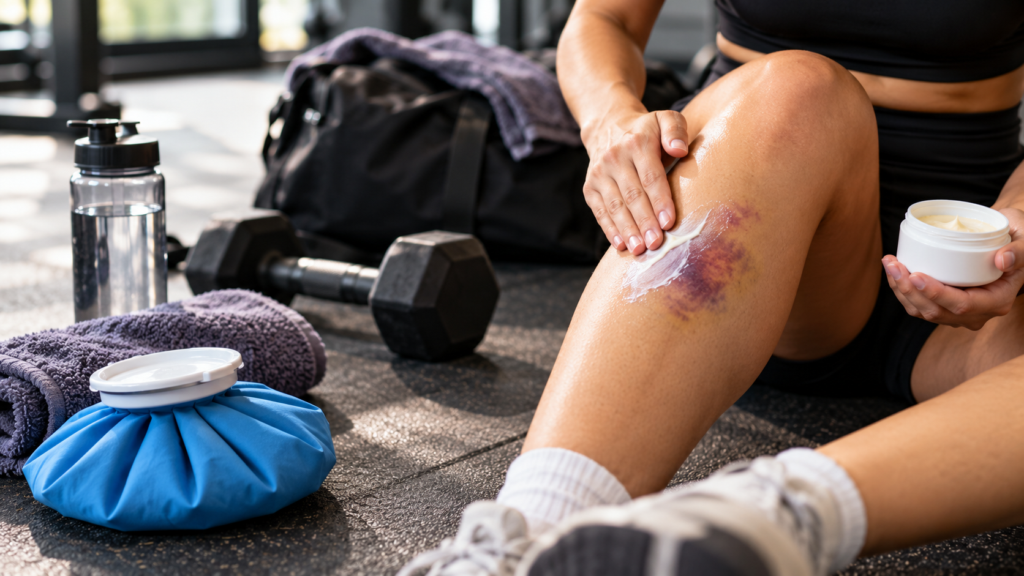
Anyone who trains hard collects marks. A barbell that scrapes your shin on a deadlift, a knee to the thigh during sparring, or the corner of a bench you’d have sworn wasn’t there. Bruises come with the territory, especially when you’re pushing your body regularly.
Most fade on their own and eventually become an afterthought. Still, there’s a sensible middle ground between ignoring every purple patch and treating it like a serious injury. A good bruise cream can fit into that space, helping you care for minor bumps while you give your body time to recover.
What’s Actually Happening Under the Skin
A bruise is a contusion. Small blood vessels break beneath the surface while the skin itself stays intact, allowing blood to leak into the surrounding tissue. That trapped blood is what creates the familiar patch of discoloration, tenderness, and sometimes mild swelling.
The color shifts you see are part of the body breaking down and reabsorbing that blood. According to the Cleveland Clinic, a fresh bruise often looks red because the trapped blood still carries oxygen. Within a day or two, it can turn blue or purple as oxygen levels drop. Around days five to ten, it may shift toward green or yellow, followed by yellowish-brown shades before gradually fading.
Most ordinary bruises clear up within about two weeks without any intervention. Knowing that general timeline is genuinely useful because it gives you a baseline for what normal healing looks like.
The First 48 Hours Matter Most
Cold comes first. The Mayo Clinic’s first aid guidance suggests using an ice pack wrapped in a towel for no more than 15 minutes at a stretch during the first day or two. The cold can help limit swelling and reduce discomfort while the bruise is still fresh. If you’re able to, keeping the affected area elevated above heart level can also help minimize swelling, particularly during the first 24 to 48 hours.
There’s no need to press the ice directly against your skin, though, or leave it on for longer thinking it’ll work faster. Give your skin a break between applications, and let the area rest while your body gets on with repairing those damaged blood vessels.
It’s not just about making the bruise feel better. The goal during those first couple of days is to limit how much blood leaks under the skin. Less bleeding usually means less swelling and a smaller bruise to deal with later.
It’s also best to leave the bruise cream alone at this stage. Rubbing or massaging a fresh bruise can irritate the area and may make the swelling worse.
Once those first couple of days have passed, gentle warmth can help improve circulation as your body clears the trapped blood. That’s also when topical products like a bruise cream can start to make more sense as part of your usual bruise care.
Where a Bruise Cream Fits
Arnica is the ingredient you’ll see most often, a staple in athletic kits for generations. Vitamin K turns up in some formulas as well.
What a good bruise cream reliably gives you is a reason to handle the area carefully and keep the skin in decent shape while it recovers. The light massage involved in applying it encourages blood flow to the spot, which follows the same logic as the warmth.
Use a bruise cream twice daily. After the first two days, work outward from the center with minimal pressure. If it hurts, you’re pressing too hard.
This bruise cream is built for exactly this kind of post-training use, and you can learn more about skin relief creams here and what’s in each one before committing.
Training Around a Bruise
The urge to train through it is usually fine. A contusion on the quad isn’t grounds for skipping legs altogether, though it’s a fair reason to drop the load and avoid anything pressing directly on the spot.
Watch what it does over 48 hours. Spreading discoloration, pain that climbs rather than settles, or a tight pressure-like feeling all deserve a closer look.
Recovery basics do more here than any topical will. Sleep, protein, water. If you’re putting a routine together, here’s solid material on structuring recovery days around hard training that is worth your time.
For more information on rest and recovery, read more here.
Red Flags Worth Knowing
Most bruises are unremarkable. A few aren’t.
Check in with a doctor if:
- You bruise easily or find marks you can’t account for
- Swelling is severe, or the pain seems out of proportion to the impact
- Pain is still significant three days after a minor knock
- A bruise sits over a joint and restricts how it moves
Unexplained bruising in particular is worth raising at your next appointment, since it occasionally signals something that has nothing to do with training.
If you’re in contact sports, repeated hits to the same area deserve attention too. Protective gear exists for a reason, and picking equipment that actually fits heads off a fair number of these before they happen.
The Practical Version
Ice for the first day or two, elevate when you can. Once swelling settles, move to gentle warmth and a bruise cream applied with a light hand twice a day.
Then, just leave it alone and let it heal. Bruises take time to heal, so the best thing you can do is stay comfortable while you wait.