

We may earn a small commission on some links at no extra cost to you. Learn more.
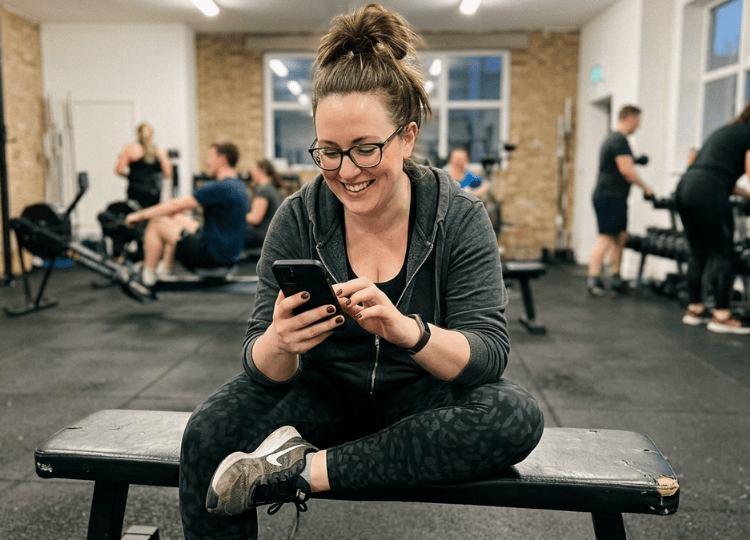
GLP-1 medications like Ozempic, Wegovy, Mounjaro and Zepbound have changed the way millions of people approach weight loss. But the medication is only one part of the picture.
Getting the most out of GLP-1 therapy means staying on top of your injections, hitting your protein targets despite a suppressed appetite, maintaining muscle through resistance training, and managing the mental load that comes with a significant lifestyle change. That is a lot to track, and no single app does all of it equally well.
The good news is that a handful of apps do specific things exceptionally.
Below, I have pulled together the best apps for GLP-1 users across 6 categories, from all-in-one companions to mindset tools, based on what they actually do and who they are best suited for.
Why the Right Apps Matter on GLP-1
GLP-1 medications suppress appetite dramatically, which is largely why they work. But that same suppression creates a real risk: eating too little, particularly too little protein, at a time when your body needs it most.
Research published in PMC found that participants taking semaglutide lost an estimated 10% or more of their muscle mass during a 68-week treatment period, roughly equivalent to 20 years of age-related muscle loss. Clinical trial data for tirzepatide tells a similar story, with lean mass accounting for roughly 25% of total weight lost. That figure is not unique to GLP-1 medications, some lean tissue loss accompanies most significant weight loss, but the pace and scale of GLP-1-driven weight loss makes the risk more acute.
The solution is well established. With adequate protein intake and consistent resistance training, research shows that muscle loss can be minimised and strength preserved, even during rapid weight loss.
Apps that help you stay on top of injections, protein, training and mindset are not nice-to-haves on a GLP-1 journey. They are genuinely useful tools.
MeAgain – Best All-in-One Solution
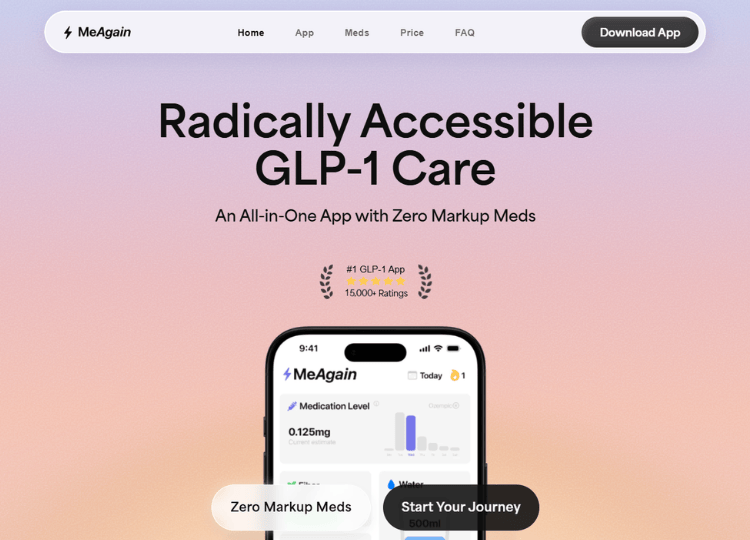
If you want a single app that handles the full GLP-1 experience, MeAgain is the most complete option available. It was built from the ground up for people on medication, not retrofitted from a generic fitness tracker, and the difference shows.
The core of the app is a dashboard that brings together everything that matters for a GLP-1 user in one place: protein, fiber, water, steps, injection days, side effects, and pill reminders. Food logging works by photo, barcode or voice, with AI handling the nutrition breakdown automatically. That matters when appetite is low and the last thing you want to do is manually enter everything you ate.
The injection tracking is genuinely well thought out. MeAgain includes a shot day checklist to help reduce side effects, an injection site rotation map so you always know where to inject next, and an estimated medication levels chart that shows how much active drug remains in your system across the week based on your medication’s pharmacokinetic profile. That last feature is particularly useful for planning meals and exercise around peak medication activity.
What I found distinctive about MeAgain compared to other trackers is the attention to the smaller details that make a long journey feel manageable. The Capybara home screen widget tracks protein, fiber, water and steps in real time and reacts based on how you are doing, genuinely fun, which sounds trivial until you realise that engagement and consistency are the things that actually determine long-term success. There is also a community within the app where users share progress and tips, and a Journey Card feature for capturing photo milestones.
The app has a free tier and premium plans, and for users in the US, MeAgain also provides access to compounded semaglutide and tirzepatide at zero markup… funded through app subscriptions rather than medication margins, which is an unusual model worth noting.
Rated 4.8 stars with over 286,000 users, it is one of the most well-reviewed apps specifically built for this purpose.
Shotsy – Best for Basic Tracking
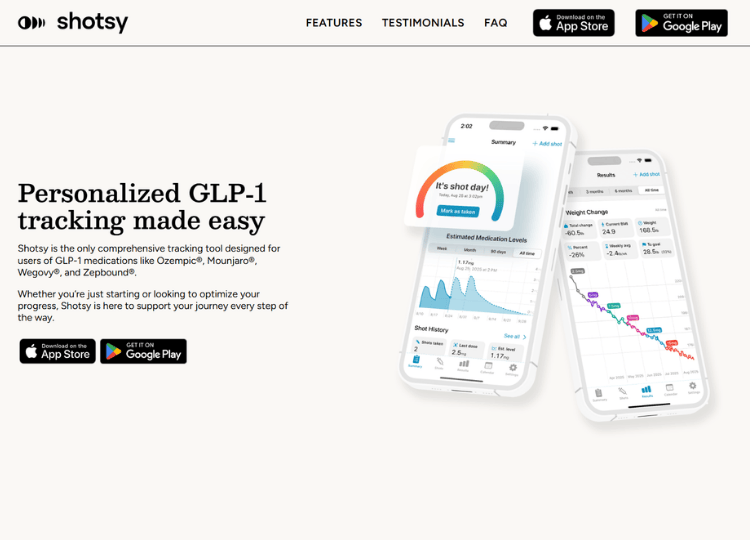
Shotsy is the most downloaded GLP-1 tracking app on the market, with close to 1 million downloads across iOS and Android. It was founded in 2024 by Aja Beckett, a software engineer who was herself a GLP-1 patient, and the product reflects that practical perspective.
Where MeAgain aims to be comprehensive, Shotsy excels through clarity. The interface is clean, the charts are genuinely readable, and logging a dose takes seconds. You can record injection site, dosage and any side effects, view your estimated medication levels over the course of the week, and track your weight loss progress over time, all without the app feeling cluttered.
The estimated medication levels chart is one of the features users consistently highlight in reviews. It visualises how drug concentration changes between doses based on peer-reviewed clinical data, which helps you understand when you are at peak and trough… information that is useful for planning meals, managing nausea and discussing dosing with your healthcare provider.
Shotsy 3.0, released in March 2026, introduced oral GLP-1 tracking for the Wegovy pill and other oral formulations, a first-of-its-kind Maintenance Mode for users who have reached their goal weight, and multi-medication scheduling for the growing number of people on combination regimens.
For anyone who already has nutrition tracking handled elsewhere and just wants a reliable, well-designed tool for the injection side of their GLP-1 journey, Shotsy is the obvious choice. Core features are free, with a premium tier unlocking personalised medication level charts and advanced analytics.
Strength Well – Best for Maintaining Strength
One of the most important things a GLP-1 user can do alongside their medication is resistance train. The research is unambiguous: combining adequate protein intake with regular strength work is the most effective strategy for preserving muscle mass during significant weight loss. The challenge is knowing where to start, tracking whether you are actually progressing, and staying consistent.
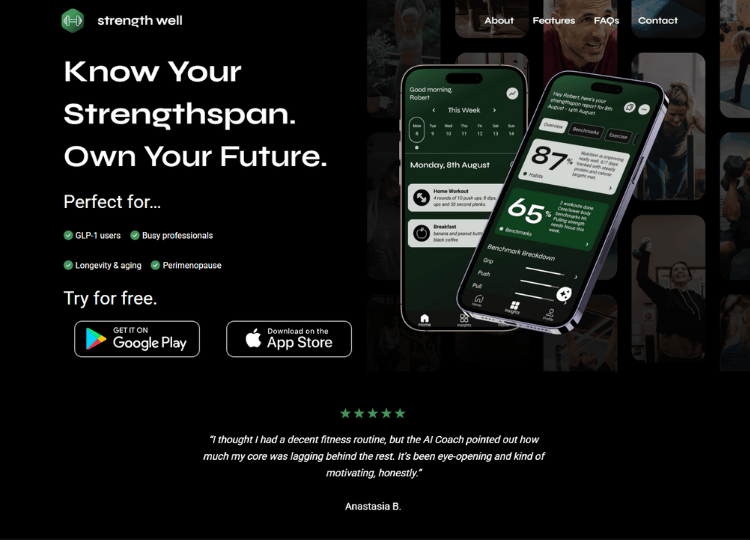
Strength Well approaches this differently to most workout apps. Rather than giving you a programme to follow, it measures your overall strength capability, what it calls your “strengthspan”, across 9 carefully selected exercises using personalised benchmarks based on your age, gender and body weight. The result is a clear, objective picture of where your functional strength actually sits, and what you need to work on.
The 9 exercises are chosen to be accessible regardless of experience level, and most require only a single dumbbell or kettlebell. You can follow your own training programme and use Strength Well alongside it, or use the app’s AI coach for daily guidance and feedback. The AI coach learns from your journal entries and benchmark data over time, providing coaching that is personalised in a meaningful way rather than just a generic plan.
For GLP-1 users specifically, the benchmarking approach is useful because it gives you concrete evidence of whether your strength is being preserved or declining during weight loss, something that is otherwise very difficult to track without baseline data. Knowing that your leg press, deadlift or shoulder press is holding steady is reassuring evidence that the training and protein intake are working.
Available on iOS and Google Play with a free trial available.
Cronometer – Best for Macro Tracking
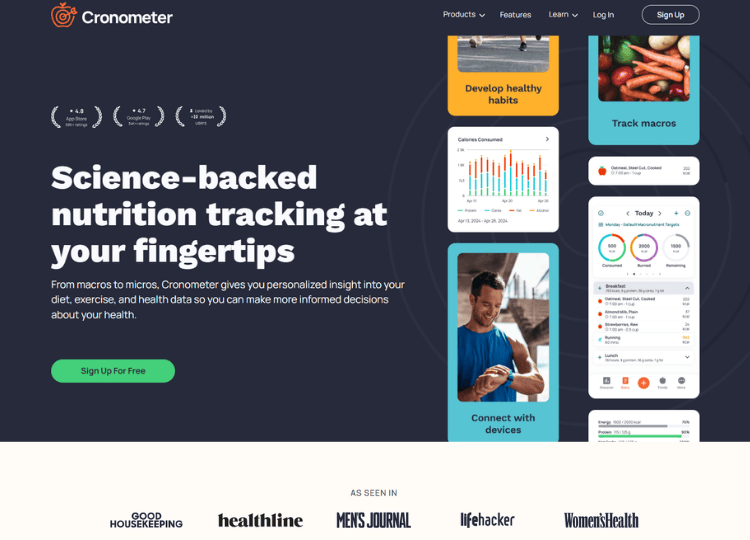
The nutrition challenge on GLP-1 medications is specific: you are eating significantly less, which means every meal has to count more. Getting enough protein, research suggests 80 to 120g per day for most GLP-1 users, while also hitting fiber, micronutrient and hydration targets is harder than it sounds when appetite is suppressed.
Cronometer is the most thorough nutrition tracker available for this purpose. Where most apps track calories and the 3 macros, Cronometer tracks up to 92 nutrients and compounds, including soluble and insoluble fiber separately, individual amino acids, all major vitamins and minerals, and electrolytes. The food database covers 1.1 million entries, all verified from lab-analyzed sources rather than user-submitted data… which matters when accuracy is the point.
For GLP-1 users, what makes Cronometer particularly valuable is the micronutrient visibility. Fatigue, muscle cramps, and hair thinning are common complaints during rapid weight loss, and they are often related to specific deficiencies, magnesium, iron, B12, zinc, that a standard calorie tracker would never flag. Cronometer makes those gaps visible, which means you can address them through food choices before they become a problem.
Logging is fast. Barcode scanning covers the vast majority of packaged foods. AI photo logging, recently added in beta, speeds up the process further. You can copy previous meals, save custom recipes, and set your own macro targets rather than relying on the app’s defaults.
The free version is genuinely comprehensive… more so than most paid versions of competing apps. The Gold plan at $9.99/month or $54.99/year unlocks photo logging, food suggestions to help meet targets, more detailed charts and the ability to print reports to share with a dietitian or healthcare provider.
Mealime – Best for Healthy Recipes
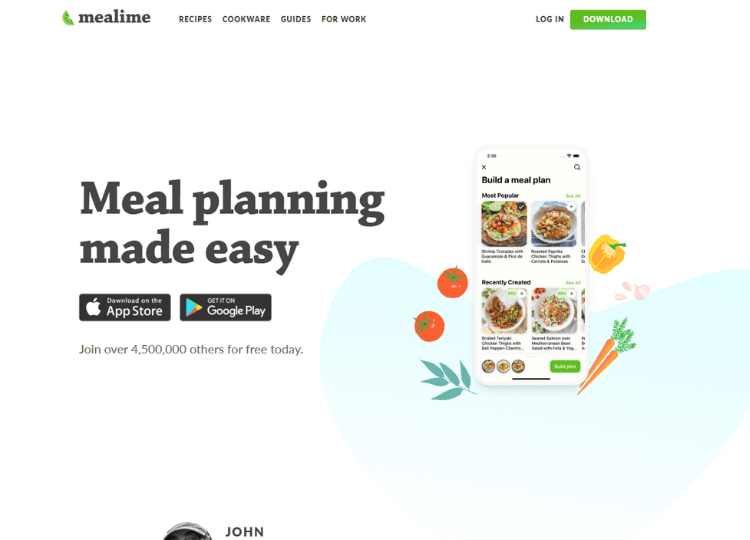
Reduced appetite is helpful for weight loss, but it comes with a less welcome side effect: the temptation to eat whatever is easiest rather than whatever is most nourishing. When hunger is low, cooking feels like less of a priority. The result is often under-eating, poor food choices, or both.
Mealime addresses this by making healthy cooking as frictionless as possible. You set your dietary preferences and any restrictions upfront, from low carb to high protein to pescatarian and beyond, with over 200 customization options, and the app generates a personalized weekly meal plan from recipes designed to be cooked in roughly 30 minutes. Every recipe comes with full nutritional information and an auto-generated grocery list organized by aisle, which means you can go from zero plan to a week of healthy meals in a few minutes.
The recipes are created by dietitians, which means they are balanced rather than just low-calorie. For GLP-1 users who need to maximize protein and fiber from smaller portions, a well-designed recipe is meaningfully different from a generic one. The Pro plan, at just $2.99 per month, unlocks exclusive recipes and the ability to view macro and calorie information… worth it if you are tracking alongside Cronometer or MeAgain.
What consistently stands out in user reviews is how the app removes the daily decision fatigue around food. When appetite is suppressed and motivation to cook is low, having a plan already made and a list already generated removes 2 of the biggest barriers to eating well. Over 7 million people use the app, and the majority report it as one of the simplest ways they have found to maintain consistently healthy eating habits.
Headspace – Best for Managing Mindset
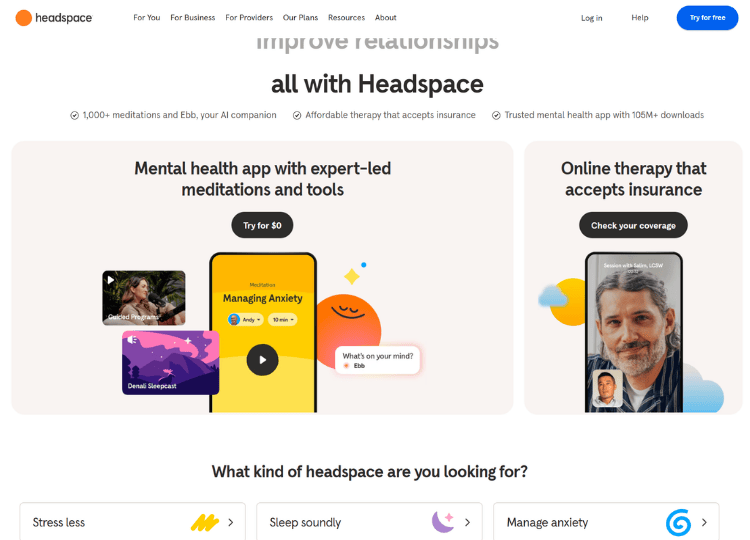
The psychological dimension of GLP-1 therapy is underappreciated. Many people arrive at medication having spent years, sometimes decades, in a difficult relationship with food, their body, or both. The medication changes what you eat and how much, but it does not automatically change the thoughts and habits that sit behind those behaviours.
Headspace is the most researched mindfulness app available, with over 50 published peer-reviewed studies behind it. In a UCSF study of more than 1,400 employees, those using Headspace reported a 27% reduction in perceived stress and a 37% decrease in anxiety symptoms after 8 weeks. A 2025 randomised controlled trial published in Annals of Behavioral Medicine found that Headspace was effective at reducing subjective stress in novice meditators, with measurable benefits appearing within 2 weeks of daily use.
For GLP-1 users specifically, the mindset piece matters in a few practical ways. Stress and poor sleep are both documented contributors to weight regain and increased appetite. Managing anxiety around food, weight plateaus or medication side effects is a real part of the journey for many people. And building the consistency and daily structure that leads to long-term habit change is fundamentally a psychological challenge as much as a physical one.
The app covers guided meditation, breathwork, CBT-based exercises, sleep tools, and movement sessions. Sessions run from 3 minutes upward, which makes it realistic to fit into even a busy day. Headspace now also offers access to licensed therapists and a mental health coach feature alongside the self-guided content, making it a more comprehensive mental wellness tool than it was a few years ago.
At $12.99 per month or $69.99 per year, with a 7-day free trial, it is accessible and well worth trying as a complement to the physical side of the GLP-1 journey.
FAQs
Do I need all of these apps?
No. The right combination depends on where your gaps are. If you want 1 app that handles most things, MeAgain is the place to start. If injection tracking is all you need, Shotsy is the cleanest option. Most people will benefit most from combining 2 or 3 of these, for example, MeAgain or Shotsy for injection tracking, Cronometer for detailed nutrition, and Strength Well for monitoring whether they are maintaining strength.
Which app is best for protein tracking on GLP-1?
Both MeAgain and Cronometer track protein well, but in different ways. MeAgain is optimised for quick, habitual logging with a focus on protein, fiber and water. Cronometer goes deeper into the full nutritional picture, including micronutrients that are often overlooked during rapid weight loss.
Is Strength Well suitable for beginners?
Yes. The 9 benchmark exercises are chosen specifically because they are accessible to all fitness levels and require minimal equipment. You do not need to be experienced with strength training to use the app, and that is part of the point, it meets you wherever you currently are.
Can Headspace help with food noise?
GLP-1 medications reduce food noise, the persistent mental preoccupation with food, for most users. But for those still experiencing it, or managing the psychological shift that comes with a significant change in eating behaviour, mindfulness practice through an app like Headspace can be a useful complement to the medication.
Are these apps available on both iOS and Android?
MeAgain and Headspace are available on both. Shotsy launched primarily on iOS but has an Android version. Strength Well is available on iOS and Google Play. Cronometer and Mealime are available on both platforms.
Bottom Line
No single app covers everything a GLP-1 user needs, but the right combination can meaningfully support the physical, nutritional and psychological dimensions of the journey.
If you are starting out and want 1 app, MeAgain is the most complete option built specifically for this purpose. If injection tracking is your main need and you have nutrition handled elsewhere, Shotsy is the most polished and widely used tool for that job.
Add Cronometer if detailed nutrition tracking matters to you… especially micronutrients that are easy to neglect during rapid weight loss. Add Strength Well if you want objective evidence that your muscle is being preserved. Mealime makes the practical challenge of eating well each day significantly easier. And Headspace supports the part of the journey that all the other apps cannot reach.
Used together or in combination, these apps address the things that actually determine long-term success on GLP-1 therapy: consistency, nutrition quality, strength maintenance, and mindset.
Related Articles
Top Fitness and Workout Apps for Over 50s