
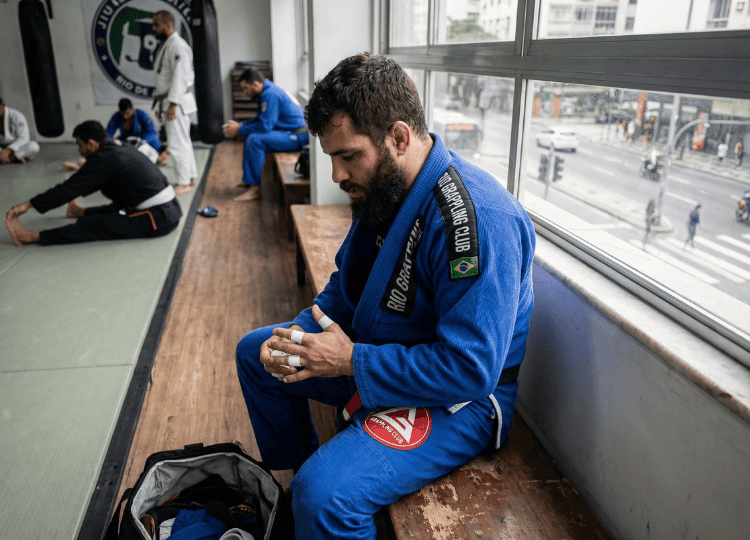
Martial arts training places unique demands on the shoulder joint. Whether you practice boxing, Brazilian jiu-jitsu, muay thai, judo, or mixed martial arts, your rotator cuff — the group of four muscles that stabilize the shoulder — works constantly to control motion, absorb impact, and support forceful movements.
Because martial arts involve repeated overhead actions, punching, grappling, and rapid shifts in arm position, the rotator cuff is at high risk of strain and reinjury if not properly prepared and protected.
A rotator cuff re-injury can significantly disrupt training continuity and performance and, if chronic, may lead to long-term loss of strength or motion. Fortunately, with the right approach — from active prevention to smart bracing and recovery practices — you can drastically reduce the odds of re-injury and perform at your best over the long haul.
Understanding the Rotator Cuff and Why It Re-Injures
The rotator cuff is made up of four muscles — the supraspinatus, infraspinatus, teres minor, and subscapularis — that surround the shoulder joint and work together to support and rotate the upper arm. These muscles keep the ball of the upper arm bone centered in the shoulder socket during movement.
In martial arts, rotator cuff strains and tears often occur or worsen due to:
- Overhead or forceful actions such as repeated strikes or defensive blocks
- Grappling movements that place the shoulder in stretched or vulnerable positions
- Insufficient warm-up or muscle imbalance
- Poor technique under fatigue
Without proper preparation and recovery, these stresses can accumulate, increasing the risk of re-injury.
Active Shoulder Warm-Up and Mobility
Before every training session, a focused warm-up for your shoulders prepares the rotator cuff for the demands ahead.
Dynamic Shoulder Mobility
Dynamic movements such as arm circles, pendulum swings, and gentle overhead reaches increase blood flow, lubricate the joint, and improve tissue flexibility.
Band Rotations
Resistance bands are ideal for activating the rotator cuff muscles without heavy loading. Warm-up sets of internal and external rotation exercises with light resistance help “wake up” stabilizers that are crucial for shoulder control during sparring and striking.
Scapular Preparation
Strengthening the muscles around the shoulder blade — including wall slides, Y-raises, and shoulder blade squeezes — supports a stable base for the rotator cuff muscles to work from. Good scapular control reduces excessive stress on the cuff.
Strength and Stability Training
Well-designed strength work builds resilience in the rotator cuff and surrounding structures, reducing the risk of overload during combat movements.
Focused Rotator Cuff Exercises
Incorporate exercises such as:
- External rotations with resistance bands
- Side-lying external rotations
- High-to-low rows
These target the specific rotator cuff muscles and improve strength across motion patterns commonly used in martial arts.
Serratus and Scapular Activation
Strengthening the serratus anterior and lower traps improves shoulder stability by encouraging smooth, coordinated motion around the joint. Movements like serratus punches or band pull-aparts help develop this control.
Balanced Strength Programming
Shoulder training should balance pushing movements (like punches and push-ups) with pulling and rotational work. This avoids muscle imbalances that can pull the shoulder into compromised positions under load.
Technique and Movement Quality
Even strong muscles won’t offer full protection if movements are poorly performed.
Technique Refinement
Proper punching, blocking, grappling, and rolling mechanics reduce unnecessary strain on the rotator cuff by ensuring force flows through the entire kinetic chain — from the feet up through the hips and core, instead of directly into the shoulder.
Controlled Progression
Gradually increasing intensity and exposure to stress protects tendon health by allowing tissues to adapt. Sudden spikes in training load — for example, doubling volume or force too quickly — are a common trigger for pain and tear recurrence.
Bracing and Supportive Devices
External support can be a useful adjunct when returning to training after a shoulder injury, especially during higher intensity sparring phases.
Shoulder Braces
Rigid or semi-rigid shoulder braces reduce excessive motion that might stress a healing rotator cuff. They act as a reminder and physical limiter, particularly during impact or unstable positions.
Kinesiology Tape
Kinesiology tape can offer proprioceptive feedback — improving your body’s awareness of shoulder positioning — and some athletes find it helps reduce minor pain and swelling during activity. While evidence is mixed, it can be useful as part of a broader rehab plan under professional guidance.
Compression Sleeves
Light compression around the shoulder increases circulation and can help reduce post-training inflammation and swelling, contributing to better recovery between sessions.
Recovery Strategies to Prevent Re-Injury
Re-injury often occurs when the shoulder hasn’t fully recovered from previous stress. Smart recovery habits can break that cycle.
Rest and Active Recovery
Complete rest is rarely necessary for minor aches, but active recovery — gentle mobility work, light band exercises, or low-impact movement — improves blood flow and speeds healing without adding significant stress.
Cold and Heat Therapy
Cold therapy after intense training helps quell inflammation and swelling. Heat before activity increases tissue elasticity and blood flow, preparing muscles and tendons for work.
Sleep and Nutrition
Adequate sleep and balanced nutrition — including protein for tissue repair and omega-3 fats to modulate inflammation — underpin all recovery processes.
Recognizing Red Flags
Early recognition of recurrent or worsening symptoms allows you to address issues before they escalate.
Pain Pattern Monitoring
If you experience nagging shoulder pain that worsens with overhead activity, clicking or catching in the joint, or weakness when lifting or rotating the arm, these are signs that your rotator cuff may be strained and requires attention.
Professional Assessment
Persistent pain or loss of function should be evaluated by a health professional experienced with athletic shoulders. Physical therapists or sports medicine clinicians can assess compensatory movement patterns, tensile strength, and recovery readiness.
Integrating Prehab Into Your Routine
“Prehab” — proactive injury prevention training — should be a staple for martial artists, especially those with a history of shoulder issues. This means incorporating rotator cuff and scapular stability exercises regularly, not just after injury.
Daily or frequent mini-sessions of band work, mobility drills, and shoulder blade activation improve readiness and resilience, making re-injury far less likely.
Bottom Line
Preventing rotator cuff re-injury in martial arts doesn’t come down to a single exercise or gadget — it’s a comprehensive approach grounded in preparation, strength, movement quality, supportive tools, and recovery management. Strengthening your rotator cuff and surrounding stabilizers with targeted exercises, executing movements with excellent technique, using supportive bracing when appropriate, and honoring recovery processes all contribute to healthier shoulders and longer martial arts longevity.
For competitive fighters and hobbyists alike, implementing these principles into your training routine can be the difference between consistent progress and recurring setbacks — leading to sustained performance, confidence, and shoulder health.