
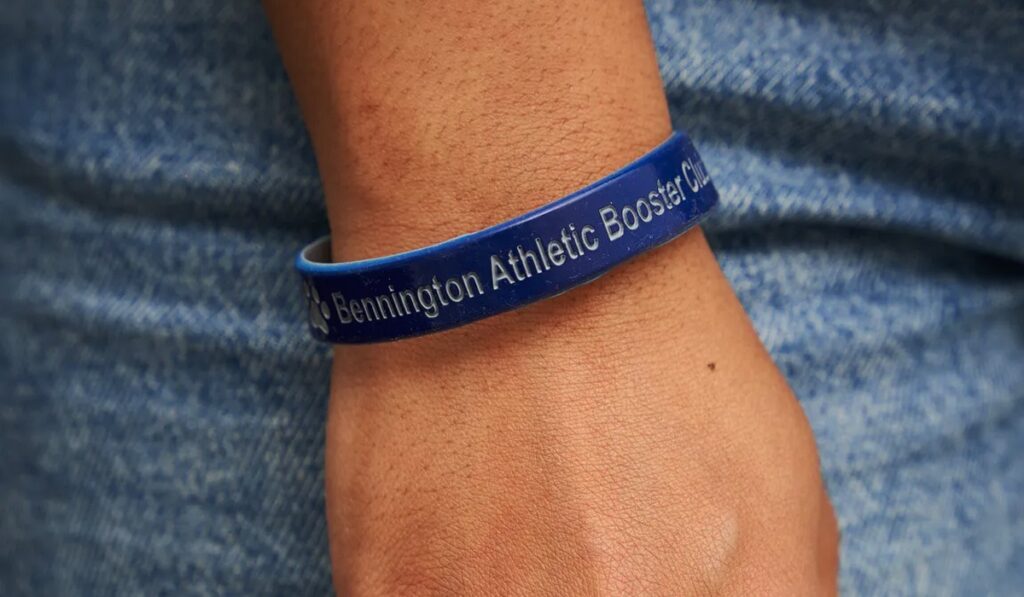
Photo from Swagprint.com
If you’ve ever promised yourself that this time the gym routine will stick, you’re not alone. According to research, approximately 50% of individuals who start an aerobic exercise program will stop within the first 6 months.
A simple pack of colored silicone wristbands can become a powerful accountability engine. Peer-reviewed studies have already shown that low-tech, wearable prompts dramatically increase weekly workout completion.
Below, you’ll learn three proven wristband systems, the science behind them, and exactly how to put them to work today.
Why Wristbands Work for Behavior Change
Stanford researcher BJ Fogg’s behavior model states that the clearer a prompt, the faster a behavior sticks. A bright band on your wrist is a constant visual reminder every time you reach for your phone or water bottle. This simple cue helps integrate your fitness goals into your daily routine without conscious effort.
Unlike smartwatches that require charging and updates, plain silicone bands are simple to use. They present no technological barriers, making them ideal for beginners. Sourcing them is also straightforward; for example, Swagprint.com’s high-quality custom silicone wristbands offer affordable, durable options perfect for any of these strategies.
Strategy 1: Color-Coded Weekly Goal Bands
Consistent self‑monitoring is one of the strongest predictors of exercise adherence. A simple, visible cue on your wrist turns an abstract weekly plan into instant, emotion‑neutral feedback. Color shifts act like a traffic light for behavior. They make progress obvious, lapses unmistakable, and next actions clear, without relying on willpower in the moment.
Pro Tips To Boost Adherence
- Make the bands unavoidable. Keep them on your water bottle or keys, so you interact with them daily.
- Pair with a micro‑tracker. Each time you train, jot a single line in your notes app (date + session type). The wristband gives the cue; the log preserves the streak.
- Separate “minimums” from “extras.” Hitting your minimum turns the band green. Any bonus sessions are celebrated, but the week still resets to yellow on your start day.
- Match colors to context. If your workplace uses red for safety alerts, consider blue/yellow/green to avoid alert fatigue.
Variations
- Multi‑goal weeks: wear two thin bands on one wrist (e.g., yellow for strength, blue for cardio). Each turns green independently when its minimum is met.
- Recovery focus: during deload or travel weeks, set a lighter minimum (e.g., two mobility sessions) so green still reflects success.
- Team or partner mode: friends can send a “green check” photo when they flip their band, light social accountability without public posting.
Common Mistakes To Avoid
- Setting an aggressive minimum you can’t hit during busy weeks. Start small (e.g., 2 sessions) and increase once you’ve gone green for 3–4 consecutive weeks.
- Treating red as failure. Red is a prompt to adjust the plan, not a verdict. Use it to schedule the very next doable session.
- Changing colors mid‑week without rules. Decide ahead of time when you’ll switch bands (e.g., automatic red after Thursday if targets aren’t on track).
The color‑coded band system turns your week into a visible scoreboard you carry everywhere. It reduces decision fatigue, creates timely prompts, and helps prevent the classic “I’ll start over Monday” spiral by making the next right action obvious.
| Pro Tip: Maximize your visual reinforcement. Don’t just wear the band; stack the other colors on your desk or coffee table. This keeps your goals top-of-mind even when you’re not at the gym. |
Strategy 2: Milestone Reward Bands
Motivation can dip after the initial excitement of a new routine wears off. This strategy introduces reward loops by having you earn a new band only after clearing a pre-set milestone. This process turns your progress into a tangible trophy you can wear.
Think of it like martial arts belts, progressing from white to black. Choose several band colors that gradually deepen in shade, with each color representing a specific achievement. For example, a new color could signify completing twenty 30-minute workouts.
To implement this, map out realistic milestones that are about 10 to 12 sessions apart. Once you achieve a goal, replace your current band with the next color in the series. Posting a quick photo update on social media can also help cement the win through public recognition.
| Warning/Important: Keep your milestones achievable. Setting goals more than 15 workouts apart can kill momentum. Your brain’s reward system needs frequent reinforcement to keep motivation high and the habit engaging. |
Strategy 3: Community Challenge Bands
Social accountability can significantly improve exercise adherence, with some studies showing higher rates in supervised or group programs. A unified band color amplifies group identity and creates a sense of shared purpose. It’s a simple visual cue that you are all in it together.
To launch a challenge, poll your group to pick a challenge color. You can either share a link for everyone to purchase identical bands or bulk-order and distribute them. Posting a weekly leaderboard photo where everyone shows their band can add a fun, competitive element.
You can create your own challenge with ready-made prompts and leaderboards on social media or in a group chat. Simply designate a color for the challenge period. Then create a space for members to share their progress and encourage one another.
| Key Insight: Never underestimate the power of the group. Research shows social accountability can boost workout adherence by up to 24%. A shared band color creates a powerful sense of team identity and mutual responsibility. |
Material and Design Considerations
When selecting bands for your fitness journey, consider the material. Silicone often proves more durable and easier to clean than fabric, especially with frequent workouts. For longevity, look for designs that are debossed or ink-injected rather than just printed, as they are less likely to fade over time.
Tracking and Safety
A simple spreadsheet or a free habit-tracking app can pair well with any band strategy for additional data. For comfort and safety, rotate bands between wrists every few days. Clean them weekly with mild soap and let them air-dry to prevent skin irritation.
The Path Forward
Visual cues, progressive rewards, and social accountability are three evidence-backed drivers of workout consistency. Each one can be represented by a simple band on your wrist. Pick a color pack and decide which strategy best fits your personality.
Share your progress with friends or an online community to enhance accountability. Small bands can lead to big wins. Let’s turn today’s intention into a lifelong habit, one color at a time.