
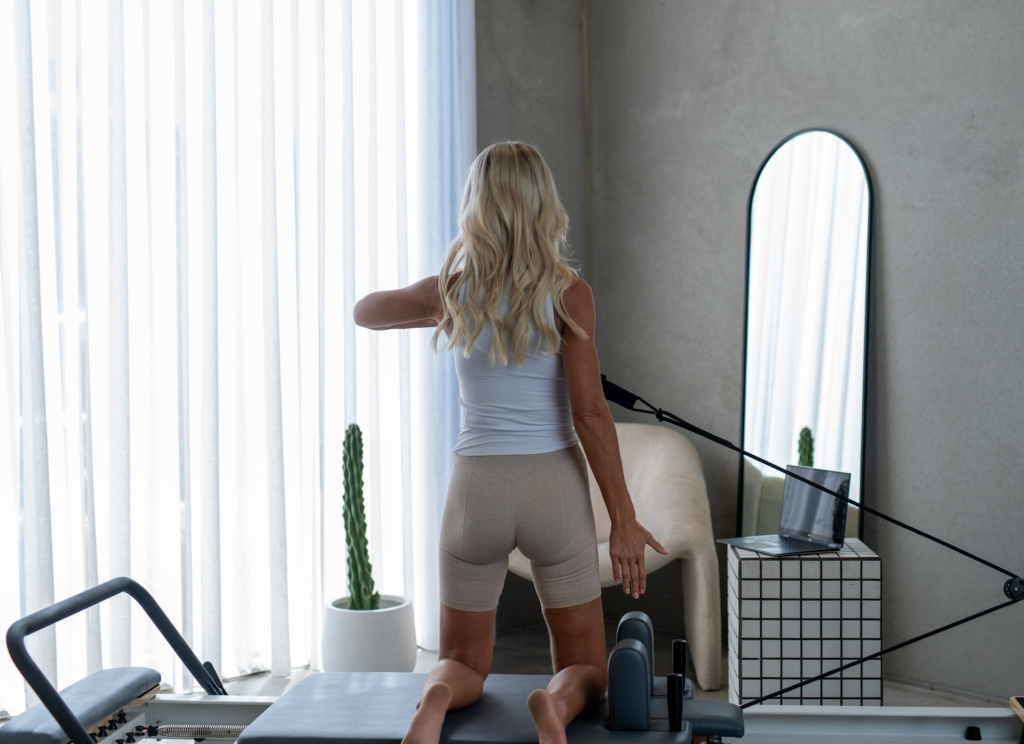
The first surprise in a reformer class usually comes during something basic. A set of foot presses looks simple enough until the springs start pulling the carriage back. Then one heel lifts, a knee wanders slightly, or the return takes more effort than expected.
That is where reformer Pilates gets interesting. It is not only about stretching, and it is not quite the same as lifting weights. The machine keeps asking for strength while the body moves through positions that would normally be saved for mobility work.
The Carriage Tells on You
A fixed gym machine gives the body something solid to push against. A reformer does not always offer that luxury.
During split squats, one foot may stay on the platform while the other travels backward with the carriage. The front thigh starts working quickly. At the same time, the hips have to stay square while the back leg moves away.
Small mistakes show up early. Push harder with one leg, and the carriage can move unevenly. Let the ribs flare during strap work, and the body starts borrowing movement from the back. None of it looks dramatic, but it changes how the exercise feels.
People who already lift weights sometimes notice these things more than beginners. Someone may have no trouble squatting with a barbell but struggle to keep a carriage steady with one leg.
You Get More Range Without Stopping to Stretch
A typical gym session can leave mobility until the end. By that point, the bottle is empty, the headphones are coming off, and the stretching often lasts three minutes.
The reformer mixes more range into the actual work.
Take a long lunge. The front leg is loaded while the opposite hip opens as the carriage travels back. With feet in straps, the legs can move through circles or controlled extensions while resistance stays on them.
The useful part is not seeing how far the carriage can move. Someone can easily gain another few inches by tipping the pelvis or arching the lower back. The better rep is often the smaller one that still looks controlled.
A systematic review comparing Pilates with other exercise found no clear difference in strength, balance, or flexibility outcomes. Reformer work can still be a useful way to train those areas within a wider routine.
Springs Are a Little Strange at First
New users often assume more springs mean more difficulty. Sometimes they do. Sometimes they make the exercise easier to control.
Heavy springs during footwork can make pushing the carriage harder. A light spring during a kneeling or standing exercise may give much less help. Suddenly keeping the carriage still becomes the difficult part.
There are other ways to make an exercise harder too. A coach may ask for a slower return, remove one foot, extend the range, or change where the hands are placed.
This matters when choosing equipment at home as well. A person looking at a space-friendly Pilates machine for regular home workouts needs to check more than spring resistance. Frame length, carriage travel, ceiling height, storage, and room around the machine all affect what exercises are actually possible.
A reformer can technically fit beside a bed and still be almost useless there. Side exercises need clearance. Standing work needs room around the frame. Long straps need somewhere to travel without catching a chair.
Some Exercises Get Difficult Quietly
There is not always an obvious moment when a reformer set becomes hard.
During footwork, the first few presses may feel easy. A little later, the return starts getting quicker. The knees stop following the same line. The person begins pressing harder through one foot.
The same thing happens during rows. At first, the arms pull the straps cleanly. As the shoulders tire, the chest may lift, or the body starts leaning backward to help.
That is useful feedback. There are no plates crashing and no big change in speed, but fatigue still shows itself.
Slower reps make these changes easier to notice, although there is no prize for making every repetition painfully slow. Sometimes a normal controlled pace is enough.
Pilates Can Actually Be Heavy Work
The idea that Pilates is mainly stretching usually disappears somewhere around the second set of lunges.
Spring resistance can make leg presses, rows, presses, planks, and split squats demanding. A long set often feels harder because tension does not disappear between repetitions. There may be no comfortable place to rest until the set is finished.
Still, somebody training for maximum strength probably should not throw away the squat rack. Heavy resistance training has its own job.
A weekly routine can easily include both. The Australian movement guidelines for adults recommend muscle-strengthening work at least twice a week, alongside regular activities that target mobility, balance, and coordination.
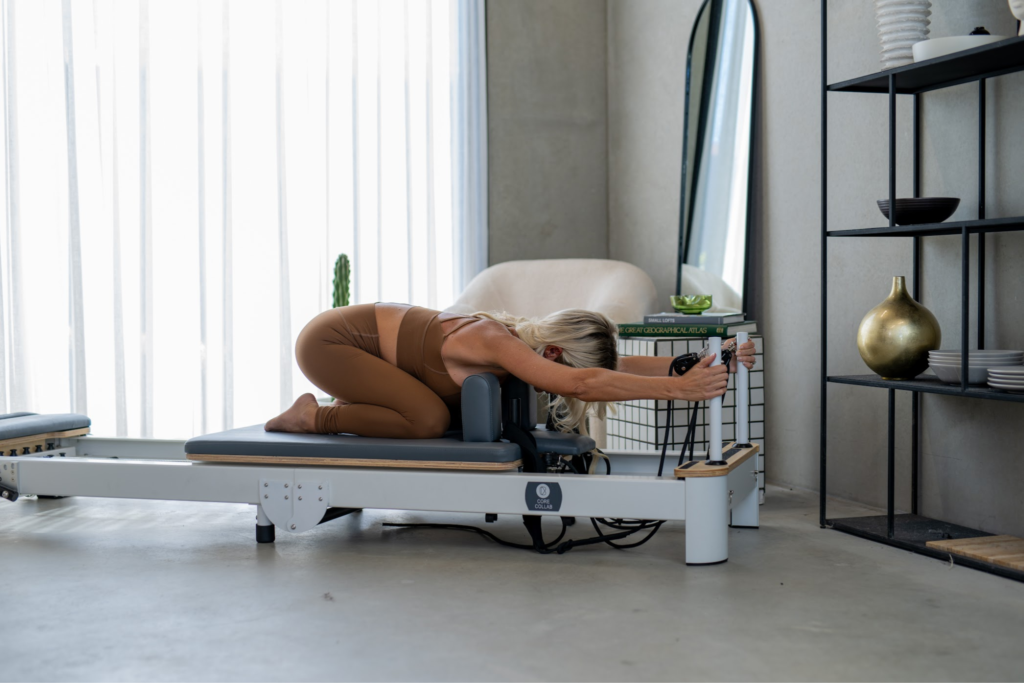
At Home, Twenty Minutes Is Often Enough
Home equipment changes the way people use a workout. There is no class starting at 6:30 and no reason every session needs to fill an hour.
A short session before work might be five minutes of footwork, bridges, and a few sets with straps. After a long day, someone may only want hip work and a couple of gentle spinal movements. Weekend training can be longer.
The bigger problem is usually exercise selection. Social feeds are full of complicated reformer moves involving kneeling balances, deep lunges, and positions that require a good understanding of the springs.
Most people do not need those immediately. Basic footwork, bridges, rows, strap exercises, and simple lunges already cover a lot of ground. Getting those right takes longer than it looks.
It Sits Quite Easily Beside Other Training
Perhaps the most practical thing about reformer Pilates is that it does not ask people to rebuild their whole week around it.
A runner can use it without giving up running. Someone who enjoys lifting can keep lifting. People with stiff hips after sitting at a desk all day may simply prefer a session that includes resistance and more movement than another hour on gym machines.
There is no need to turn it into a contest between Pilates and everything else. Most people are just trying to stay strong, move comfortably, and find workouts they will still be doing six months from now.