

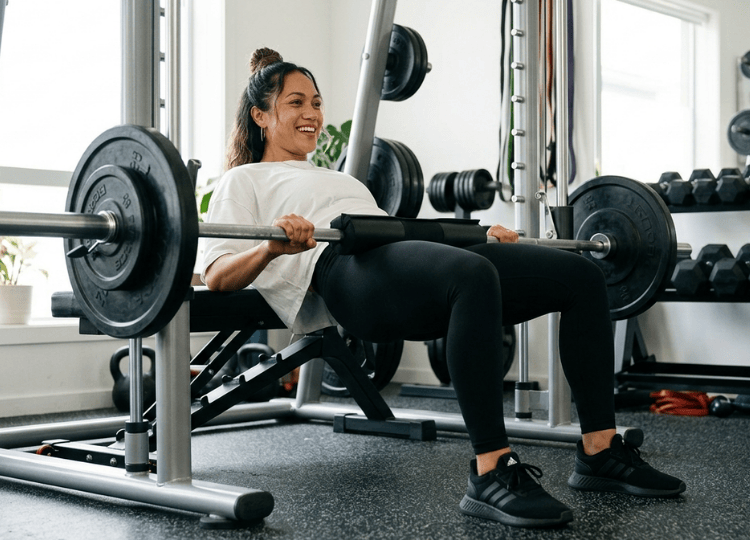
The hip thrust is one of the most effective exercises available for building glute strength and size.
A PubMed study comparing the hip thrust to the back squat found that the hip thrust produced more than double the mean gluteus maximus activation of the squat, making it one of the highest-activation glute exercises in existence.
The Smith machine version delivers the same stimulus with a more stable setup, a simpler loading process and the added safety of fixed bar catches, making it a practical choice for beginners and experienced lifters alike.
This guide covers everything you need to know about Smith machine hip thrusts, including how to set up and perform the exercise, the muscles worked, the benefits, how it compares to the barbell version, and the best alternatives.

Quick Summary
- The Smith machine hip thrust is one of the most effective exercises for isolating and strengthening the glutes, with research showing hip thrusts produce more than double the gluteus maximus activation of a back squat
- The fixed bar path and built-in safety catches make it more accessible than the barbell version, particularly for those training alone or new to loaded hip thrusts
- Foot placement directly affects which muscles are emphasised: feet closer to the body targets the quads, feet further away targets the hamstrings, and feet at roughly 90 degrees at the top targets the glutes
How to Set Up and Perform Smith Machine Hip Thrusts
Getting the setup right before starting is important. A few minutes adjusting the bench and bar position will make a significant difference to both comfort and the effectiveness of the exercise.
- Set the Smith machine bar to roughly knee height and load it with the desired weight.
- Place a flat bench perpendicular to the machine, positioned so that when you sit against it, the bar falls directly over your hip crease.
- Sit on the floor with your upper back resting against the edge of the bench. Your shoulder blades should be supported but your hips should be free to move.
- Roll or lower the bar onto your hips. If the bar feels uncomfortable, wrap a barbell pad or folded towel around it before loading.
- Place your feet flat on the floor, shoulder-width apart, roughly in line with your knees. In the top position, your knees should form a 90 degree angle.
- Brace the core, squeeze the glutes and drive the hips upward until the body forms a straight line from shoulders to knees.
- Hold briefly at the top, squeezing the glutes hard, then lower with control back to the starting position.
- Repeat for the desired number of reps.
Coach’s Tip: This exercise is about isolating the glutes, so focus entirely on squeezing the glutes to drive the movement rather than using momentum or pushing through the lower back. Keep the chin slightly tucked and avoid overextending the lower back at the top. It is worth doing a few reps with no weight on the bar first to check the bench position and foot placement before adding load.
Muscles Worked
- Gluteus maximus – the primary target of the hip thrust, responsible for driving the hip extension movement and the muscle with the highest activation in this exercise
- Gluteus medius and minimus – work to stabilise the pelvis and keep the hips level throughout the movement
- Hamstrings – assist with hip extension, particularly when the feet are placed further from the body
- Quadriceps – stabilise the knee joint throughout the lift and contribute more when the feet are positioned closer to the body
- Erector spinae – maintain an isometric contraction throughout to keep the spine neutral under load
- Adductors – keep the legs aligned and stable during the lift
Smith Machine Hip Thrust Benefits
Exceptional glute activation
Research consistently shows that hip thrusts produce significantly higher gluteus maximus activation than squats and deadlifts. A PubMed EMG study found that the barbell hip thrust elicited more than double the mean and peak upper and lower gluteus maximus activity compared to the back squat.
Other EMG testing has shown the difference in glute activation between the barbell and Smith machine versions is not dramatic, meaning the Smith machine delivers comparable glute stimulus.
Safer and easier to set up
Loading a barbell for hip thrusts, positioning it correctly, and getting under it safely is one of the more awkward setups in the gym, especially when training alone. The Smith machine eliminates this entirely.
The bar is always in position, the weight is easy to load before you sit down, and the fixed safety catches mean you can re-rack instantly if needed. For solo training, this is a significant practical advantage.
Easier to isolate the glutes
Because the Smith machine removes the need to balance a free bar, the stabilising demand on surrounding muscles is reduced. This is sometimes cited as a drawback of Smith machine training, but for hip thrusts specifically it is a benefit. The glutes become the primary focus of every rep without assistance from stabilisers, which increases the quality of the glute stimulus per set.
Effective progressive overload
The Smith machine allows precise, incremental load increases that are straightforward to track over time. Compared to resistance bands or bodyweight variations, the ability to add plates in small increments makes progressive overload more manageable and measurable.
Foot placement controls muscle emphasis
One of the most useful features of the hip thrust is how easily foot placement can shift the muscular emphasis. Moving the feet closer to the body increases quad involvement. Moving them further away increases hamstring involvement. Keeping the shins vertical at the top position with a 90 degree knee angle maximises glute activation.
Smith Machine vs Barbell Hip Thrust
Both variations are effective for building glute strength and size. The choice between them largely comes down to training context and personal preference.
The barbell hip thrust requires more stability and balance, which engages the stabilising muscles of the hips and core more actively. For those whose primary goal is athletic performance and functional strength, this additional demand has value. The barbell also allows a more natural bar path, which some lifters prefer as the movement tends to feel less restricted.
The Smith machine hip thrust is more practical for solo training, easier to set up quickly, and allows more complete glute isolation. For those whose primary goal is glute hypertrophy or those new to loaded hip thrusts, these are meaningful advantages. The EMG evidence supports the Smith machine as an effective substitute rather than a lesser alternative.
One practical note: because the Smith machine assists the movement along a fixed path, most people find they can lift noticeably more weight on the Smith machine than with a barbell. This is normal and expected. If you train on both, do not try to directly compare the loads. If you’re using a barbell, our guide on hip thrust benchmarks and averages might be useful if you’re just getting started.
Alternatives
Barbell Hip Thrust
The most direct alternative and the most common variation for weighted hip thrusts. Requires more stability but allows a more natural movement path and is the variation most commonly referenced in research.
Glute Bridge
A floor-based variation with no bench required. The range of motion is slightly shorter than a hip thrust but the movement pattern is identical. A good starting point for those new to hip extension exercises before progressing to a bench-elevated version.
Single Leg Smith Machine Hip Thrust
Performing the hip thrust with one foot raised off the floor trains each side independently, significantly increases the difficulty and addresses any strength imbalances between left and right. Best approached once the bilateral version is well established.
Cable Hip Thrust
Using a cable machine low pulley instead of a bar provides constant tension throughout the full range of motion, which differs from the peak-tension-at-top pattern of a bar. A useful variation for those who want to train hip extension from a different resistance curve.
Things to Consider
- Get the bench position right before adding load. The most common setup mistake is placing the bench too far from or too close to the bar, which affects the bar path over the hips and reduces both comfort and effectiveness. Take the time to adjust before loading the bar.
- Use a barbell pad. The hip crease is not a comfortable place to have a loaded bar without padding. A barbell pad or folded towel makes the exercise considerably more comfortable and allows focus to remain on the movement rather than managing discomfort.
- Do not overarch the lower back at the top. The top position should be a straight line from shoulders to knees, not a backbend. Overextending the lower back shifts load away from the glutes and onto the lumbar spine.
- Push through the heels. Driving through the heels rather than the toes keeps the focus on the posterior chain and ensures the glutes are doing the primary work throughout the lift.
- Start lighter than you think necessary. Even experienced lifters benefit from starting light on the Smith machine hip thrust while learning the setup and movement pattern. The glutes will still be working hard at lighter loads, and establishing good form first makes heavier sets considerably more productive.
Bottom Line
The Smith machine hip thrust is a highly effective glute exercise backed by research showing hip thrusts produce some of the highest gluteus maximus activation of any lower body movement.
The Smith machine version specifically offers practical advantages in setup, safety and glute isolation that make it a sensible choice for anyone training alone, anyone new to loaded hip thrusts, or anyone whose primary goal is glute development rather than overall athletic performance.
Related Articles
Plate Pinches For Better Grip Strength