
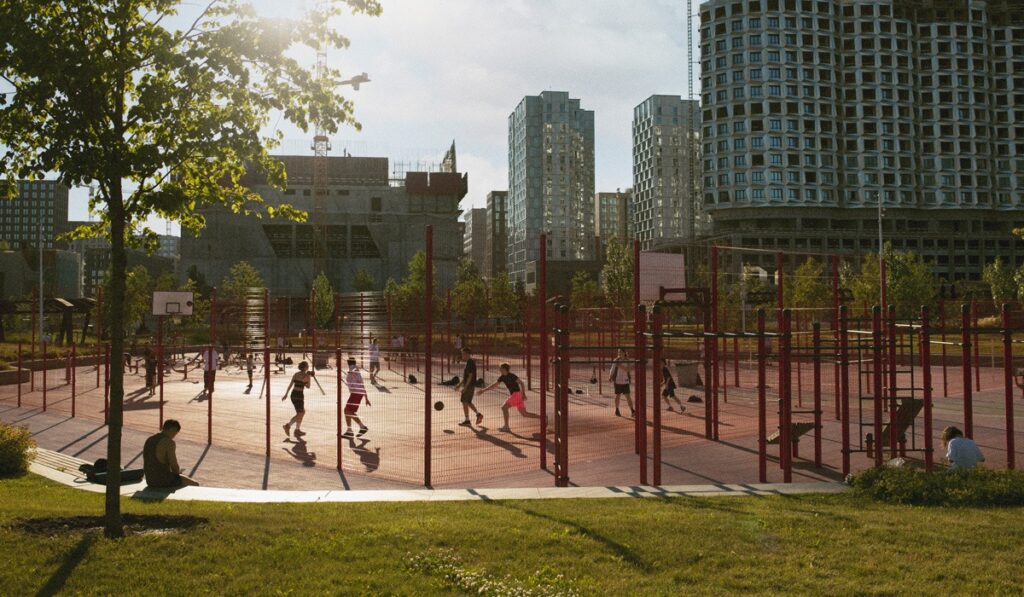
Photo from Freepik
From park-based bootcamps to schoolyard HIIT circuits, functional-fitness participation has exploded. According to the Outdoor Industry Association, the outdoor recreation base grew to a record 175.8 million participants, showing a clear demand for open-air activity.
Municipal planners, PE teachers, and coaches now face a common brief. How do we design an inclusive space that keeps everyone moving year-round?
We’ve analyzed the latest research and distilled the landscape into three design trends that consistently create vibrant, well-used fitness zones. You’ll walk away with zoning tips, case-study stats, and an action checklist to launch or upgrade your own community gym.
Trend 1: Support Multigenerational Recreation
The most successful community fitness hubs are designed for everyone, from eight to eighty. Creating spaces where multiple generations can exercise together fosters social connection and builds healthier lifelong habits.
Why It Matters
Soon, about one in five U.S. residents will be 65 or older, with this demographic shift expected by 2030. Parks that facilitate social connection combined with moderate physical activity can reduce social isolation and improve well-being among older adults, which may lead to lower healthcare costs.
Additionally, parks that support physical activity for multiple generations encourage family engagement and promote fitness environments accessible to all ages.
Zoning & Layout Tips
To encourage intergenerational activity, cluster low-impact stations like hand cycles and recumbent steppers near moderate-intensity rigs so grandparents can train alongside teens. Install shaded social pods with simple pergolas and benches to invite rest and conversation.
For colder climates, adding a small, lockable cubby for loaner resistance bands can keep winter sessions humming.
Equipment Spotlight
Playground equipment that supports multiple generations is key to inclusive outdoor spaces. WillyGoat’s collections of playground equipment feature thoughtfully designed pieces that encourage safe, shared use by seniors, adults, and children alike.
| Key Insight: Family-centered fitness works. Children whose parents exercise with them are more likely to meet activity guidelines, proving the power of designing spaces that encourage families to stay active together. |
Trend 2: Design a Space for Every Age & Ability
True inclusivity in fitness and recreation spaces embraces users of all ages and abilities, incorporating universal design principles to accommodate diverse physical and neurological needs. This ensures that every community member can participate fully without barriers or exclusion.
ADA & Universal-Design Principles
Begin with safe, accessible surfacing such as poured-in-place rubber or engineered wood fiber, both of which meet ADA recommendations by providing shock absorption and lowering fall risk. Each equipment cluster should include at least one transfer station with a clear, unobstructed five-foot turning radius to accommodate wheelchairs and other mobility devices.
Include visual and tactile cues, such as bright contrasting edging and raised icons on equipment, to support users with low vision or sensory processing challenges.
Bodyweight Circuits & Obstacle-Course Elements
Classic fitness components like parallel bars, plyometric steps, and balance rails can be adapted for various ability levels by using band assistance, adjustable heights, or elevated platforms.
For neurodiverse participants, integrating quiet zones or sensory panels helps create a calming environment conducive to focus and comfort.
Adaptive & Sensory Gear
Modular rigs featuring wheelchair-height pull-up bars and tactile handholds allow coaches to program inclusive workouts. This flexibility is key to long-term community engagement and ensures everyone can participate fully.
Active Adults, Active Kids
A practical way to engage families is to add QR-coded plaques on equipment. These codes can link to instructional videos demonstrating beginner, intermediate, and advanced variations of exercises, enabling users of all ages to work out safely within their personal ability ranges and challenge one another in a supportive way.
| Pro Tip: Boost inclusivity with QR codes on equipment. Link them to videos demonstrating beginner, intermediate, and advanced exercise variations, allowing everyone to train safely at their own level. |
Trend 3: Create a Fitness Trail
A fitness trail, or circuit pathway, transforms a simple walk into a structured workout. It’s an efficient way to integrate comprehensive training into a natural landscape or existing park path.
What Is a Fitness Trail?
Imagine a walking or jogging loop equipped with strategically placed exercise stations focusing on key fitness components like core strength, balance, agility, and stretching. This concept layers structured workouts over casual movement, capitalizing on the rising popularity of walking, currently one of the most accessible and widely practiced forms of physical activity, with over 155 million Americans participating regularly, according to the SFIA’s latest report.
Design Blueprint
Position exercise stations roughly every 100 meters along the trail, alternating muscle groups at each station to allow sufficient recovery and maintain workout quality. Safety is paramount. Each station should be clearly visible from multiple points on the trail to minimize isolation and ensure quick access if needed.
For the trail surface, crushed granite is an excellent choice. Known for its durability, permeability, and natural appearance, it offers good traction while facilitating drainage to prevent pooling.
Obstacle-Course/Functional-Training Tie-In
Add variety and engagement by incorporating functional training equipment such as monkey bars, wall-ball targets, low hurdles, and balance beams. To keep the trail appealing over time, design stations with modular components that can be rotated or replaced seasonally, preventing boredom and allowing for program updates tailored to different skill levels or fitness trends.
| Key Insight: Fitness trails deliver real ROI. One community saw an 8% rise in perceived property value and a 3x increase in wellness event attendance after installing a looped circuit pathway, making it a powerful community investment. |
Implementation Checklist: Turning Trends into Reality
- Conduct a site audit to assess space, grading, and utility access.
- Host a community input session to gather feedback.
- Research local grants and corporate sponsorship opportunities.
- Draft a phased installation timeline that aligns with your budget.
- Establish a schedule for quarterly maintenance inspections.
- Launch programming to activate the space.
The Path Forward
Thoughtful outdoor fitness design pays incredible community dividends, leading to stronger social bonds and healthier residents. Use these trends and the implementation checklist to get started. By focusing on multigenerational use and inclusive design, you can create a vibrant hub that serves your community for years to come.