
A lifter walks into week three of a fat-loss phase, drops four pounds on the scale, and still can’t see the definition they trained for, because half of what disappeared was muscle rather than fat. That mix-up sits behind a stubborn assumption in gym culture: that muscle gain and fat loss are two separate battles, fought in separate seasons, never in the same program. Newer research on body recomposition tells a different story. For beginners, people returning after a break, and even some experienced lifters, gaining muscle while shedding fat in the same training block is achievable with the right structure, not a myth reserved for genetics.

Why Are Muscle Gain and Fat Loss Treated as Opposites?
The bulk-and-cut model became standard gym advice because it’s easy to explain, not because it’s the only approach that works. A calorie surplus supports growth, and a calorie deficit forces fat loss, so early bodybuilding culture split the two into alternating phases and never looked back. That framing overlooks beginners and detrained lifters, whose muscles respond to almost any structured resistance training regardless of calorie balance. It also overlooks the growing body of recomposition research showing that muscle repair and fat burning aren’t mutually exclusive within the same week, or even the same day.
What Does Body Recomposition Actually Require?
Recomposition demands more precision than a straight bulk or a straight cut. Training has to be demanding enough to signal the body to hold onto or build muscle, calorie intake has to sit close to maintenance rather than deep in either direction, and protein has to stay high enough to support repair while calories are tight.
Training Frequency and Intensity
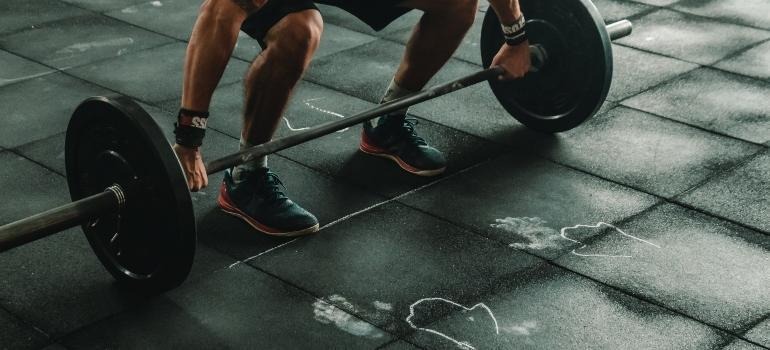
Three structured resistance sessions a week, hitting each major muscle group at least twice, is the minimum frequency most recomposition research relies on. Intensity matters just as much: training close to muscular failure on compound lifts sends a stronger growth signal than lighter, higher-rep circuits alone. Many of the setbacks lifters run into here have more to do with expectations than programming, impatience, all-or-nothing starts, and quitting before results show, which is exactly the pattern behind what most people get wrong about getting in shape.
Which Exercises Support Both Goals at Once?
Exercise selection for recomposition favors compound, multi-joint movements over isolation work, since squats, deadlifts, rows and presses recruit more total muscle and burn more calories per set than curls or leg extensions ever will. Programs built around effective body composition exercises typically pair those compound lifts with short rest periods and moderate rep ranges, keeping the heart rate elevated without sacrificing the load needed to maintain strength. Isolation work still earns a place later in a session, but it should never replace the compound lifts doing the heavy work for both goals simultaneously.
Building a Weekly Split That Covers Both Goals
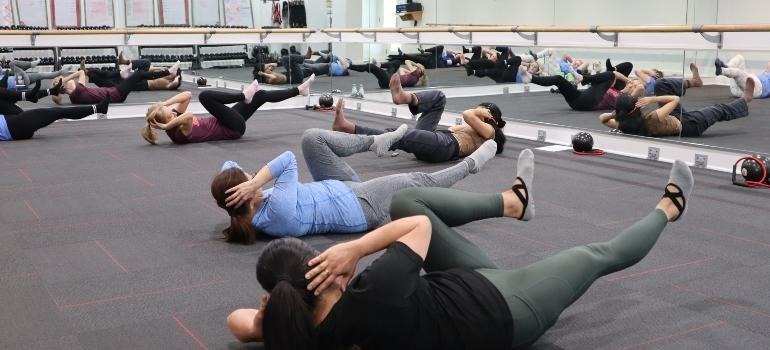
A full-body or upper/lower split trained three to four times weekly gives each muscle group enough frequency to grow while leaving room for the conditioning work that supports fat loss. Beginners without gym access can get a genuine training stimulus from home, and a structured 12 week bodyweight workout plan for beginners demonstrates how progressive overload works even without a single dumbbell. The split matters less than consistency across it; skipping sessions undermines recomposition faster than any single programming choice.
How Should Nutrition Support Simultaneous Recomposition?
Calories set close to maintenance, rather than committed to a surplus or deficit, give the body room to build muscle without accumulating fat. A 2024 editorial reviewing recent body recomposition research describes it as a genuine physiological phenomenon rather than a myth, achievable through the right combination of resistance training and diet even outside dedicated cutting or bulking phases. Carbohydrates and fats fill the remaining calories based on training volume and personal preference, since neither macronutrient alone determines whether recomposition succeeds once protein and total calories are dialed in.
How Much Protein Is Actually Enough?
Protein needs rise during recomposition because the body is doing two jobs on a tighter calorie budget than a surplus allows. The International Society of Sports Nutrition’s position stand on protein and exercise points to intakes of roughly 1.6 to 2.2 grams per kilogram of bodyweight daily for most exercising individuals, rising higher for trained lifters in a deficit. Spreading that protein across three to four meals supports muscle repair more consistently than loading it into one or two large servings.
Who Should Expect Realistic Results From This Approach?
Recomposition works fastest for beginners, detrained lifters, and anyone carrying extra body fat, since all three groups can build muscle and lose fat under almost any reasonable program. Progress slows considerably for lean, experienced lifters, who may need to lean back toward a traditional bulk or cut to keep moving. The wider convergence between fitness, nutrition and even aesthetic medicine described in the new body composition stack is part of why expectations here keep shifting, as more tools become available for the plateaus that used to require picking one goal over the other.

Building One Plan Instead of Two
Muscle gain and fat loss were never as incompatible as the old bulk-and-cut framing suggested; they simply require a program precise enough to pursue both without shortchanging either. Structured training three to four times a week, calories held near maintenance, and protein intake on the higher end of the recommended range are the three levers that make recomposition realistic rather than theoretical. Anyone still splitting their training year into separate “building” and “cutting” seasons has a reasonable case for testing one recomposition-focused block first, tracking strength and how clothes fit rather than the scale alone, and deciding from there whether two goals really needed two separate plans.
References:
https://pmc.ncbi.nlm.nih.gov/articles/PMC5477153
https://pmc.ncbi.nlm.nih.gov/articles/PMC11405322
Images:
https://images.pexels.com/photos/2261477/pexels-photo-2261477.jpeg?
https://images.pexels.com/photos/7697834/pexels-photo-7697834.jpeg?
https://images.pexels.com/photos/37677569/pexels-photo-37677569.jpeg?
https://images.pexels.com/photos/3838705/pexels-photo-3838705.jpeg?