

The underrated squat variation that builds glute strength without the knee strain of traditional squats.
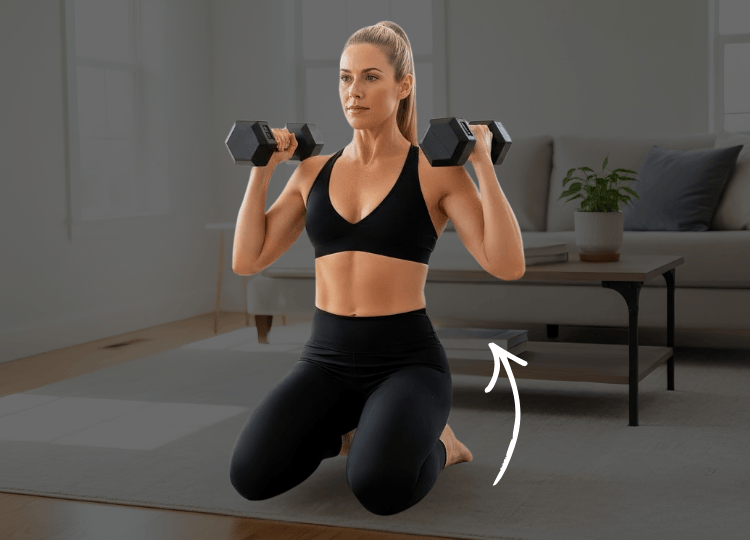
Kneeling squats don’t get as much attention as traditional squats, but for anyone dealing with knee discomfort during loaded squatting, or anyone who wants to build the hip extension strength that carries over to bigger lifts, they deserve a place in your routine.
By eliminating most of the knee’s range of motion and shifting the work to the hips and glutes, the kneeling squat offers a genuinely useful option for rehabilitation, skill development, and glute-focused training.
They also help those looking to improve their squatting technique for heavier back squats, as the movement encourages you to focus on driving through the hips, a skill that transfers well to more complex lower body exercises.
Although it’s a seemingly simple exercise, there are some important things to get right. This guide covers everything you need to know, including muscles worked, benefits, variations, and how to perform kneeling squats correctly.

Quick Summary
- Kneeling squats involve kneeling on the floor and lowering your glutes toward your ankles, keeping the torso upright throughout.
- They can be useful for reducing knee joint stress during the movement, improving hip extension strength, or building a better mind-muscle connection with the glutes.
- The kneeling position requires sustained knee flexion, which some people find uncomfortable, use padding and start with bodyweight.
What is a Kneeling Squat – TL;DR
A kneeling squat is a squat that is performed from a kneeling position (as opposed to standing).
With a neutral spine and upright torso, you lower your glutes to your ankles before lifting them back up.
Compared to regular squats, less strain is applied to the knees.
You can also add weight to kneeling squats… usually by either holding a barbell/dumbbells, or using a resistance band placed around your waist.
(If you’re looking for squatting alternatives due to knee pain, we’d recommend speaking to a Physical Therapist first to ensure you get to the root cause of your pain).
Squat Variations
As well as kneeling squats, there are all sorts of variations of the classic squat that allow you to target the lower body muscles differently. Hindu squats, Asian squats, cyclist squats, shrimp squats, and bear squats, are just a few examples.
How to Perform a Kneeling Squat
To do a kneeling squat:
- Kneel on a cushioned surface with your knees shoulder-width apart.
- Brace your core and squeeze your glutes.
- Keeping your torso upright and core braced, slowly lower your glutes down toward your ankles by flexing at the hips.
- Pause for a moment at the bottom before squeezing your glutes to drive back up to the starting position.
- Repeat for repetitions.
Coach’s Tip
Kneeling squats lend themselves really well for slow eccentric repetitions, i.e., lowering your glutes to your ankles slowly (such as a 3 second tempo). Couple this with explosive concentric repetitions (rising out of the squat), and each set is going to make those upper leg muscles work overdrive.
Kneeling Squat Muscles Worked
Glutes
The kneeling squat targets the glutes by requiring a strong hip extension as you rise from the bottom position.
It’s worth noting, however, that research suggests glute activation in the kneeling squat is moderate rather than maximal, if your primary goal is glute hypertrophy, pairing this exercise with higher-activation movements like hip thrusts or Romanian deadlifts is recommended.
That said, kneeling squats are a useful tool for building hip extension strength and improving the mind-muscle connection with the glutes, particularly for beginners.
Hamstrings
The hamstrings play a supporting role throughout the movement, assisting the glutes during hip extension. Strengthening the hamstrings also provides additional stability around the knee joint, which is valuable for injury prevention.
Quads
The quads play an important supporting role in the kneeling squat, helping to control and stabilise the movement as you lower down and drive back up. While they don’t go through their full range of motion the way they would in a traditional squat, they remain active throughout the exercise.
Core
Your core muscles work as stabilisers throughout the kneeling squat, maintaining an upright posture and preventing the lower back from arching. Keeping the core actively engaged throughout each rep is essential for both safety and getting the most out of the movement.
Kneeling Squat Benefits
Focus on Glutes
By initiating the movement from a kneeling position, kneeling squats place a greater emphasis on the glutes than many traditional squat variations. The hip extension required to rise from the kneeling position targets the glute muscles directly, making it a useful exercise for those looking to strengthen and better activate this muscle group. For maximum glute development, use this movement alongside higher-activation exercises like hip thrusts.
Less Strain on the Knee Joint Through Range of Motion
Unlike traditional squats, kneeling squats eliminate most of the knee’s range of motion during the movement, shifting the primary focus to hip extension. For people managing knee discomfort during loaded squatting, this can make the exercise a more manageable option.
That said, the kneeling position does place the knee in sustained full flexion, which some individuals find uncomfortable — particularly those with patella or meniscal issues.
If this is a concern, use padding generously and start with bodyweight only. As always, consult a physiotherapist or doctor before using this as a rehabilitation exercise.
Improve Hip Hinge Extension Strength
The kneeling squat encourages a strong, controlled hip extension movement, which is a fundamental pattern in many compound exercises. Improving hip extension strength here can carry over positively to deadlifts, squats, and athletic movements.
Beginner Friendly
The movement is more controlled than a traditional squat and the reduced range of motion makes it accessible for those just starting out. It can also serve as a useful introduction to holding a barbell, helping beginners get comfortable with the position before progressing to heavier back squats.
Refresh Tired Workout Routines
Kneeling squats add a useful variation to standard lower body training. Whether used as a warm-up, a finisher, or a main accessory movement, they’re easy to adapt and can add variety to glute and leg day sessions.
Injury Recovery
For those rebuilding strength after injury, kneeling squats can offer a gentler way to load the glutes and hips without the full demands of a traditional squat. Always work with a physiotherapist or medical professional to confirm this exercise is appropriate for your specific situation.
Spanish squats are also often used in injury rehab and recovery.
Improve Balance and Stability
The kneeling position requires active core engagement and careful control throughout the movement, which over time can contribute to improved balance and stability in the lower body.
Variations
Smith Machine Kneeling Squats
Performed using a Smith machine, this variation provides guided and controlled movement.
Place a pad under your knees, position the bar across your upper back, and perform the kneeling squat. Ideal for those new to the exercise or looking for added stability.
This can be used alongside Smith Machine hip thrusts for the ultimate glute workout.
Barbell Kneeling Squats
For the more adventurous, barbell kneeling squats add an extra challenge, as you need to balance the weight without any assistance from the Smith Machine.
This variation is great for those looking to increase strength and muscle engagement, especially for intermediate to advanced gym-goers.
Resistance Band Kneeling Squats
Looking for a home-friendly option? Try resistance band kneeling squats.
Loop a band around a sturdy anchor and your hips, and perform the kneeling squat. This variation offers adjustable resistance and is perfect for those wanting to add a gentle challenge to their home workouts.
Things to Consider
When incorporating kneeling squats into your routine, there are a few key points to keep in mind.
The kneeling position places the knee in sustained full flexion, which some people find uncomfortable regardless of the load being used. Always use adequate padding under the knees and start with bodyweight to assess your comfort before adding resistance.
Weight loading on kneeling squats is more limited than on traditional squats. The pressure through the knees in a kneeling position means very heavy loads become uncomfortable and counterproductive, which caps the progressive overload potential of this exercise over time. For this reason, kneeling squats are best used as an accessory or rehabilitation movement rather than a primary strength exercise for advanced lifters.
Unlike traditional squats, kneeling squats don’t meaningfully target the calves, so you’ll need to include dedicated calf training elsewhere in your programme if that’s a goal.
Finally, re-racking a heavy barbell from a kneeling position is more challenging than from standing. Ensure you have a proper setup before adding significant weight, and consider using a spotter if you’re new to the barbell variation.
Common Mistakes to Avoid
Ignoring Knee Comfort
The kneeling position places sustained pressure on the knees, so don’t skip the padding. If you experience sharp or persistent knee discomfort, stop the exercise and consult a professional before continuing.
Leaning Forward
Keep your back straight and torso as upright as possible throughout. If you find yourself leaning forward, it typically means your hip flexors are tight or your core isn’t adequately braced, focus on keeping your chest tall and squeezing the glutes as you rise.
Rushing the Movement
Take your time with each rep, particularly on the way down. A slow, controlled descent puts the muscles under tension for longer and reduces the risk of losing form at the bottom of the movement.
Lack of Core Engagement
Keeping the core actively braced throughout is essential for maintaining an upright posture and protecting the lower back. If your lower back is arching at any point, refocus on bracing before continuing.
Using Incorrect Resistance
Choose a resistance level that allows you to complete each rep with full control and proper form. Given the limitations on loading mentioned above, err on the side of lighter weight and higher quality repetitions rather than pushing too heavy too soon.
Bottom Line
Kneeling squats are a versatile exercise, targeting glutes while easing knee strain. They enhance hip hinge movement, offer a beginner-friendly approach, and refresh tired routines.
Ideal for injury recovery, they also improve balance and stability. It’s a dynamic movement that adds both strength and variety to your fitness journey.
Related Articles
Muscles Worked During Stir The Pot Exercise