
It’s 3:15 p.m., the sky is already turning gray, and the report on your screen hasn’t moved in twenty minutes. In summer, you’d shake this off with a walk. In January, you head for the coffee machine for the third time.
The winter afternoon slump is a routine problem, and routine fixes work best. Small changes to light, movement, food, and caffeine timing can carry you to the end of the workday without wrecking your evening.
What Changes in Winter
Look at what a typical winter workday includes. You leave home in the dark, spend daylight hours at a desk, and drive home in the dark again. Workouts move indoors or get skipped. Lunches get heavier, and the coffee count creeps up.
None of these changes is dramatic on its own. Put together, they make 2 to 4 p.m. the hardest stretch of the day for a lot of people. The fixes below target each piece of that routine.
Get Outside While There’s Still Daylight
In December and January, the useful daylight in your workday may end by mid-afternoon. Plan around that window instead of waiting until you feel tired.
A 10-minute walk outside right after lunch is the simplest version. Leave your phone in your pocket, walk at a pace that warms you up, and come back before the 1:30 meeting. If you work from home, a loop around the block counts.
Keep a hat, gloves, and a warm layer at your desk or by the door. That way the walk doesn’t depend on what you happened to wear that morning, and cold hands stop being the excuse.
On days when getting outside isn’t possible, move your desk or laptop closer to a window for the early afternoon. Take calls standing by the window, and save screen-heavy tasks for later in the day when the light is gone anyway.
Move Before the Slump Hits
Most people wait until they’re foggy to get up, and by then, getting up feels like a chore. Schedule short movement breaks at 1:30 and 3:00 instead, and treat them like meetings.
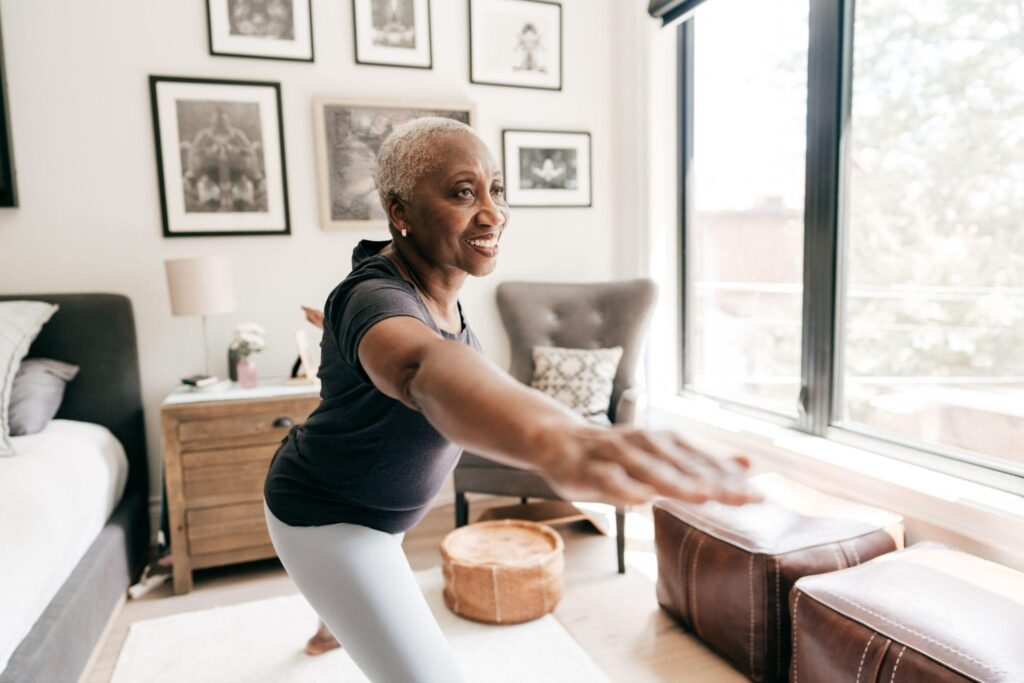
A five-minute desk-friendly circuit is enough to break up a long sitting stretch:
- 10 bodyweight squats
- 10 incline push-ups against your desk or a counter
- 30 seconds of marching or jogging in place
- 10 standing hip hinges, like a bow from the waist with a flat back
- 30 seconds of shoulder rolls and neck turns
Run through it once or twice. If you work in an office, a quick trip up and down a couple of flights of stairs does a similar job without anyone noticing.
If you train after work, these short breaks also make it easier to show up for that session, since you’re already warmed up and out of your chair.
Build a Lunch That Doesn’t Weigh You Down
Winter comfort food is part of the appeal of the season. A big bowl of pasta at noon, though, can make the next two hours feel slow for a lot of people.
If you notice that pattern, try changing the size and mix of your lunch before you change anything else:
- Fill half your plate or bowl with vegetables, even if they’re roasted or in a soup.
- Add a clear protein source, like chicken, eggs, beans, tofu, or Greek yogurt.
- Keep the bread, pasta, or rice to a portion you’d call “a side.”
- Save a small snack, like an apple with peanut butter, for 3 p.m. instead of eating everything at noon.
Packing lunch the night before makes this easier, since the 12:30 decision is already made when you’re hungry and rushed. Track how you feel for a week. Your own afternoons are better evidence for your body than any general rule.
Schedule Your Hardest Work Earlier
If you know the mid-afternoon stretch is your weakest, stop saving your most demanding tasks for it. Put writing, analysis, and hard decisions in the morning, and line up lighter work for 2 to 4 p.m.: email, admin, calls, filing, and planning tomorrow.
Coaches and lifters can use the same approach. If you program your own training, put the session that needs the most focus, like heavy lifts or technical work, on days and times when you feel sharpest.
Keep Water Within Reach
Winter makes it easy to forget about water. You’re not sweating through a summer commute, and it’s easy to let coffee be the only thing you drink all afternoon.
Keep a full bottle on your desk and refill it at lunch and again mid-afternoon.
If cold water feels unappealing in January, switch to something warm: herbal tea, hot water with lemon, or a mug of broth. Each refill also gives you a reason to stand up and walk to the kitchen.
Be Smart About Afternoon Caffeine
Coffee is the first thing most of us reach for, and timing is where it goes wrong. If late cups have ever kept you staring at the ceiling, set a personal cutoff and stick to it.
You have a few options for what to do after that cutoff:
- Switch to decaf or half-caf for your afternoon cup, so you keep the ritual.
- Pair your movement break with a cold glass of water instead of a drink from the machine.
- Try a caffeine-free product built for afternoon focus.
One example of that last option is Ultra Pouches, a line of nicotine-free nootropic pouches.
Their Ultra Focus pouch contains no caffeine. It uses paraxanthine, a naturally occurring byproduct of caffeine metabolism, along with other nootropic ingredients. Their Ultra Energy pouch does contain caffeine, 180 mg per pouch, so it fits better as a morning option than a late-afternoon one.
The pouches are sold for adults 18 and older. As with any supplement, talk with your doctor first if you’re pregnant, nursing, taking prescription medication, or managing a health condition.
Protect Tonight’s Sleep
How you sleep tonight shapes how tomorrow afternoon goes. Winter evenings make it tempting to stay on the couch with a screen until midnight, then wake up in the dark feeling short-changed.
Pick a consistent bedtime and wake time, including on weekends, and keep them within about an hour of each other.
Dim the lights and put your phone away for the last 30 minutes before bed. If you train in the evening, finish hard sessions early enough that you have time to wind down afterward.
When It’s More Than an Afternoon Slump
Feeling a little flat at 3 p.m. is common. Feeling exhausted most of the day, losing interest in things you usually enjoy, or noticing that your mood drops every winter is different.
If that sounds familiar, talk to your doctor. Ongoing fatigue has many possible causes, and a doctor can help you sort out which ones apply to you. Seasonal changes in mood are also something a doctor or mental health professional can help with.
Building an Afternoon That Holds Up Until Dinner
Pick two changes for this week. A 10-minute walk after lunch and a 2 p.m. caffeine cutoff make a good pair, since each one is easy to keep track of.
Add a five-minute movement break and a refilled water bottle the following week. Once you’re getting outside while it’s light, moving before the fog sets in, and keeping late caffeine out of your evening, 3 p.m. starts to look a lot more like 10 a.m.