
Movement patterns influence how your body handles everything from walking up stairs to performing a heavy squat. When these patterns are smooth and coordinated, muscles and joints share the workload, supporting strength and stability. When patterns are inconsistent, strain builds in places that fatigue quickly. Over time, this can lead to aches, stiffness, and setbacks during training.
Improving your movement can change how your body feels day to day. It shapes how you generate force, absorb impact, and maintain balance during activity. A small shift in how you hinge, rotate, or push often creates a noticeable difference in comfort and performance.
What Movement Patterns Are and Why They Matter
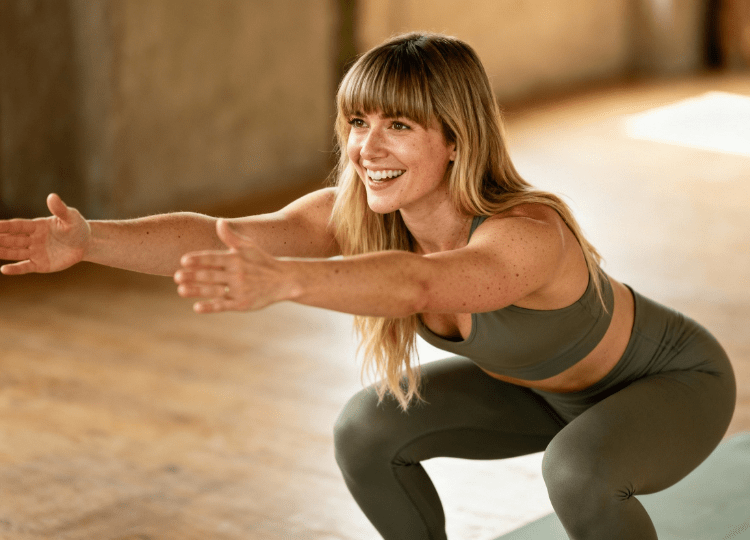
Movement patterns describe the shapes your body goes through during essential actions. They include squatting, hinging, pushing, pulling, rotating, and carrying. These patterns appear in nearly everything you do. Carrying groceries, getting up from the floor, and lifting weights all rely on the same foundational mechanics.
Efficient patterns let your muscles fire in the right sequence. They help joints move through a safe, natural range of motion. When a pattern breaks down, your body compensates by placing more pressure on joints that are not built for constant load. Inefficient patterns often cause tension in the lower back, tightness around the hips, or discomfort around the shoulders.
Learning how your body naturally moves provides a framework for improving technique and training the body to coordinate as a unit, supporting better posture, safer exercise progressions, and stronger overall performance.
The Science Behind Movement Quality and Strength
Movement quality is the result of how well your muscles, tendons, and nervous system communicate during activity. When this system works smoothly, you produce more power without adding extra strain. Better coordination within each movement pattern helps explain why people often feel stronger after improving form, even when the weight on the bar stays the same.
Research in ergonomics supports this connection. The CDC’s ergonomics guidance explains how inefficient movement increases the load on joints and soft tissues, raising the risk of irritation and overuse injuries. Small mechanical issues tend to build up over time, especially during repetitive tasks or structured training.
Improving these patterns gives your muscles clearer instructions. With better alignment, coordination becomes easier, exercises feel more stable, and strength develops in a way that supports long-term progress.
How Physical Stress Amplifies the Impact of Poor Movement Patterns
Patterns that work well during light activity can break down under heavier or more frequent physical demands. Lifting, bending, climbing, and carrying all place pressure on joints and tissues. If your movement is inconsistent, that pressure builds over time.
People who work in physically demanding environments often encounter a broad range of injury risks. This awareness sometimes includes exposure to fatal FELA accident information, which shows how serious certain hazards can be. Daily physical stress increases the need for efficient movement because margins for error are smaller.
Strengthening these foundational patterns helps the body stay organized during challenging tasks. When muscles share the workload and joints stay aligned, you are less likely to feel the kind of strain that lingers after a long day or an intense workout.
Practical Ways to Improve Movement Patterns
Improving movement begins with slowing down. Paying attention to how your body moves during familiar exercises reveals patterns you may not notice at full speed. Identifying whether your knees track evenly during a squat or whether your hips stay level during a hinge gives you valuable information about where to focus.
Mobility training supports better alignment. Opening the hips and ankles often leads to cleaner squats. Improving thoracic spine mobility can make overhead movements feel more stable. Activation work prepares key muscles to engage at the right time, reinforcing healthier patterns.
Filming yourself during common exercises can be surprisingly helpful. Many lifters notice small shifts in posture or balance that feel invisible during the moment. With consistent practice, these adjustments become part of your natural movement.
Functional Exercises That Reinforce Better Patterns
Functional exercises teach the body to move with more intention and control. Squat variations strengthen the legs while encouraging hips, knees, and ankles to coordinate. Hinge movements like Romanian deadlifts strengthen the posterior chain and help the hips absorb load instead of the lower back.
Rotational exercises build core stability and prepare you for real-life movements such as turning, twisting, or bracing while carrying heavy loads. Loaded carries support posture and teach the body to stay organized during movement. These exercises improve balance, coordination, and body awareness, supporting everyday activity.
If you want to explore this training style further, the guide to functional fitness training offers helpful ideas for building strength that transfers to real-world movement. Consistent practice helps your body build patterns that feel smooth, strong, and dependable.
Conclusion
Improving movement patterns helps the body distribute effort more effectively. Small adjustments in how you squat, hinge, rotate, or carry weight can change how strong and stable you feel in daily life. These improvements reduce unnecessary strain, support better posture, and encourage steady progress during training.
Focusing on movement quality builds a stronger foundation for every activity you perform. With more efficient patterns, your body stays balanced and better prepared for a wide range of physical challenges. This approach supports long-term resilience and makes everyday tasks feel easier and more comfortable.