

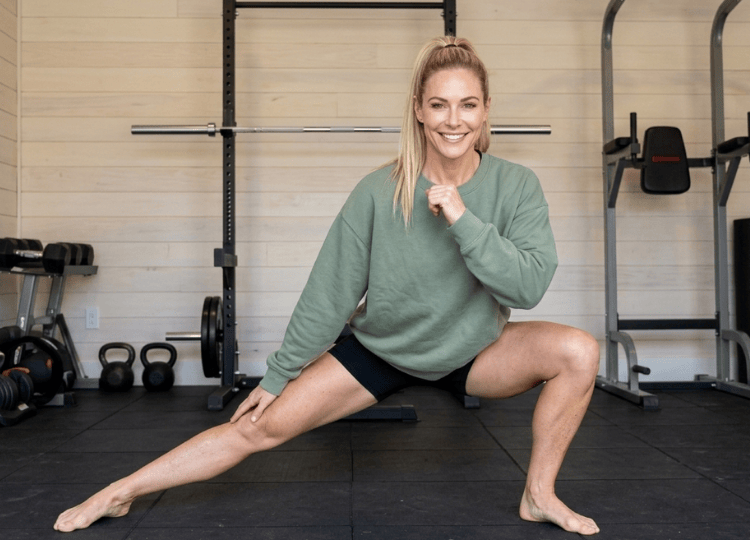
The hip adductors are one of the most commonly neglected muscle groups in a stretching routine, and one of the first to cause problems when they are.
These are the muscles of the inner thigh, responsible for bringing the legs toward the midline of the body and contributing to hip stability and movement in almost every direction.
When they are tight or restricted, the effects tend to show up across the whole lower body: reduced squat depth, limited hip mobility, increased lower back tension, and a higher risk of groin strains, which are among the most common soft tissue injuries in sport.
The 7 hip adductor stretches below cover a range of positions and intensities, making the routine suitable whether you are warming up before training, winding down after a session, or simply working on flexibility at home with no equipment at all.
What are the Hip Adductors?
The hip adductors are a group of five muscles located on the inner thigh: the adductor longus, adductor brevis, adductor magnus, gracilis and pectineus.
Together they are responsible for hip adduction, which is the movement of the leg toward and across the midline of the body, as well as contributing to hip flexion, extension and rotation depending on the position of the hip at any given moment.
Age, prolonged sitting and a sedentary lifestyle are the most common reasons for adductor tightness in the general population. In athletes, repetitive loading without adequate recovery and stretching is the more typical cause.
In both cases, the impact extends beyond the inner thigh itself, since tight adductors alter pelvic mechanics and place compensatory stress on the lower back, knees and surrounding hip muscles.
How Long Should You Hold Each Stretch?
Research comparing different static stretching protocols for the hip adductors supports holds of 30 to 60 seconds per side for meaningful flexibility improvements.
A PMC study found that both passive and active static stretching of the adductors for up to 60 seconds produced increases in range of motion without any reduction in muscle strength, making them safe to include both before and after training.
Holding for less than 20 seconds tends to produce limited benefit, while exceeding 60 seconds before training may marginally affect performance in some individuals.
For a general flexibility routine, aim for two to three sets of 30 to 45 seconds per side on each stretch. For a pre-workout warm-up, a single set of 20 to 30 seconds is sufficient.
7 Best Hip Adductor Stretches
Side Lunge
The side lunge is one of the most effective and accessible adductor stretches available, combining a dynamic movement with a meaningful groin stretch that most people feel immediately.
How to do it:
- Stand upright with your feet in a wide stance, roughly twice shoulder-width apart.
- Shift your weight to the left, bending the left knee and keeping the right leg straight.
- Lower yourself until you feel a stretch through the right inner thigh. Keep the back flat and the chest up throughout.
- Hold for the desired duration, then push back up to centre and repeat on the other side.
Only go as deep as is comfortable. The stretch should be felt in the inner thigh, not the knee. Over time, you should be able to get progressively lower as flexibility improves.
Butterfly Stretch
A staple in yoga and physiotherapy alike, the butterfly stretch is one of the most direct and accessible adductor stretches available and a particularly good option for those new to inner thigh flexibility work.
How to do it:
- Sit on the floor with your back straight. Bend both knees and bring the soles of your feet together in front of you.
- Hold your feet with both hands and allow the knees to relax toward the floor.
- Hold the position, feeling the stretch through the inner thighs and groin.
- To increase the intensity, lean gently forward from the hips while keeping the back flat.
If the stretch feels intense immediately, move the feet further away from the body, which reduces the range of motion required and makes the position more comfortable.
Supine Adductor Stretch
The supine adductor stretch is performed lying on the back, making it one of the most accessible options for those with limited mobility or those looking for a restorative stretch at the end of a session or before bed.
How to do it:
- Lie flat on your back with your knees bent and feet flat on the floor.
- Allow both knees to slowly fall outward toward the floor, bringing the soles of the feet together.
- Let gravity do the work and allow the inner thighs to relax into the stretch. Do not force the knees down.
- Hold for 30 to 60 seconds, breathing steadily throughout.
This is a gentle, passive stretch that works well as a cool-down or evening mobility exercise. For a deeper stretch, bring the feet slightly closer to the body.
Kneeling Adductor Stretch
The kneeling adductor stretch targets the inner thigh directly in a position that most people find easy to control and adjust, making it a reliable option for consistent adductor flexibility work.
How to do it:
- Start in a kneeling position on all fours. Widen your knees as far as is comfortable, keeping the ankles in line with the knees.
- Shift your hips back slightly toward your heels, feeling the stretch open up through the inner thighs.
- Hold the position, keeping the back flat and the core gently braced.
- To deepen the stretch, shift the hips further back or widen the knees gradually.
A folded mat or cushion under the knees makes this more comfortable on hard floors.
Pigeon Pose
Pigeon pose provides a deep stretch for the hip adductors, glutes and hip flexors simultaneously, making it one of the most efficient single positions for overall hip flexibility. It requires slightly more mobility to enter than some of the other stretches on this list, but the depth of the stretch it provides makes it worth working toward.
How to do it:
- Start on all fours. Bring the right knee forward toward the right hand, lowering the right shin toward the floor at an angle. The right foot should rest somewhere between the left hip and the left hand depending on your flexibility.
- Extend the left leg straight behind you, resting the top of the left foot on the floor.
- Lower your hips toward the floor and feel the stretch through the right hip, glute and inner thigh.
- Hold for 30 to 60 seconds, then switch sides.
If the hips do not reach the floor comfortably, place a folded blanket or block under the hip on the bent leg side for support. Do not force the position.
Reclining Pigeon Pose
The reclining pigeon pose offers a gentler variation that’s worth trying if the regular pigeon pose puts too much strain on your knees.
Frog Stretch
The frog stretch is a deep groin and adductor stretch that appears frequently in physiotherapy literature for inner thigh flexibility. It provides one of the more intense adductor stretches on this list and is best approached gradually, allowing the hips to open over time rather than forcing the position.
How to do it:
- Start on all fours on a mat. Slowly widen both knees out to the sides as far as is comfortable, keeping the ankles directly behind the knees and the feet flat or turned outward.
- Lower your forearms to the floor for support as you sink your hips toward the mat.
- Hold the position, breathing steadily and allowing the inner thighs to relax into the stretch with each exhale.
- To increase the depth, gently shift the hips further back or wider.
This stretch should be felt through the inner thighs and groin. If any sharp pain is felt in the hips or knees, reduce the range immediately. Progress gradually over multiple sessions rather than trying to force depth on the first attempt.
Lateral Lunge with Hold
A more controlled version of the side lunge, the lateral lunge with hold adds a static element that increases the stretch duration and makes it particularly effective for improving adductor flexibility over time.
How to do it:
- Stand with feet hip-width apart. Take a wide step out to the right, keeping the left leg straight.
- Bend the right knee and lower into a lateral lunge, keeping the right foot flat on the floor and the torso upright.
- Hold the bottom position, feeling the stretch through the left inner thigh and groin.
- Drive through the right foot to return to standing and repeat on the other side.
For a deeper stretch, rest your elbows on your thighs at the bottom position and gently press the knees outward.
Benefits of Stretching the Hip Adductors
Reduces the Risk of Groin Strains
Research suggests that appropriate stretching may help reduce the risk of adductor strains, which can occur when the groin muscles are stretched beyond the limits of normal range of motion.
Groin strains are particularly common in sports involving rapid changes of direction, kicking and lateral movement, and maintaining adequate adductor flexibility is one of the most practical preventive measures available.
Improves Lower Body Mobility and Squat Depth
Tight adductors restrict hip abduction and external rotation, which limits squat depth and compromises movement quality in a wide range of lower body exercises.
Consistently stretching the inner thigh muscles improves the available range of motion at the hip joint, which translates directly into better movement patterns in training and daily life.
Reduces Lower Back Tension
The adductors attach to the pelvis and play a role in pelvic positioning. When they are chronically tight, they can contribute to altered pelvic mechanics that place additional stress on the lower back.
Addressing adductor tightness through regular stretching helps restore more natural pelvic positioning and reduce the compensatory tension that tight inner thighs can create further up the kinetic chain.
Supports Athletic Performance
Hip mobility is a fundamental requirement of almost every athletic movement. Research has consistently linked adequate adductor flexibility to improved performance in sports that require lateral movement, acceleration and change of direction.
Including adductor stretches as part of a regular warm-up and cool-down routine is one of the simplest and most accessible ways to support both performance and injury resilience.
Stretch and Strengthen
As well as stretching the adductors, doing exercises that strengthen these muscles, such as the Copenhagen plank, can make a big difference to your overall lower body movement.
Things to Consider
- Never stretch into pain. The adductors should feel like they are being lengthened and gently challenged during these stretches, not strained. A pulling sensation in the inner thigh is normal. Sharp pain in the groin, hip or knee is a signal to stop and reduce the range of motion.
- Be patient with progress. Adductor flexibility tends to respond more slowly than some other muscle groups. Consistent stretching two to three times per week over several weeks is what produces lasting improvement. Occasional sessions are unlikely to produce meaningful change.
- Warm tissue stretches more effectively. Performing these stretches after light aerobic activity or a warm shower will allow the muscles to respond better than stretching cold. For pre-workout use, a shorter hold of 20 to 30 seconds is sufficient. Longer holds are best saved for post-workout or standalone flexibility sessions.
- Bilateral tightness is common but asymmetry is worth addressing. Most people find one side significantly tighter than the other. Spending slightly more time on the tighter side at each session is a practical way to gradually reduce this asymmetry over time.
Bottom Line
The hip adductors are an area of the body that many people stretch only when something goes wrong. The research is clear that consistent adductor stretching reduces injury risk, improves hip mobility, supports lower back health and enhances lower body movement quality across a wide range of activities.
The 7 stretches above cover a range of intensities and positions, from accessible beginner-friendly options like the butterfly and supine stretch to deeper variations like the frog stretch and pigeon pose. None of them require equipment, all of them can be done at home, and two to three sessions per week of 10 to 15 minutes is enough to produce meaningful improvements in flexibility over time.
Start with the stretches that feel most accessible, hold each position for 30 to 45 seconds per side, and build gradually toward the deeper variations as your range of motion improves.
Related Articles:
Benefits of the Prayer Stretch