

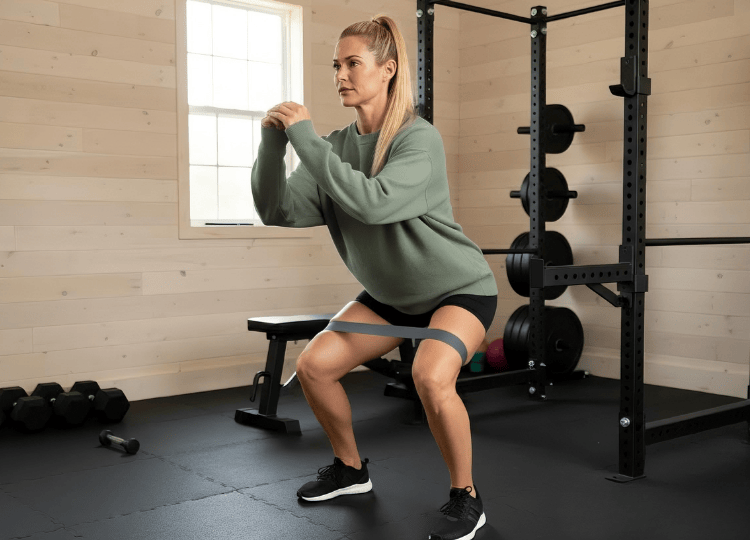
Sitting underneath the gluteus medius on the outer hip, the gluteus minimus is the smallest of the three gluteal muscles. But small doesn’t mean insignificant. It plays a defining role in stabilising the pelvis during walking, running, and any single leg movement… and weakness here creates a chain reaction of compensation patterns up and down the body that can be difficult to trace back to the source.
Hip instability during single leg movements, the knee caving in during squats, persistent lower back ache that doesn’t seem to have an obvious cause… weak gluteus minimus muscles are a surprisingly common contributor to all of these problems.
This guide covers the 8 best exercises for targeting the gluteus minimus, how to perform each one, and what the research actually says about which movements are most effective.
At a Glance – Gluteus Minimus Exercises
- Clamshells
- Single Leg Romanian Deadlift
- Lateral Band Walks (Side Steps)
- Fire Hydrants
- Lying Hip Abduction
- Monster Walks
- Hip Abduction Machine
- Side Plank Hip Dips
What (and Where) are the Gluteus Minimus Muscles?
The gluteus minimus muscles are one of the three muscle groups that make up our “glutes”, along with the gluteus medius and the gluteus maximus muscles.
They’re the smallest of the three, sitting underneath the gluteus medius, and are primarily responsible for hip abduction, which is the movement of the leg away from the midline of the body, and internal rotation of the hip.
But, the impact goes beyond these simple movement patterns, as weakness around the outer hips can lead to all sorts of MSK issues, such as back and knee pain, due to the body not being able to stabilize the pelvis and spine, especially when load is applied.
Getting Started with Glute Training
Our 4 week glute workout plan, with printable PDF, includes exercise ideas and programming for a basic glute training plan at home.
Best Gluteus Minimus Exercises
Clamshell
The clamshell is a simple yet really effective exercise that targets the gluteus minimus.
To perform the clamshell exercise, lie on your side with your hips and knees bent at a 45-degree angle. Keeping your feet together, and legs stacked on top of each other, raise your top knee as high as you can without moving your pelvis. Then, slowly lower your knee back down.
You can add a resistance band to increase the difficulty.
The clamshell is effective at targeting the gluteus minimus because it involves hip abduction, the primary function of this muscle. A common mistake to avoid is rotating the spine or pelvis during the movement. Instead, keep your core engaged and your body still to ensure you’re isolating the gluteus minimus and outer hips.
Single Leg Romanian Deadlift
The single leg Romanian deadlift might not be the first exercise that comes to mind for gluteus minimus training, but research ranks it among the highest force-producing exercises for the gluteal muscles, including the gluteus minimus. The combination of hip extension, single leg balance, and the demand for lateral pelvic stability throughout the movement creates a high level of gluteus minimus activation that most isolation exercises simply can’t match.
To perform the single leg RDL, stand on one leg with a slight bend in the knee. Hinge at the hips, extending the free leg behind you for balance and keeping your back flat and parallel to the floor at the bottom of the movement. Squeeze the glutes and drive the hips forward to return to standing. A dumbbell or kettlebell held in the opposite hand to the standing leg increases the challenge meaningfully.
A common mistake to avoid is allowing the pelvis to rotate during the movement. Keep the hips square throughout, any rotation reduces the demand on the gluteus minimus and shifts the work elsewhere. This is precisely the cue that makes the exercise effective for the outer hip muscles.
Lateral Band Walks (Side Steps)
Lateral band walks (also known as side steps) are another great exercise for the gluteus minimus.
To perform a lateral bank walk, place a resistance band around your ankles, thighs or feet, and stand with your feet hip-width apart. Step to the side with one foot, then follow with the other foot, keeping tension in the band.
Lateral band walks target the gluteus minimus by requiring you to resist the band’s tension while moving your legs apart. A common mistake to avoid is letting your knees cave inwards, so try to actively push against the band to keep your knees aligned as you move.
The lower the band is on your body, the harder it is… so start by placing it around your thighs and build up to putting it around your feet (or opt for a thicker band).
Fire Hydrants
Fire hydrants are another popular exercise in glute workouts and injury rehabilitation.
To perform fire hydrants, start on all fours (quadruped position) with your knees stacked directly under your hips and your hands under your shoulders. Keeping your knee bent, lift one leg out to the side, then lower it back down.
Fire hydrants target the gluteus minimus by requiring hip abduction in a different plane of motion. A common mistake to avoid is rotating the body or shifting your weight too much.
Mobility around the hip joints could be a limiting factor for some when attempting this movement path.
You can also add a resistance band to increase the difficulty.
Lying Hip Abduction
Lying hip abduction is perhaps the simplest of all these exercises, but again, incredibly effective at targeting the outer hips.
To perform a lying hip abduction, lie on your side with your legs straight and stacked on top of each other. Lift your top leg up towards the ceiling, then slowly lower it back down.
Don’t worry about how high you lift your leg, but instead, focus on very controlled movements.
To make things easier, you can also do this standing up, which means you don’t need to work against gravity.
Monster Walks
Monster walks can be seen as a variation of the lateral banded walk. Instead of moving from side to side, you move forwards and backwards.
To perform this exercise, place a resistance band around your ankles or thighs, and stand with your feet hip-width apart. Step forward and out to the side with one foot, then follow with the other foot, keeping tension on the band.
Monster walks target the gluteus minimus by requiring you to resist the band’s tension while moving your legs apart.
Hip Abduction Machine
The hip abduction machine is a piece of gym equipment that is specifically designed to target the gluteus medius and minimus, by adding load to a hip abduction movement.
To use this machine, sit on the seat with your legs on the padded levers and your feet on the footrests. Push your legs apart against the resistance, then slowly bring them back together.
A common mistake to avoid is using too much weight as this can encourage poor technique. Start with a light weight and focus on using good form to ensure you’re engaging the gluteus minimus and that you have full control of the weight for the whole duration of the movement.
Side Plank Hip Dips
Side plank hip dips are a challenging exercise that target the gluteus minimus, along with other muscles in your core and lower body.
To perform side plank hip dips, start in a side plank position with your elbow stacked directly under your shoulder and your feet stacked on top of each other. Lower your hips towards the ground, then lift them back up to the starting position.
This exercise targets the gluteus minimus by requiring you to lift your body weight using your hip muscles. It also challenges your balance and core stability.
Holding a side plank also means this is a great exercise for strengthening the core, particularly the obliques.
Benefits of Gluteus Minimus Exercises
Improved Hip Stability
The gluteus minimus is one of the primary stabilisers of the hip joint during single leg activities. When it’s functioning well, the pelvis stays level as weight shifts from one leg to the other during walking, running, and exercise. When it’s weak, the opposite side of the pelvis drops, a pattern known as a Trendelenburg gait, which increases stress through the hip, knee, and lower back simultaneously.
Strengthening the gluteus minimus directly addresses this instability at the source.
This is particularly noticeable for single leg exercises, such as single leg RDLs.
Posterior Chain Strength
The gluteus minimus is part of the posterior chain, a group of muscles that includes the glutes, hamstrings, and lower back.
Strengthening the gluteus minimus can contribute to overall posterior chain strength, which is important for power and speed in many sports.
Reduce Knee Pain
Weak gluteus minimus muscles can contribute to knee pain and injuries by causing the thighs to rotate inwards, putting extra stress on the knees.
Strengthening the gluteus minimus can help align the thighs and reduce knee stress.
Research consistently links hip abductor weakness, including weakness in the gluteus minimus, to excessive femoral internal rotation and adduction during weight-bearing activities.
This inward collapse of the thigh is one of the most common biomechanical contributors to patellofemoral pain and other knee problems. Strengthening the gluteus minimus helps restore proper alignment through the hip and knee during movement.
Reduce Back Pain
The gluteus minimus can also play a role in back pain. When this muscle is weak, other muscles, like the lower back muscles, may have to work harder to compensate, leading to pain and strain.
Strengthening the gluteus minimus can help balance the workload among these muscles and reduce back pain.
Improved Athletic Performance
Strong gluteus minimus muscles can enhance your athletic performance in most sports, especially ones that involve lots of lateral movements, running, jumping or that need good stability.
Strengthening the gluteus minimus can improve your power, speed, agility, and endurance in these movements.
Better Posture
Strong gluteus minimus muscles can also contribute to better posture because they help maintain proper alignment of the hips and pelvis, which is essential for good posture.
Improved posture can not only enhance your appearance but also reduce the risk of pain and injuries related to poor posture.
Improved Hip Mobility
The gluteus minimus plays a key role in hip abduction and internal rotation, movements that are essential for many daily activities like walking, climbing stairs, and getting in and out of a car. Strengthening the gluteus minimus can enhance your mobility and make these activities easier.
The Importance of Hip Mobility
Without good hip mobility, you won’t feel the benefits of stronger glutes. Exercises like 90/90 Hip Stretch, World’s Greatest Stretch, Reclining Pigeon Pose and single leg hip rotations can help keep the hip joints moving efficiently to support normal movement paths from the hips.
Things to Consider
Muscular Balance
Strengthening the gluteus minimus in isolation without balancing it with hip adduction work is a common programming mistake.
The hip abductors and adductors need to work in coordination to control movement in all directions… training one side heavily while neglecting the other creates the kind of imbalance that leads to the very injuries gluteus minimus training is supposed to prevent. Include adduction exercises in equal measure alongside the movements in this guide.
Make sure you’re also doing hip adduction exercises in equal measure as well, to ensure you can control movements in different directions and functions.
Technique
Proper technique is really important when performing any exercise.
Incorrect technique can reduce the effectiveness of the exercise and increase the risk of injuries.
From our experience, incorrect form often comes from trying to increase the weight/resistance too much. Take things slow and only increase the resistance if you can maintain good form.
Fitness Goals
Your fitness goals should guide your choice of gluteus minimus exercises.
If your goal is to improve athletic performance, you might focus on dynamic exercises like monster walks. If your goal is to reduce knee or back pain, you might focus on simpler exercises like clamshells or lying hip abduction.
Biggest Impact
Not all of these exercises are equally effective, and it’s worth knowing the research picture before you programme them. A 2023 study that measured gluteal muscle forces across common hip exercises found that the side plank and single leg Romanian deadlift produced the highest gluteus minimus forces, placing them in the top tier for muscle development potential.
Progress Beyond Isolation Exercises
One of the most common mistakes in gluteus minimus training is staying too long with low-load isolation exercises like clamshells and sidelying leg raises. These have their place, particularly in early rehabilitation or as warm-up activation work, but they don’t generate the muscle force needed to drive meaningful strength gains over time.
As you get comfortable with the basics, progressively move toward more demanding exercises like the side plank, single leg RDL, and loaded hip abduction variations that challenge the muscle more significantly.
Bottom Line
The gluteus minimus plays a quietly significant role in hip stability, pelvic control, and lower body movement, and weakness here has a way of showing up as problems in other areas that seem unrelated.
The exercises in this guide range from beginner-accessible movements like clamshells and lying hip abduction, to more demanding options like the side plank and single leg RDL that research identifies as the highest force-producing exercises for this muscle.
For best results, use the lower-load exercises as a starting point or warm-up tool, and build toward the more challenging movements as your strength and control develop. Include hip adduction work alongside these exercises to maintain balance around the hip joint, and be patient… the gluteus minimus responds to the same principles as any other muscle: progressive load, good technique, and consistency over time.
Related Articles
Sliding Leg Curls – Muscles Worked and Benefits
Battle Rope Slams Exercise Guide
Suitcase Carry (Single Arm Farmer’s Carry) – Muscles Worked and Benefits