

Most healthcare still runs on vibes and annual snapshots.
You get your once-a-year physical, a few basic labs, a quick “looks fine,” and then six to twelve months of radio silence. If something shows up next year, it probably started a while ago. If it doesn’t, you assume all is well.
That model is finally breaking.
A new wave of direct-to-consumer health platforms gives you regular access to deep blood testing, trend tracking, and actual insight into what’s happening under the hood. Not just cholesterol and glucose, but inflammation, hormones, metabolic risk, nutrient status, and early longevity markers.
Instead of waiting for symptoms, you can spot problems early and actually do something about them.
Four companies are leading this space right now: One Twenty (Formerly Outlive.bio), Function Health, Superpower, and InsideTracker. They all promise “personalized health,” but they take very different approaches in terms of testing depth, frequency, medical support, and what you’re expected to do with the data.
Whether you’re an athlete looking to optimize performance, a biohacker seeking longevity, or simply someone who wants better control over their health trajectory, understanding these differences is crucial to choosing the right platform.
In this comprehensive comparison, we’ll examine each platform’s testing scope, technology integration, pricing structure, and overall value proposition to help you make an informed decision about your health journey.
Here’s the honest breakdown and who each one is really for.

One Twenty
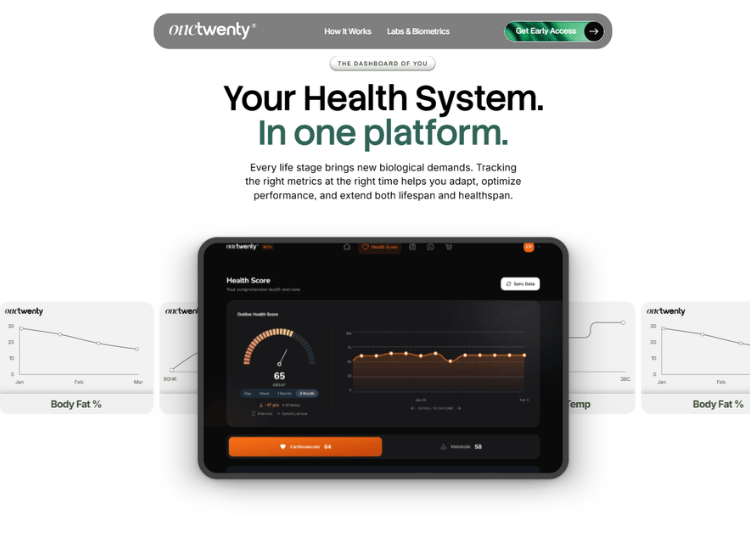
Live guidance for sleep, hormones, and weight powered by your wearables, smart devices and blood work
The overall winner: One Twenty
After comparing all four, One Twenty is the most complete platform if your goal is actual health optimization, not just interesting lab results.
Most platforms stop at testing and recommendations. One Twenty goes a step further by combining blood labs, wearable data, real clinicians, and prescription-level interventions inside one system.
In other words, it bridges the gap between consumer health tech and real medicine.
One Twenty’s core idea is something they call Real-Time Longevity. Your blood work, wearable data from things like Oura and Apple Health, and lifestyle metrics all live in one place and get reviewed continuously. If something is off, you don’t just get a suggestion to “eat more fiber.” You get a plan, and when appropriate, actual treatment.
That includes physician-guided care for hormone optimization, metabolic health, sleep, recovery, and weight loss using tools like HRT, TRT, GLP-1s, and other therapies that most DTC platforms cannot legally touch.
At the current founder pricing of $499, One Twenty includes quarterly lab testing worth more than that on its own, medical consultations, ongoing monitoring, and even smart devices like a BMI scale. Compared to traditional concierge medicine, which often runs $5,000 to $10,000 per year, it is a very aggressive price point.
If you want continuous feedback, medical support, and fewer blind spots, nothing else here really competes.
One Twenty: the full picture
- Best for: people who want action, not just data
- Cost: $499 to $999 depending on tier
- Testing frequency: 2 to 4 times per year
- Why it’s different: prescriptions, clinicians, and continuous monitoring
One Twenty isn’t for people who want to “learn about their biomarkers.” It’s for people who want to change them.
They aim to turn the annual physical into something that happens every day. Continuous monitoring, early detection, and never letting issues build into something severe.
The platform combines three pieces competitors usually separate:
Deep and frequent lab work
Quarterly or twice-yearly panels covering metabolic health, cardiovascular risk (ApoB, Lp(a)), liver and kidney function, hormones, inflammation, and longevity markers like homocysteine and DHEA-S. They track more than 100 biomarkers and emphasize trends, not one-off results.
Continuous data from wearables and smart devices
One Twenty integrates with Oura, Apple Health, Fitbit, Dexcom, Withings, and more. Sleep, HRV, activity, glucose, weight, and blood pressure feed into one system so labs never sit in isolation. The combined stream can exceed 100k data points yearly.
Medication escalation
This is the real differentiator. Members work with clinicians on HRT, TRT, GLP-1s, peptides, and personalized treatment plans. Not advice. Actual medical protocols with adjustments based on labs and biometric feedback.
The experience feels more like a modern medical practice than a testing company. Real clinicians review your data, fine-tune plans, and follow up over time instead of dropping a PDF and disappearing.
Custom supplement packs launch in early 2026. These are generated directly from your labs and updated as markers shift, avoiding generic stacks and guesswork.
One Twenty also includes an AI assistant that understands all your lab and wearable data, finds patterns, and links changes in sleep, weight, or medications to biomarker trends.
The platform is in closed beta now and launches publicly in January. HSA and FSA payments are accepted.
Function Health: excellent testing, slower feedback loop
- Best for: early disease detection
- Cost: $499 per year
- Testing frequency: twice per year
- Strength: sheer volume of labs
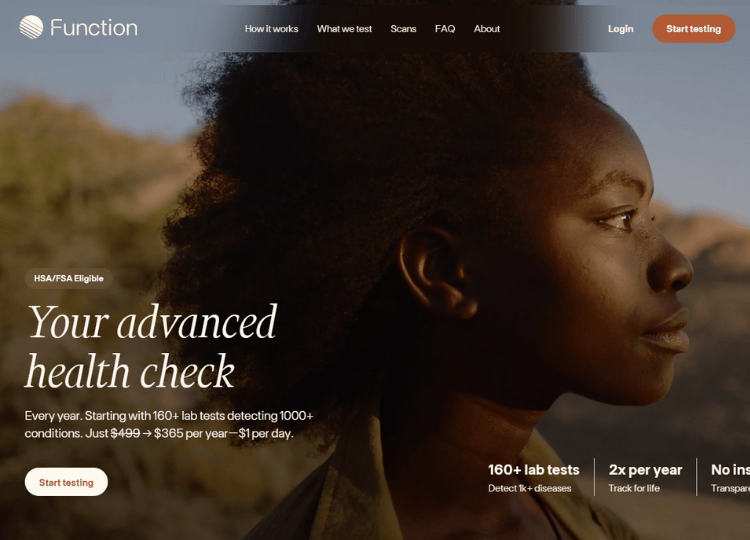
Function Health made a big splash by offering over 100 biomarkers for $499, and to be fair, that part is impressive.
The platform is built around screening for problems early, not optimizing aggressively. You get a massive lab panel up front, a partial retest mid-year, and clinician-reviewed results with lifestyle recommendations.
For people who want to know everything that might be wrong, Function delivers.
The downside is pace. With testing only every six months, changes happen slowly. If you start an intervention, you are often waiting half a year to confirm whether it worked.
There’s also no real treatment layer. You get guidance, but prescriptions and ongoing care are outside the scope.
Function shines as a diagnostic snapshot tool. It is less suited for people actively trying to move numbers month by month.
- Best for: tight budgets and baseline testing
- Cost: $199 per year
- Testing frequency: once per year
- Strength: lowest upfront price
Superpower wins on sticker price. For under $200, you get a large biomarker panel that used to be inaccessible at that cost.
Where things get tricky is after you get results.
Supplement recommendations are heavy and can easily run $300 to $400 per month if you follow them closely. Additional lab testing costs extra. At-home blood draws cost extra. Over a year, total spend can quietly exceed much more premium platforms.
Testing only once a year is another limitation. For anyone trying to improve performance, hormones, or metabolic health, that is a long time to operate on old data.
Superpower works well as an introduction to advanced labs. It is less compelling for ongoing optimization.
InsideTracker: data-first performance tuning
- Best for: athletes and hardcore self-optimizers
- Cost: wide range, $149 to $1,800+
- Testing frequency: optional
- Strength: flexibility and DNA integration
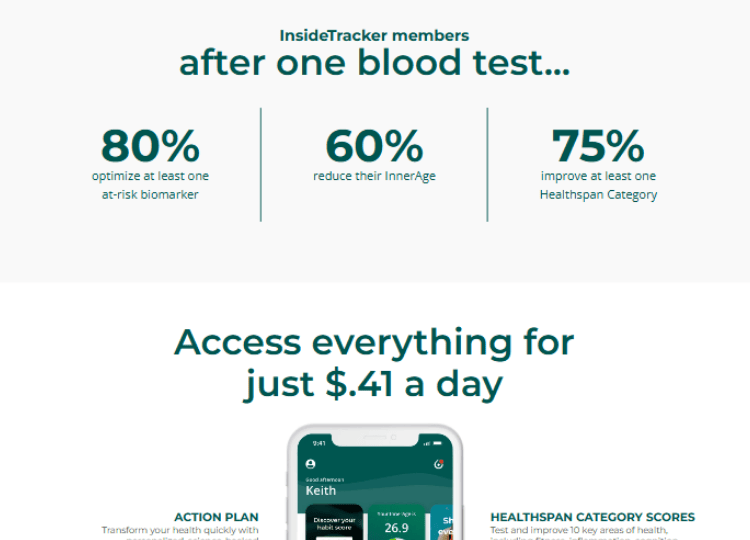
InsideTracker has been around longer than most and it shows in the polish. The dashboard is excellent, data visualization is clean, and trend tracking is satisfying if you like charts.
Its biggest differentiator is flexibility. You can upload your own labs, use their testing, or blend both. DNA data can also be layered in for performance and nutrition insights.
The tradeoff is that everything is algorithm-driven. There are no clinicians reviewing your results, no prescriptions, and no human interpretation. You are expected to be your own operator.
For athletes and biohackers who enjoy self-experimentation, that is a feature. For people who want guidance and accountability, it can feel cold.
How to choose, realistically
- Choose One Twenty if you want continuous monitoring, medical support, and the ability to actually intervene when numbers are off.
- Choose Function Health if your priority is broad screening and peace of mind rather than optimization.
- Choose Superpower if cost is the main constraint and you just want a baseline.
- Choose InsideTracker if you love data, already do your own labs, and want performance-focused insights.
The bigger shift happening here
All of these platforms point to the same reality: waiting for problems to show up clinically is an outdated strategy.
Health happens slowly, quietly, and predictably in biomarkers long before symptoms appear. When you track the right things consistently, you get time on your side.
None of these tools replace a primary care doctor. But they fill the massive gap between “you’re fine” and “you’re sick.”
The best platform is the one you will actually use, understand, and act on. Data alone is interesting. Data plus follow-through is where outcomes change.
One Twenty currently grabs our top spot due to the complete nature of the service. Try it below and let us know how you get on.
One Twenty
Live guidance for sleep, hormones, and weight powered by your wearables, smart devices and blood work