
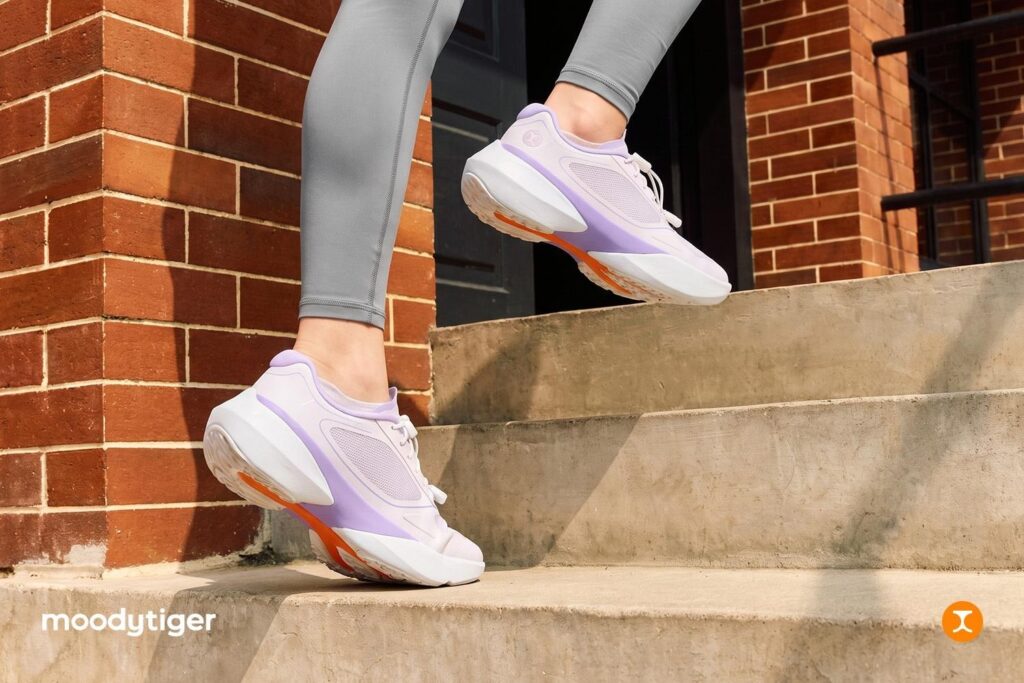
Children’s feet grow up to two full sizes a year, which means most families are buying new sneakers roughly twice a year — usually in a hurry, often on a weekend, almost always in a shop with terrible lighting and a child who wants to be literally anywhere else. It is a small, recurring, strangely stressful purchase, and it is easy to get wrong. The shoe that looked fine in the box turns into the shoe that lives abandoned at the bottom of the closet, worn twice, quietly rejected for reasons your child could not articulate. Here is a five-point check that takes about two minutes and saves you from exactly that shoe.
Before the checks, one mindset shift that changes everything: the single most common mistake is buying too big to ‘get another season out of them.’ It is completely understandable — feet grow, shoes cost money, the logic feels airtight. But a shoe that is too long makes a child trip, slide forward on downhills, and curl their toes to hold it on, which is its own slow misery. A thumb of growing room is the ceiling, not the target. Buy for the foot in front of you.
1. Grab the heel.
With the shoe fully on and laced, hold the heel in place and ask your child to rise up onto their toes. If the heel lifts and slips inside the shoe, that shoe will rub — and a kid with a blister is done for the day, sometimes done for the week, and will remember it. A snug, supportive heel cup that holds the foot in place is non-negotiable in anything that is going to see actual running, jumping, and sudden stops. Everything else is negotiable; this is not.
2. Press for the thumb of space.
Push your thumb down at the very front of the shoe, past the end of the longest toe — which is not always the big toe, so check. You want about a thumb’s width of room. Any less and they will have outgrown it by Halloween and be complaining by the second week. Much more and the foot slides forward on every step down a hill or a stair, and the shoe stops protecting them and starts working against them. This is the single check most parents skip, and the one that quietly ruins the most shoes.
3. Bend it where the foot bends.
Hold the shoe at both ends and flex it like you’re closing a book. A good shoe folds at the ball of the foot — the natural hinge — and stays firm through the middle. A bad one folds in half in the center like a taco, offering the foot no support exactly where a still-developing arch needs it most. Children’s feet are doing years of quiet architectural work, and a shoe that collapses in the middle forces their small muscles to do the shoe’s job all day. Firm through the arch, flexible at the toes. That’s the shape you want.
4. Lighter wins, and it is not close.
Put one shoe in each hand and just feel the difference between two candidates. Children take far more steps per mile than adults do — shorter legs, higher cadence — so every extra gram is a small tax levied on every single step, all day. A heavy, over-built shoe is a genuine drag on a small runner, even if they can’t tell you that’s what’s wrong. The best modern kids running shoes get their cushioning from a light, resilient foam rather than sheer bulk, so the foot is protected without being weighed down. Pick the shoe up before you pick it out.
5. Watch them put it on alone.
This is the sleeper test, the one nobody tells you about, and it may matter most of all on a Tuesday morning. A shoe that a six-year-old cannot get onto their own foot without help becomes your problem, at the door, at 7:40, every single day, forever. Stiff laces they can’t tie, a tongue that folds under, a heel too rigid to jam a foot past — each is a tiny daily battle. Dial closures and stretch-lace systems have mostly solved this, and it is a bigger quality-of-life upgrade than it sounds. Several of the girls’ sneakers my daughter rotates through use a twist dial she is absurdly, wonderfully proud of operating entirely by herself, which means one fewer thing I do every morning.
A note on the great myth of the sport-specific shoe. Marketing would love to sell you a running shoe, a training shoe, a trail shoe, and a court shoe for the same seven-year-old. They do not need that yet, and they will outgrow all four before wearing any of them out. What a kid this age needs is one genuinely good, versatile pair that fits properly right now and can handle the honest chaos of a childhood day — playground, PE, the walk, the park, the sprint to the ice cream van. Save the specialization for the teenager who has actually chosen a sport.
A practical word on timing the purchase, since fit is a moving target with kids. Shop in the afternoon, not first thing in the morning — feet swell slightly over the day, and a shoe fitted to a morning foot can pinch by evening. Fit them wearing the socks they’ll actually use, not the thin dress socks they happen to have on for the shop, because a couple of millimeters of sock changes everything at these sizes. And measure both feet: it is completely normal for one to be a touch longer, and you always fit to the bigger one. These sound fussy written down, but they are the difference between a shoe that works and a shoe that gets quietly abandoned for reasons your kid can’t name.
It’s also worth keeping two functional pairs in rotation once your child is genuinely active, and not purely for wear. Shoes need roughly a day to dry out their internal cushioning and lining after a hard, sweaty session or a wet walk — put them straight back on damp the next morning and they pack down faster, smell worse, and can rub. An everyday pair and a play-hard pair, alternated, means each gets a chance to recover, and the two together outlast a single pair worn into the ground. It feels like buying more; it usually works out to buying less, and to a kid who never has to jam a foot into a cold, damp shoe. The same thinking runs right through moodytiger’s footwear line, from road runners to trail shoes: kid-proportioned fit, dial closures small hands can operate alone, and weight kept honest.
Where the money is worth spending is construction and fit, not logos or gimmicks. Companies like moodytiger build their children’s shoes on kid-specific lasts — the foot-shaped mold a shoe is built around — rather than simply shrinking an adult design and hoping. It sounds like a technicality and it is the whole game: a shoe shaped like a child’s actual foot fits like one. The difference shows up exactly where you’d hope, in the only review that counts — fewer complaints, longer play, and a pair that gets worn until it is genuinely outgrown rather than quietly retired to the closet.
So when should kids’ running shoes actually be replaced? When any one of three signs appears: tread worn smooth and shiny at the toe or outer edge; a heel counter that folds flat under gentle thumb pressure; or a kid who has started curling their toes when you press the front — or who suddenly, mysteriously, doesn’t want to wear the shoes they loved last month. Any one of those means the shoe is done, whatever the calendar or the price tag says, because a dead shoe hurts a growing foot in ways a child rarely reports. Growing feet don’t file formal complaints. They just quietly change how they run, and hope somebody notices. Two minutes, five checks — be the one who notices. Your child’s feet, and your closet floor, will both thank you.