

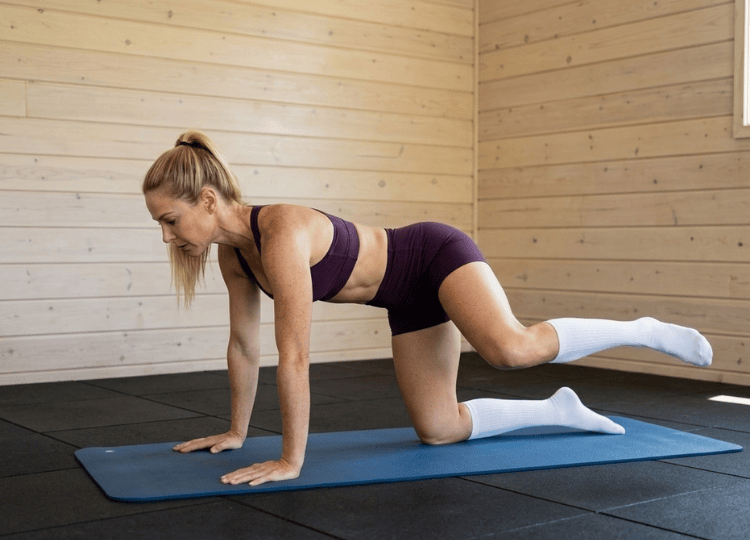
The fire hydrant is one of the most effective exercises available for targeting the outer glutes and improving hip mobility, and one of the most consistently overlooked.
Most lower body training, squats, lunges, deadlifts, focuses heavily on the gluteus maximus, the largest of the three glute muscles. The fire hydrant works differently. It primarily targets the gluteus medius and gluteus minimus, two smaller muscles on the side of the hip that are responsible for hip abduction and stability.
These muscles are rarely trained directly and are chronically weak in most people, particularly those who spend long periods sitting.
The fire hydrant requires no equipment, can be done anywhere and works well as a warm-up activation exercise before lower body training or as a standalone mobility and strengthening drill.

Quick Summary
- The fire hydrant primarily targets the gluteus medius and minimus, two muscles on the outer hip that are rarely worked by squats, lunges or deadlifts.
- Weak gluteus medius muscles are directly linked to lower back pain, knee injuries and poor movement mechanics, making this a valuable exercise for most people.
- Requires no equipment, works well as a warm-up activation drill before lower body training, and can be progressed with a resistance band or ankle weights.
What is the Fire Hydrant Exercise?
The fire hydrant is a quadruped exercise, meaning it is performed on all fours. From this position, one leg is raised out to the side in a controlled arc, mimicking the movement of a dog at a fire hydrant, which is where the name comes from.
It is used widely in rehabilitation programmes for lower back and hip injuries, as a pre-workout glute activation exercise, and as a hip mobility drill in its own right. Despite its simple appearance, performing it with correct form and control produces a meaningful challenge for the outer glutes and hip external rotators.
How to Do the Fire Hydrant
- Start on all fours with your hands directly under your shoulders and your knees directly under your hips. Your back should be flat and your core braced.
- Keeping the knee bent at 90 degrees, raise your right leg out to the side as high as you can without rotating the hips or tilting the torso.
- Pause briefly at the top, squeezing the outer glute.
- Lower the leg with control back to the starting position.
- Complete all reps on one side before switching.
Aim for 10 to 15 reps per side for 2 to 3 sets as part of a warm-up, or 3 sets of 12 to 15 reps in a standalone strength session.
Coach’s Tip – The most common mistake is allowing the hips to rotate and rise on the working side to gain extra height. Keep both hips level throughout the movement. The range of motion should come from the hip joint, not from twisting the lower back. A smaller range with the hips level is more effective than a larger range with poor form.
Muscles Worked
- Gluteus medius – the primary target of the fire hydrant, responsible for hip abduction and pelvis stabilisation during movement
- Gluteus minimus – sits beneath the gluteus medius and assists in hip abduction and internal rotation
- Hip external rotators – including the piriformis, which rotates the thigh outward during the lift
- Tensor fasciae latae (TFL) – assists in hip abduction and flexion throughout the movement
- Core and obliques – engage to stabilise the torso and prevent the hips from tilting during the lift
- Gluteus maximus – activated as a secondary muscle, particularly at the top of the range of motion
Benefits of the Fire Hydrant
Targets the gluteus medius directly
The gluteus medius is one of the most important and most undertrained muscles in the lower body. Squats and hip thrusts target the gluteus maximus effectively but do relatively little for the gluteus medius. The fire hydrant is one of the few exercises that isolates it directly, making it a valuable addition to any lower body programme for balanced glute development.
Improves hip mobility
The fire hydrant moves the hip through extension, rotation and abduction simultaneously, covering all three major planes of hip motion. Research from the Journal of Orthopaedic and Sports Physical Therapy has highlighted targeted hip exercises like the fire hydrant as an effective way to improve hip range of motion and joint health, particularly for those who sit for prolonged periods.
Supports lower back health
Weak gluteus medius muscles are a well-established contributor to lower back pain. When the hip stabilisers are not doing their job, the lower back compensates during everyday movements like walking and stair climbing. Strengthening the gluteus medius through exercises like the fire hydrant reduces this compensatory loading and supports better spinal mechanics.
Reduces injury risk
Research published in the Journal of Strength and Conditioning Research links gluteus medius weakness to increased risk of knee and hip injuries, including IT band syndrome, patellofemoral pain and hip impingement. Including fire hydrants in a regular routine is a practical preventive measure, particularly for runners and those involved in sport.
Works as a glute activation warm-up
The fire hydrant is widely used as a pre-workout activation exercise to wake up the glutes before compound movements like squats and deadlifts. Activating the gluteus medius before loading it in compound exercises improves glute recruitment during the main session and reduces the likelihood of the quads and lower back taking over.
Requires no equipment
The fire hydrant can be done anywhere with no equipment at all. Adding a resistance band or ankle weight instantly increases the demand, but neither is required to get a meaningful training effect.
Variations
With a Resistance Band
Adding a resistance band around the thighs just above the knees is the most straightforward way to increase the difficulty of the fire hydrant. The band adds resistance throughout the range of motion and increases the demand on the gluteus medius significantly. Start with a light band and progress to a heavier one as strength improves.
With Ankle Weights
Ankle weights add resistance at the end of the lever, which increases the load on the outer glute throughout the movement. This is a useful progression for those who have built a solid base with the bodyweight version and want to increase strength rather than just activation.
Fire Hydrant Kick
From the top of the standard fire hydrant position, extend the raised leg straight out to the side before bending it back to 90 degrees and lowering. This variation increases the range of motion and further challenges the hip external rotators and TFL. It is more demanding than the standard version and best approached once good form is established.
Fire Hydrant Pulse
At the top of the movement, rather than lowering immediately, pulse the knee a few inches up and down for 3 to 5 small pulses before returning to the start. This increases time under tension in the outer glute without adding any equipment.
Standing Fire Hydrant
The standing variation brings the same hip abduction movement upright, which adds a balance challenge and makes it a useful option for those with wrist discomfort in the quadruped position. Stand with feet hip-width apart, bend the knee of the working leg and raise it out to the side as high as possible while keeping the torso facing forward. A wall or chair can be used for light balance support while the movement is being learned.
Things to Consider
- Keep the hips square. Allowing the hips to tilt and rotate is the most common form error and one that shifts the work away from the gluteus medius onto the lower back. If the hips are rising to gain height, reduce the range of motion.
- Slow down. The fire hydrant is more effective performed slowly and with control than quickly. A 2 second lift, a brief pause at the top and a 2 second lowering produces far better glute activation than rushing through the reps.
- Use it as a warm-up. 2 sets of 10 to 12 reps per side before squats, deadlifts or hip thrusts is an effective way to activate the glutes and improve recruitment in the main session.
- Progress gradually. Bodyweight fire hydrants are a good starting point. Once 3 sets of 15 reps per side feel well controlled, add a light resistance band before increasing to a heavier one or progressing to ankle weights.
- Combine with complementary exercises. The fire hydrant works best as part of a broader glute programme rather than in isolation. Pairing it with hip thrusts, glute bridges and donkey kicks provides more complete glute development across all three muscles.
Bottom Line
The fire hydrant is a simple, equipment-free exercise that directly targets the gluteus medius and minimus, two muscles that are consistently underworked in most lower body training programmes. The research linking gluteus medius strength to lower back health, injury prevention and movement quality makes a strong case for including it regularly, whether as a warm-up activation drill or as part of a dedicated lower body session.
Start with the bodyweight version, focus on keeping the hips level throughout, and progress to a resistance band once the movement feels controlled. Two to three sessions per week is enough to see meaningful improvements in hip strength and mobility over time.
Related Articles