
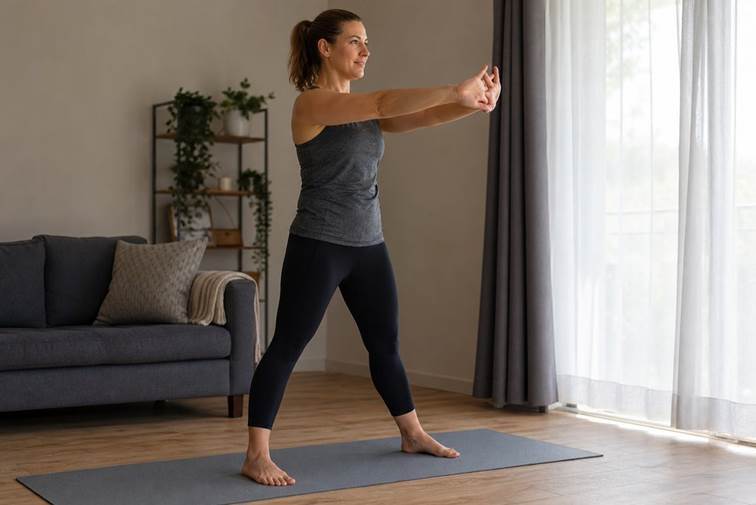
Your feet and back have to work together every time you stand, walk, climb stairs, or head out for a long day. When one area gets stiff or sore, the other may end up picking up some of the extra work. If you are looking for ways to help with plantar fasciitis, simple stretches and exercises may also help you move more comfortably. You do not need a complicated workout or a room full of equipment to give your feet and back some attention. A few easy movements can fit into your day without taking up much time.
Start With a Gentle Calf Stretch
Your calves connect closely to the way your feet move, so they are a good place to start. Tight calf muscles can make it harder for your ankle to move freely when you walk. That can put extra pressure on the bottom of your foot.
Stand facing a wall and place both hands against it. Step one foot behind you and keep that heel on the floor while you gently bend your front knee. Hold the stretch for about 20 to 30 seconds, then switch sides.
There is no need to force the stretch. You should feel a gentle pull through the back of your lower leg, not sharp pain in your foot or ankle. If it hurts, ease up or stop.
Give the Bottom of Your Feet Some Attention
Your feet spend most of the day carrying you around, so they deserve a little care too. One simple option is rolling the bottom of your foot over a tennis ball or a small massage ball. Sit in a chair and slowly move your foot back and forth over the ball.
Keep the pressure comfortable. Spending a few minutes on each foot can feel especially nice after a long day on your feet. It can also help you notice areas that feel particularly tight or tender.
This is not about trying to crush the sore spot into submission. Gentle pressure is usually a better place to start. If a movement makes your pain noticeably worse, give it a break.
Try Toe Raises
Your toes and the small muscles in your feet help with balance and movement. You can work them without needing weights or gym equipment. Simply stand near a wall or chair for support and slowly lift your toes while keeping your heels on the floor.
Hold the position for a few seconds before lowering your toes. Try several repetitions and keep the movement controlled. It may feel surprisingly difficult at first.
As you get used to the exercise, you can make it part of your regular routine. Stronger foot muscles can help support the way your feet handle everyday movement. Just remember that stronger does not always mean harder or faster.
Add a Simple Bridge
Your feet are not the only part of the body worth working on. Your hips and lower back also play an important role in keeping your movement steady. A basic bridge is an easy exercise to add to your routine.
Lie on your back with your knees bent and your feet resting flat on the floor. Tighten your stomach gently and lift your hips until your body forms a comfortable line from your shoulders toward your knees. Hold for a moment, then slowly lower yourself back down.
Do not worry about lifting as high as possible. A controlled movement matters more than getting your hips several inches off the floor. If you feel pain in your back instead of normal muscle effort, stop and reassess the exercise.
Stretch Your Hamstrings
Tight hamstrings can make everyday movement feel less comfortable. A gentle hamstring stretch can be done while sitting on the floor or standing with one heel resting on a low surface. Keep your back comfortable and lean forward slightly until you feel a mild stretch behind your thigh.
Avoid bouncing or forcing yourself deeper into the stretch. Your muscles do not need to feel like they are being pulled apart for the exercise to work. Hold the position, breathe normally, and then ease out of it.
A little consistency can go a long way here. Stretching for a few minutes several times a week is more realistic than doing a huge routine once and forgetting about it.
Do Not Forget About Balance
Balance exercises may seem unrelated to foot and back comfort, but they can help you become more aware of how you stand and move. Try standing on one foot while holding onto a sturdy chair or countertop. Keep the exercise simple at first.
Hold the position for several seconds, then switch feet. As your balance improves, you can gradually increase the time. Always have something solid nearby if you feel unsteady.
Good balance is not about standing perfectly still. Your body will make tiny adjustments as you stand, and those adjustments are part of the exercise. The goal is to build control without turning the movement into a struggle.
Listen to Your Body
Exercise should leave you feeling like you moved your body, not like you have punished it. If you already have foot pain, jumping straight into an intense workout can make things worse. Start slowly and give yourself time to see how your body responds.
People dealing with plantar fasciitis or ongoing back discomfort may need a more personalized approach. A healthcare professional can help determine which movements make sense for your situation. That is especially important if pain is severe, keeps returning, or interferes with normal activities.
Final Word
You do not need an elaborate workout to support your feet and back. A few simple stretches, strengthening exercises, and balance movements can become an easy part of your week, especially when you are consistent with them. If you need help with plantar fasciitis, gentle movement may be useful, but persistent pain should not be ignored. Pay attention to how your body responds and adjust your routine when something does not feel right.