
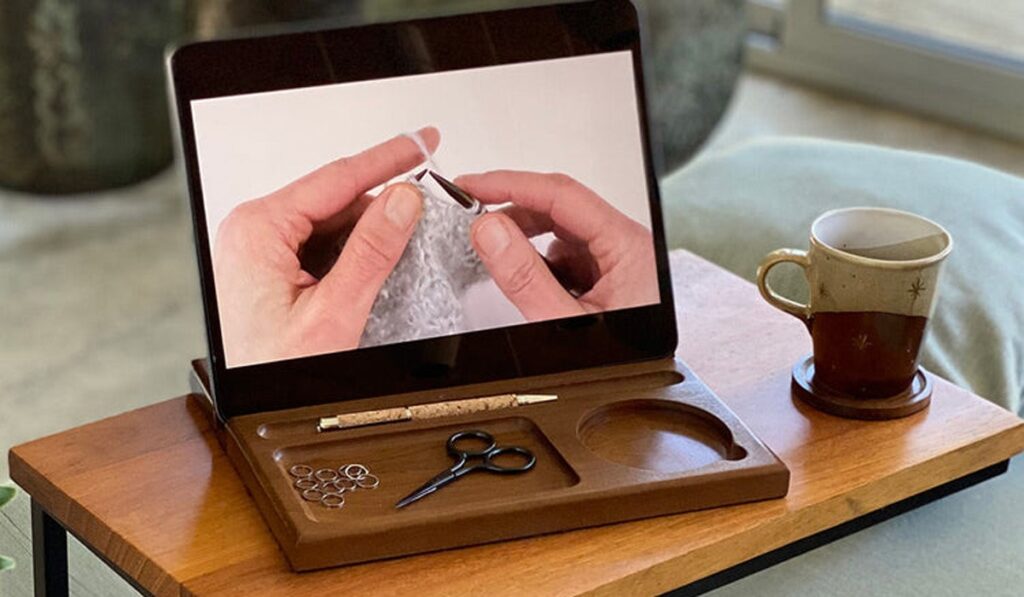
Photo from Thread and Maple
Last winter, triathlete Erin swapped her usual post-workout doom-scroll for 20 quiet minutes of knitting. By week’s end, her wearable tracked a notable bump in evening heart-rate variability, a key marker of improved recovery.
This highlights how mindful crafting can lower stress, reinforce healthy habits, and slot perfectly into your next deload week.
1. Lower Stress & Calm Your Nervous System
Each stitch offers bilateral stimulation, left needle then right needle, mirroring the cross-hemispheric activity of walking. This gentle cadence acts like a metronome for your breath. It coaxes your vagus nerve into “rest-and-digest” mode and opens the door to a restorative flow state.
Research highlights the tangible benefits, showing that craft-based interventions can lead to short-term improvements in anxiety and stress. According to one study of over 3,500 knitters, 81% of respondents with depression reported feeling happy after knitting.
| Key Insight: The rhythmic, back-and-forth motion of knitting acts like a moving meditation, activating both brain hemispheres to calm your nervous system and shift you into a ‘rest-and-digest’ state. |
Action Steps
- Cast-On Calm: Inhale for four counts, exhale for six, then cast on ten stitches. Repeat for five minutes to prime your parasympathetic system.
- Find Your Tools: Using smooth, lightweight needles can help maintain an effortless rhythm. You can find high-quality options within collections like Thread and Maple’s thoughtful gifts for passionate knitters.
- Deepen the Dive: Look into studies on crafting and cortisol for more insight into its stress-reducing effects.
2. Build Consistent, Restorative Habits & Sharpen Focus
Building consistent restorative habits supports both physical recovery and mental fitness by creating predictable routines that calm the nervous system and promote relaxation. Habits like maintaining regular sleep schedules, practicing deep breathing or meditation, and setting small daily wellness goals help sharpen cognitive focus and resilience.
Dopamine + Task Completion
Neuroscientists note that clear task edges, like binding off a swatch, release steady, healthy dopamine. This is different from the jagged spikes engineered by social media feeds. This “clean” reward improves focus, curbs anxiety, and can even boost your sense that life is worthwhile.
Restorative activities complement recovery by reducing stress hormones and improving brain plasticity, which enhances memory, attention, and emotional regulation. Integrating mindful crafting, such as knitting or journaling, into daily recovery rituals can deepen relaxation and mental clarity by engaging the brain in calm, repetitive tasks.
| Key Insight: Finishing a tangible task like a row of knitting provides a ‘clean’ dopamine reward, which builds focus, unlike the erratic, addictive dopamine spikes engineered by infinite-scrolling social media feeds. |
Getting-Started Box
- Knit a 20-minute garter-stitch coaster while your protein shake blends.
- Work on a simple coloring sheet during your mobility podcast.
- Complete a three-line gratitude embroidery before bed.
Consistent practice of these habits increases your capacity to manage stress and maintain motivation during training cycles. This enhances recovery quality and supports mental sharpness, ultimately leading to improved overall wellness and performance.
3. Complement Deload Weeks & Active Recovery
Deload weeks reduce training volume or intensity by about 50% to allow physical repair, such as tendon remodeling and lowered metabolic stress, while preventing overtraining. Pairing these with active recovery maintains light movement to promote circulation without adding strain.
Active recovery options include low-impact activities that support joint health and mental reset.
- Foam rolling or mobility circuits to ease muscle fatigue and improve hip flexibility.
- Gentle yoga, light walks, or swimming to enhance blood flow and reduce sympathetic nervous system drive.
- Mindful crafting, like knitting simple patterns or assembling small projects, to foster mental rejuvenation alongside physical rest, mimicking hobbies that rebuild motivation.
Athletes often report 80% improved performance post-deload when combining these with better sleep, adherence, and renewed focus. This approach ensures deloads boost long-term progress rather than just halting fatigue.
| Pro Tip: Think of crafting during a deload week as neural ‘cross-training.’ While muscles repair, the gentle sensory-motor activity keeps your brain engaged without taxing your nervous system, accelerating a full-system reset. |
Sample Deload Template
| Day | A.M. | Midday | P.M. |
|---|---|---|---|
| Mon | 15 min mobility | Walk (20 min) | Knit (30 min) + Breathwork |
| Wed | Yoga flow | Knit on the balance pad | Sauna |
| Fri | Light swim | Journaling | Knit & podcast |
Community & Connection
Joining craft circles, virtual knit-alongs, and supportive online forums plays a crucial role in sustaining and improving adherence to new habits by fostering a sense of belonging and accountability. These communities provide social support, encouragement, and shared motivation that help individuals stay consistent with their crafting and recovery routines.
Many online retailers and local shops offer virtual events that create accessible platforms for exchanging patterns, techniques, and progress updates. These gatherings not only boost skill development but also combat feelings of isolation by connecting like-minded individuals in supportive spaces.
These social connections have demonstrated benefits for mental fitness by reducing stress and enhancing mood, supporting both emotional and physical recovery. Engaging in community activities fosters a positive feedback loop of motivation and wellness, making new habits easier to maintain long-term.
Common Questions (Quick FAQ)
How much time do I need for benefits? Studies show that as little as 15 minutes reduces stress markers.
What if I’m terrible at crafts? Start with bulky yarn and a garter-stitch bookmark; focus on progress, not perfection.
Is craft therapy the same as art therapy? Art therapy is practitioner-led and clinical; craft therapy is a self-directed wellness tool.
Unfinished projects stress me out! Keep the scope tiny. Think coasters, cuffs, or color swatches you can finish in one sitting.
The Path Forward
Mindful crafting calms your nervous system, helps build laser-focused habits, and slips seamlessly into deload weeks. By incorporating this simple practice into your routine, you can train smarter and live better. Consider scheduling it into your next recovery block to experience the benefits firsthand.