
Recovery, when approached with intention, becomes more than a supporting act to training. It becomes a defining factor in how the body adapts, performs, and sustains output over time. Cold exposure has earned its place within this framework not because it is extreme, but because it is effective when applied with precision. Yet, within this category, the distinction between a cold plunge and an ice bath is often overlooked, reduced to semantics rather than understood as a meaningful difference in experience, control, and long-term value.
At a surface level, both methods appear to deliver the same outcome. They expose the body to cold water, lower tissue temperature, and stimulate a cascade of physiological responses that support recovery. However, when examined through the lens of consistency, design, and reliability, the differences become far more significant.
An ice bath is, by nature, a manual process. It relies on filling a tub or container with water and adding ice to achieve the desired temperature. This approach is widely used because it is accessible and straightforward, but it introduces a level of variability that cannot be ignored. The temperature is never static. It begins to change the moment the ice is added, influenced by ambient conditions, water volume, and the rate at which the ice melts. As a result, each session becomes slightly different from the last, making it difficult to establish a controlled and repeatable recovery protocol.
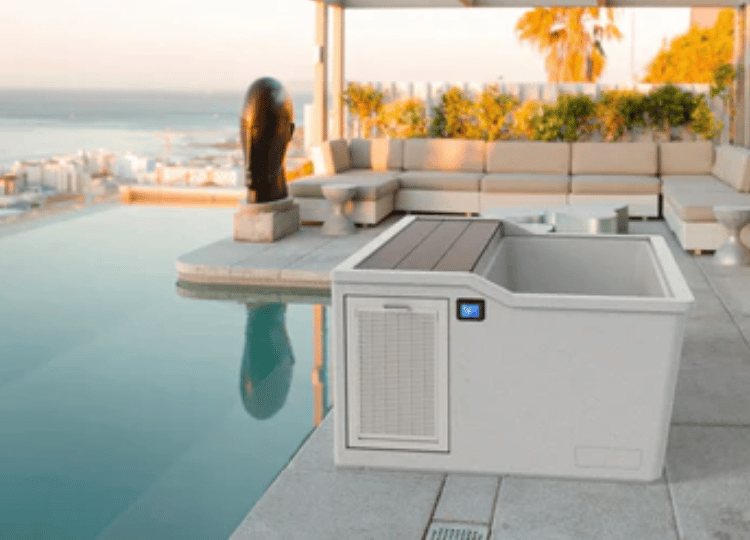
A cold plunge, in contrast, is a commercial cold plunge system designed to remove that variability entirely. It is engineered to maintain a precise temperature over extended periods, supported by integrated cooling, filtration, and circulation. The experience is not dependent on preparation or external factors. It is consistent by design. This consistency allows users to approach recovery with the same level of discipline and structure that they apply to training, creating a predictable environment in which the body can adapt more effectively.
Temperature control is not a minor detail in this comparison. It is central to how the body responds to cold exposure. When temperatures fluctuate, the physiological response becomes less predictable. In an ice bath, the initial immersion may feel excessively intense if too much ice has been added, while later moments may fall outside the optimal range as the water warms. This inconsistency can shorten sessions, disrupt breathing patterns, and shift focus away from controlled recovery toward simple endurance.
With a cold plunge, the temperature remains within a defined range, typically calibrated to deliver maximum benefit without unnecessary strain. This allows for longer, more controlled sessions where the focus can remain on steady breathing, mental composure, and gradual adaptation. Over time, this consistency leads to a more refined recovery practice, one that can be measured, adjusted, and improved.
Beyond temperature, the practical realities of each method play a significant role in how often it is used. Ice baths require preparation before every session. Ice must be sourced, transported, and added in sufficient quantities, which introduces both effort and inconvenience. For occasional use, this may be acceptable, but for individuals who value daily or frequent recovery, it becomes a barrier. Consistency is often compromised not because the method is ineffective, but because it demands too much effort to sustain.
Cold plunges remove this friction entirely. They are always ready, maintaining their set temperature without the need for repeated intervention. This immediacy changes how recovery is approached. Instead of being an activity that requires planning and effort, it becomes an integrated part of a daily routine. The result is not just more frequent use, but more consistent use, which is ultimately where the real benefits of cold exposure are realized.
Water quality is another factor that separates the two approaches in a meaningful way. Ice baths typically involve stagnant water that is reused across multiple sessions unless it is manually drained and replaced. Over time, this leads to a decline in hygiene as debris, bacteria, and body oils accumulate. Maintaining clean water requires additional effort, further complicating the process.
Cold plunge systems are designed with filtration and sanitation in mind. Water is continuously circulated and cleaned, ensuring that each session takes place in an environment that meets a higher standard. This is not simply a matter of comfort, but of trust in the system itself. When every element is considered and controlled, the experience becomes more reliable, and the focus can remain on recovery rather than maintenance.
From a physiological perspective, both ice baths and cold plunges, including the use of a cold plunge tub, trigger similar core responses when temperatures are aligned. Vasoconstriction reduces blood flow to the extremities, inflammation is moderated, and nerve activity slows, which can help alleviate soreness. Once the body exits the cold environment, vasodilation occurs, promoting increased circulation and the delivery of oxygen and nutrients to the muscles.
The difference lies in how effectively these responses are managed. In an uncontrolled environment, the body may experience unnecessary stress due to excessive cold or inconsistent exposure. In a controlled environment, the stimulus can be applied with greater accuracy, allowing the body to respond in a way that supports recovery without introducing avoidable strain.
There is also a psychological dimension that should not be overlooked. Cold exposure requires a level of mental engagement, and the environment in which it takes place influences that experience. Ice baths often feel temporary, assembled for the purpose of a single session. The experience can feel functional, but not refined.
Cold plunges, on the other hand, are designed as permanent fixtures within a recovery space. The materials, the structure, and the overall presence contribute to a sense of intention. This shifts the mindset from one of resistance to one of engagement. The act of stepping into the cold becomes less about enduring discomfort and more about participating in a controlled, deliberate process.
Cost is often cited as the primary advantage of ice baths, and in purely financial terms, they do require a lower initial investment. However, this perspective does not account for the cumulative cost of time, effort, and inconsistency. Over time, the need to repeatedly source ice and manage water conditions adds up, both practically and mentally.
Cold plunges represent a different approach to value. They require a greater upfront commitment, but in return, they deliver reliability and performance over the long term. The system operates continuously, maintaining optimal conditions without repeated input. This shifts the focus from managing the process to benefiting from it.
When considering which option is better for recovery, the answer depends on how recovery itself is defined. If it is viewed as an occasional activity, something to be done when convenient, then an ice bath may suffice. It provides access to cold exposure in its simplest form.
However, if recovery is treated as a consistent and essential part of performance, then the need for control, reliability, and integration becomes clear. In this context, a cold plunge is not simply an alternative. It is a more complete solution, designed to support recovery as an ongoing practice rather than an intermittent effort.
At Renu Therapy, the focus is not on amplifying intensity or pursuing extremes. It is on creating systems that perform with precision and consistency, allowing recovery to become a seamless extension of how you train and live. The difference between a cold plunge and an ice bath is not defined by temperature alone. It is defined by the quality of the experience, the reliability of the system, and the results it enables over time.