
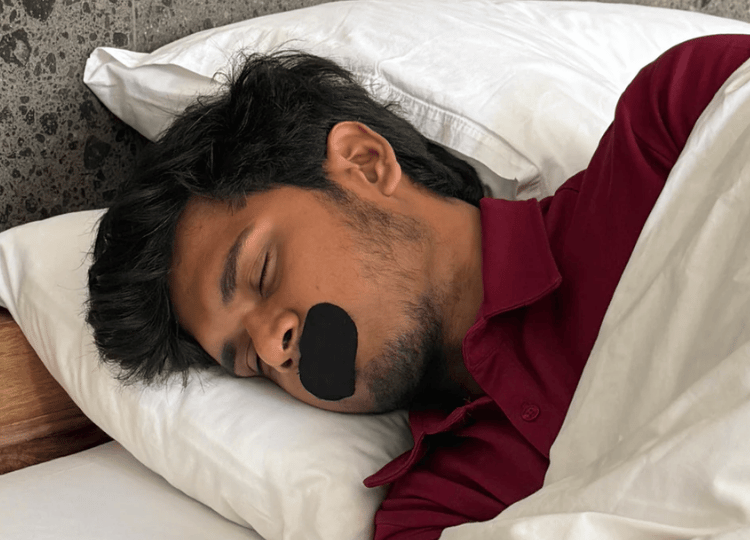
Waking up with a dry mouth is a common complaint among adults and yet it remains largely overlooked as a health concern.
But as awareness of sleep health continues to grow, an increasing number of individuals are exploring mouth tape as a practical way to address this problem at its root.
Understanding Dry Mouth at Night
Dry mouth, clinically referred to as xerostomia, occurs when salivary gland output is insufficient to maintain adequate oral moisture.
While the condition can affect individuals at any time of day, it is particularly common at night, when the natural stimuli for saliva production are largely absent.
Several factors are known to contribute to nocturnal dry mouth:
- Mouth breathing during sleep
- Medications
- Obstructive sleep apnea
- Age-related decline
- Dehydration
- Alcohol and caffeine consumption
Identifying the underlying cause is an important first step, as the appropriate intervention varies depending on what is driving the symptom. But we will focus today on mouth breathing.
Many people are unaware that they breathe through their mouth during sleep. The transition often occurs gradually, beginning with a period of nasal congestion, a change in sleep position, or an unaddressed structural issue, and becomes an entrenched pattern over time.
This matters because the nose and mouth serve fundamentally different functions in the respiratory process.
The nasal passages filter, warm, and humidify incoming air before it reaches the lungs. They also facilitate the production of nitric oxide, a molecule with established roles in vascular regulation and immune defence.
Mouth breathing bypasses all of these mechanisms, delivering unfiltered, dry air directly into the oral and respiratory tract.
The consequences extend well beyond dry mouth.
Chronic mouth breathing during sleep is associated with increased snoring, disrupted sleep quality, elevated oral bacterial load, and a significantly higher risk of dental decay.
The solution is to restore nasal breathing during sleep but the challenge is that sleep is not a state in which conscious correction is possible.
This is the fundamental premise behind mouth taping.
What Is Mouth Tape and How Does It Work?
Mouth tape is a strip of skin-safe adhesive applied horizontally across the lips prior to sleep.
Its purpose is not to seal the mouth shut, but to provide a gentle cue that maintains lip closure and redirects breathing through the nasal passages.
Many people turn to mouth taping to address common issues associated with sleeping with an open mouth, such as dry mouth, sore throat, bad breath, and disrupted sleep.
The adhesive is designed to be easy to remove and gentle on the skin, making it suitable for overnight use when applied correctly.
For many people, mouth tape may help reduce dry mouth at night by encouraging nasal breathing instead of mouth breathing during sleep.
By gently keeping the lips closed, mouth tape can help minimize airflow through the mouth and promote breathing through the nose. Nasal breathing naturally helps retain moisture in the oral cavity, which may reduce nighttime dryness and improve overall comfort during sleep.
Other Strategies for Managing Dry Mouth at Night
Mouth taping is most effective when implemented alongside other supportive measures. The following approaches have an established evidence base and work well in combination:
- Consistent daytime hydration: Adequate fluid intake throughout the day reduces the severity of overnight dryness. Water consumed immediately before sleep, however, should be moderate to avoid disrupting sleep continuity.
- Bedroom humidification: A bedside humidifier raises ambient moisture levels, reducing transepidermal and oral water loss during sleep. This is particularly beneficial during winter months or in centrally heated environments.
- Reduction of evening alcohol and caffeine: Both substances impair the body’s ability to retain adequate fluid and exacerbate oral dryness during sleep.
- Daytime nasal breathing practice: Consciously directing breathing through the nose during waking hours can support the re-establishment of nasal breathing as the default pattern, facilitating a more natural transition at night.
- Oral hygiene: Because saliva plays a critical protective role in dental health, individuals prone to dry mouth should maintain meticulous oral hygiene to mitigate the heightened risk of caries and gingival disease.
Conclusion
Dry mouth, when driven by mouth breathing, is a manageable condition. Mouth tape offers a practical, low-risk, and physiologically grounded solution that addresses the problem directly rather than managing its symptoms.
For individuals who wake consistently with oral dryness and have reason to believe mouth breathing is a contributing factor, mouth taping represents a reasonable first step.