
Building a stronger chest does not always require a long gym session or expensive equipment. With a pair of dumbbells, a little space, and a simple plan, you can fit a short workout into a busy day. The important part is choosing suitable movements, controlling each repetition, and staying consistent with your training routine.
If you are looking for effective dumbbell chest exercises, it helps to understand how different movements work the chest muscles and how to perform them safely. A five-minute session can be a practical starting point for beginners or a quick addition to a longer workout, although it should not replace a complete strength-training routine over the long term.
The benefits of using dumbbells for chest workouts
The chest muscles play an important role in pushing movements, bringing the arms toward the body’s centre, and supporting upper-body strength. They work alongside the triceps and front shoulder muscles during exercises such as dumbbell presses. Training these muscles regularly can help improve strength and make everyday pushing tasks easier.
Short workouts can also make exercise feel more manageable. People often struggle to maintain a routine because they assume every session must last 45 minutes or longer. A brief workout removes some of that pressure and provides an opportunity to practise good technique even on busy days.
However, the length of a workout does not determine its results on its own. Muscle development depends on factors such as resistance, training frequency, recovery, nutrition, and gradual progression. Five minutes can be useful for maintaining a habit, but building substantial strength will usually require a more complete plan over time.
15-Minute Dumbbell Workout Plan
This 15-minute chest workout combines two dumbbell exercises to help you train at home with minimal equipment. Choose a weight you can control comfortably, and warm up your shoulders and arms before starting.
| Time | Activity |
| Minutes 1–4 | Dumbbell floor press |
| Minute 5 | Rest |
| Minutes 6–9 | Dumbbell squeeze press |
| Minute 10 | Rest |
| Minutes 11–14 | Controlled dumbbell floor press |
| Minute 15 | Cool-down |
Dumbbell Floor Press: Lie on your back with your knees bent and feet flat on the floor. Hold a dumbbell in each hand beside your chest, then press the weights upward without locking your elbows forcefully. Lower them slowly until your upper arms gently touch the floor, and repeat at a controlled pace. This exercise primarily targets the chest, with assistance from the triceps and front shoulders. Keep your wrists straight, avoid bouncing your arms off the floor, and use a weight that allows you to maintain proper technique.
Dumbbell Squeeze Press: Lie on your back and hold the dumbbells above your chest, bringing their inner edges together if their shape allows. Maintain gentle inward pressure as you lower the weights toward your chest and press them upward again. The chest muscles do most of the work, while the triceps and front shoulders assist. Start with lighter weights if necessary, keep your wrists aligned, and avoid forcing the dumbbells together if doing so makes the movement unstable or uncomfortable.
During the final floor-press interval, focus on smooth repetitions and lower the weights over two or three seconds rather than rushing. This controlled movement targets the chest, triceps, and front shoulders. Stop when fatigue affects your technique, and do not hold your breath. Use the final minute for gentle shoulder rolls and comfortable chest movements. Take additional rest whenever needed; completing the workout safely is more important than following every interval exactly.
How to Measure the Effectiveness of Chest Workouts and Improve
The effectiveness of a chest workout can be measured by tracking changes in strength, exercise control, and consistency over time. Keep a simple record of the dumbbell weight you use, the number of repetitions you complete, and how challenging each session feels. If you can gradually perform more controlled repetitions with the same weight, or use slightly heavier dumbbells without sacrificing technique, these can be signs of progress.
Pay attention to how your chest exercises feel, but do not judge a workout only by muscle soreness or how tired you feel afterward. Soreness is not a reliable measure of muscle growth, and an effective session does not need to leave you exhausted. Instead, focus on maintaining a comfortable range of motion, controlling the weights, and working the target muscles without unnecessary strain on your shoulders or wrists.
To improve your results, increase the challenge gradually. You might add a repetition, make the lowering phase slower, or increase the weight slightly when your current routine becomes manageable. Allow enough recovery between chest sessions, and support your training with adequate sleep and balanced nutrition. Reviewing your progress every few weeks can help you identify what is working and where adjustments may be needed. If your performance stops improving, check your technique, training consistency, and recovery before simply adding more exercises or extending every workout.
How to Choose the Right Dumbbells for Home Training
Choosing dumbbells for home training starts with understanding your current strength, exercise goals, and available space. Beginners may benefit from lighter weights that allow them to learn proper form, while more experienced users may need heavier resistance for continued progress. Fixed dumbbells are simple to use, but buying several pairs can take up considerable storage space. Adjustable dumbbells offer more flexibility by allowing users to change the weight as needed.
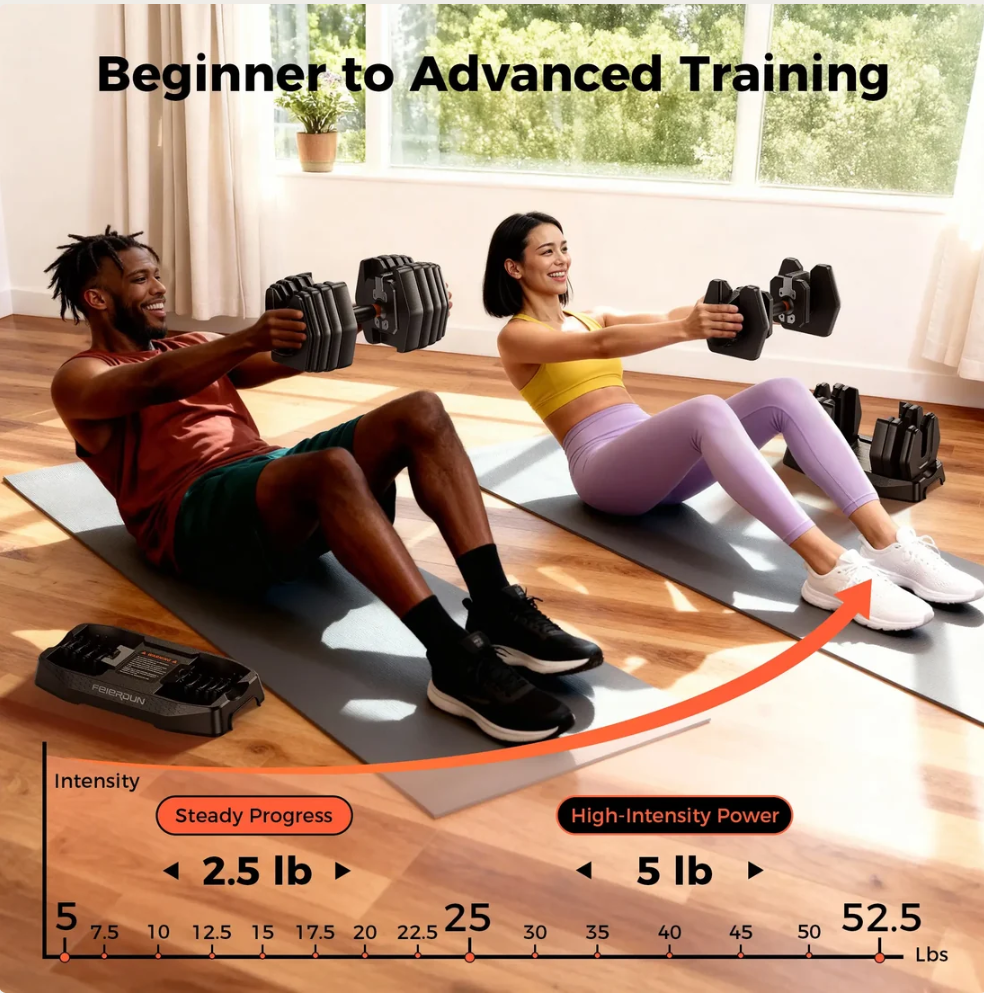
For those looking for a compact training option, the FED Fitness Feierdun Series DB1 Quick Adjustable Dumbbell 52.5LBS offers a range of resistance levels in one piece of equipment. Its product page lists 15 weight settings from 5 to 52.5 pounds, with 2.5-pound increments, a dial-based adjustment system, an ergonomic handle, and a storage base. These features can make it easier to adapt workouts as strength improves without storing multiple pairs of dumbbells. Before purchasing, consider whether the available weight range matches your fitness level and future goals, and make sure you have enough space to lift and store the equipment safely.
You can compare different adjustable dumbbells through the FED Fitness collection. When reviewing the available options, look at the weight range, adjustment mechanism, dimensions, and storage requirements. Make sure the equipment suits the exercises you intend to perform and can be placed securely on a stable surface.
Price alone should not determine your decision. A suitable set is one that meets your current needs and allows you to progress safely. You do not need to purchase the heaviest equipment available to begin building a consistent strength-training habit.
Fit Chest Training Into a Balanced Routine
A 15-minute chest workout can fit into a weekly fitness routine without requiring a long gym session. One practical approach is to train your chest two times per week, leaving enough recovery time between sessions. You can use dumbbell floor presses and squeeze presses as part of your chest training, adjusting the weight and repetitions to match your ability. Start with a brief warm-up, focus on controlled movements, and finish with a few minutes to recover.
For balanced strength development, combine chest exercises with workouts for your back, legs, shoulders, arms, and core on other days. For example, you could train your chest on Monday, focus on your lower body on Wednesday, and work on your back and arms on Friday. This is a sample schedule rather than a fixed rule; adjust it to your fitness level, available time, and recovery needs. The FED Fitness guide to dumbbell chest training can also provide ideas for adding suitable movements to your routine.
Track your progress by recording the weights you use, the repetitions you complete, and how well you maintain your technique. When an exercise becomes manageable, gradually increase the repetitions or resistance instead of rushing through movements. Balanced meals, adequate protein, and sufficient sleep can also support recovery. I don’t have personal workout experience, but these practical training principles can help you build a consistent routine. If you have an injury or a medical condition that may affect exercise, seek advice from a qualified healthcare professional before starting.
Make Short Workouts a Lasting Habit
A 15-minute dumbbell chest workout is easier to maintain when you know exactly what to do each time. Begin with a short warm-up, complete your planned chest exercises with controlled repetitions, and use the remaining time to review your form and recover. Choose a weight that challenges your chest without forcing you to swing the dumbbells or strain your shoulders.
To measure progress, record the weight you use and the number of good-quality repetitions you complete. When you can finish every set with steady control, increase the repetitions or move to the next available weight. Include chest training in a balanced weekly routine, leave time for muscle recovery, and avoid training through pain. Consistency matters more than making every session exhausting: a realistic plan that you can follow regularly gives you a clearer path toward improving strength over time.