
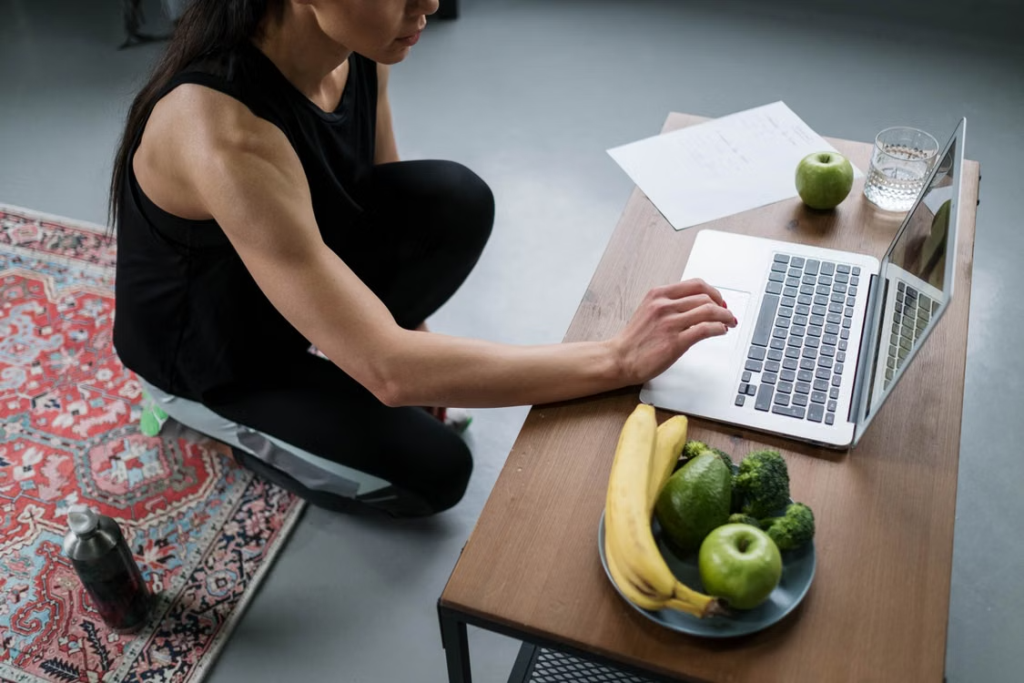
Have you ever finished an online fitness workshop feeling like you were talking at a screen rather than with your clients? Many virtual fitness experts have been there, and it can be a disheartening experience when you’re always met with a wall of blank screens and muted mics even when you’re giving your all. If you’re starting to doubt your abilities as a fitness coach, stop right there. It’s the digital experience, not you, that’s preventing your clients from truly engaging in your virtual fitness sessions.
In a study of online fitness groups, participants found it difficult to give real-time reactions while exercising far away from their laptops. The same research revealed that instructors experienced stress and anxiety, and they also faced challenges with rapport building. To transform online fitness workshops from standard lectures into active, community-driven hubs, you’ll need to build a system that supports different learning styles, and use tools that will encourage people to participate. Here are some strategies to make your virtual wellness sessions truly interactive.
Build an All-in-One Digital Environment
Restricting an online fitness class to a single, monolithic video stream reduces engagement because it ignores how people actually move, learn, and interact in a digital space. If you’re broadcasting a single, long stream, you’re basically just mimicking an old-school exercise experience, kind of like those aerobics or jazzercise videos from the 80s. For participants, this can create “Zoom fatigue” or cause them to lose focus. There’s also zero personalization since it forces beginners, intermediate, and advanced participants into the exact same pacing, causing some to burn out while others get bored. Also, when participants cannot ask questions, get form corrections, or chat with peers, they can feel isolated and stop working out.
To keep energy high, break the stream into a modular experience. For instance, if you normally broadcast 1 to 2-hour streams, break them into 10-15 minute distinct “chapters” or segments. One segment can be for stretching, another can be dedicated to intense cardio, then the next can be focused on building arm or leg muscles, followed by the main workout. Build in 2-minute water and tech breaks between each segment to let participants reset their minds and environment.
If your platform allows, split participants into smaller rooms during the main workout, then let an assistant pin the videos so you can give form feedback. Don’t forget to have a dedicated text-only stream or side channel, similar to those found on healthcare webinars so that participants can ask vulnerable questions anonymously if they aren’t comfortable sharing on camera.
Provide Interactive Toolkits
The biggest challenge of digital wellness is the physical disconnect. You and your clients are in different environments after all, and it’s likely that everyone is using different things too while working out. To bridge the gap, provide toolkits as part of your workout package. Include items such as resistance bands, mini dumbells, form-check checklists, and goal setting worksheets to encourage everyone to participate in real time.
If you’re teaching virtual yoga classes or mindful breathing techniques, send participants a wellness box before the workshop. It could include some essential oils for a live aromatherapy sensory test, a selection of herbal teas to brew and sip together, a journal, and a mini bell or singing bowl that can be used for meditation. When everyone uses the same toolkit or follows structured tracking challenges, it creates common touchpoints for group discussions or breakout room activities.
Design Experiences That Keep Everyone Active
If participants are just sitting still during lectures or less active segments of your workshop, it’s likely that they could lose focus as their thoughts start to slowly drift away. Want to help them stay in the moment? The secret is to keep them moving, and that enables them to stay present.
During lectures, never let more than 10 minutes pass without changing the audience’s physical state. You can cue a rolling of the shoulders, an overhead arm stretch, ask everyone to shift their gaze from the screen to the ceiling, or tell them to do a deep, collective exhale. During mindfulness or goal setting segments, instruct participants to use pen and paper instead of typing on their keyboard. Have them hold up their cards, notebooks, or journals to signal completion. Also, play ambient music while participants are journaling to help them stay in the zone.
At the end of the day, a successful fitness workshop is not about having flawless tech. It’s about the authentic human connections that you build. Create a virtual space where your clients can feel seen, so you can guide them well on their fitness journey.