
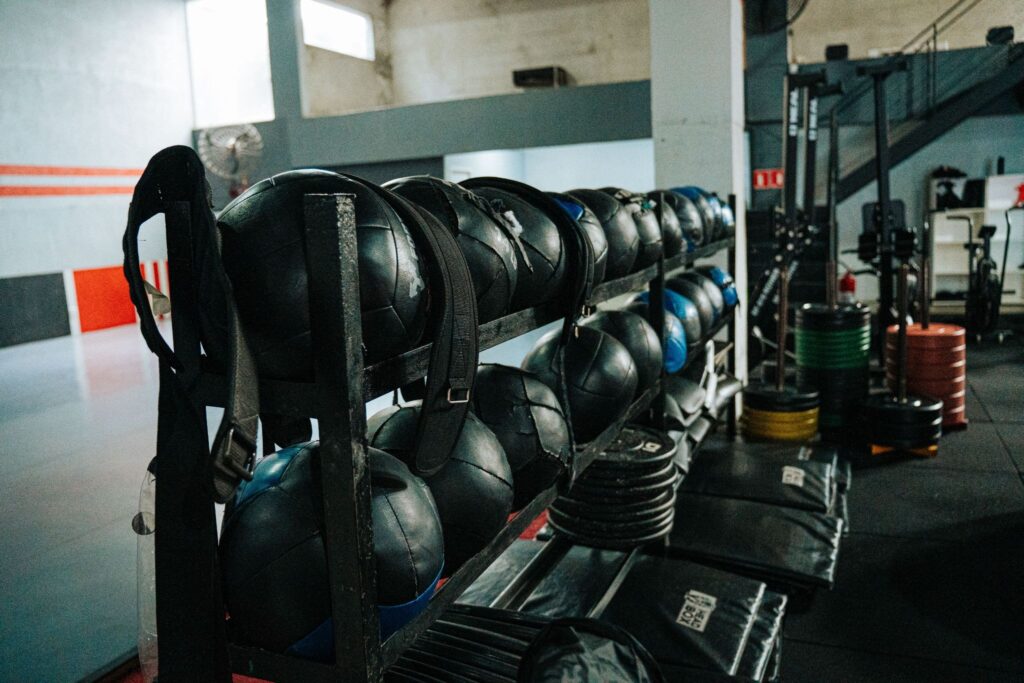
Photo by Emanuel Pedro: https://www.pexels.com/photo/modern-indoor-gym-with-kettlebells-and-equipment-32610333/
For a while, the home gym lived wherever it could fit. A spare bedroom. A corner of the garage, squeezed between the car and the Christmas decorations. A set of adjustable dumbbells hiding under the bed.
That era is ending. A growing number of serious home trainers are moving their equipment out of the house altogether and into large, dedicated steel buildings in the backyard or out on the property.
This is not just a design trend. It reflects how people now train, what they expect from their space, and how much they are willing to invest in getting stronger at home.
The Strength Gap Nobody Talks About
Most fitness conversations still center on cardio. Steps, runs, rides, and rings on a smartwatch. Strength training often gets treated as optional.
The data says otherwise. According to the World Health Organization, 31 percent of adults worldwide do not meet recommended physical activity levels. The same guidance stresses that muscle strengthening benefits every age group.
Australia shows the gap clearly. The Australian Institute of Health and Welfare found that just 24 percent of adults met the muscle-strengthening guidelines in 2022. Far more people are moving than are lifting.
That gap creates demand for spaces built around strength. Lifting needs room, height, solid flooring, and somewhere to leave heavy equipment set up. The spare bedroom rarely delivers any of that.
Why Serious Lifters Are Choosing Large Sheds
The first wave of home gyms made do with small spaces. The second wave wants a proper training floor.
That is where large steel sheds come in. On rural blocks and bigger suburban properties, people are skipping the converted garage and building a standalone shed designed for training from day one. Many of these builds borrow straight from farm and workshop designs, with wide clear spans, tall walls, and big roller doors.
The appeal is easy to see in the projects shed suppliers now showcase. Wide Span Sheds, for example, features a roundup of the best sheds Australia has to offer, from car lovers’ workshops to multi-bay machinery sheds. Those same large sheds and farm-style designs translate naturally into training spaces, because the features that suit tractors and hoists also suit squat racks and rigs.
A big shed solves problems a garage never could. It leaves room for a full power rack, a lifting platform, a rower, a ski erg, and a sled track, all at once. Nothing has to be packed away before dinner.
It also separates training from daily life. Walking out to the shed becomes a commute in miniature, a clear shift from home mode to training mode. Many lifters say that small ritual does more for consistency than any app.
Height Changes Everything
Ceiling height is the quiet deal-breaker in most home gyms. Overhead presses, pull-ups, box jumps, rope climbs, and kettlebell work all need vertical clearance that standard rooms rarely offer.
Farm-style and workshop sheds start with tall walls by design. That gives room for overhead movements, ceiling-mounted rigs, and even a mezzanine for storage or a stretching area.
Roller doors add another advantage. Open them on a mild morning, and the gym becomes half indoor, half outdoor. Sled pushes and carries can roll straight out onto the grass.
The Hidden Benefit of a Hybrid Shed
Not every backyard gym shed is only a gym. On rural properties, many owners split the space between training and everything else.
One end holds the rack, the platform, and rubber flooring. The other end stores the quad bike, the mower, or the boat. A well-planned layout lets both uses coexist without anyone tripping over a barbell.
This hybrid approach often makes the investment easier to justify. The shed protects valuable equipment and vehicles while also giving the household a serious place to train. For families, it can double as a man cave, a she shed, or a weekend hangout once the session ends.
Rules, Heat, and the Practical Side
The practical details deserve as much attention as the equipment list. In Australia, sheds generally fall under Class 10a buildings in the National Construction Code, which covers non-habitable structures like sheds, carports, and private garages. Local councils may have their own requirements too, so checking approvals early saves headaches later.
Heat is the other big issue. Steel buildings can get hot fast in an Australian summer, and hard training generates plenty of heat on its own. Safe Work Australia explains that heat becomes hazardous when the body has to work too hard to cool itself, and those same principles apply to anyone training in an enclosed space.
The fix comes down to smart design. Roof insulation, whirlybirds or roof ventilators, skylights for natural light, and cross-flow through opposite doors all help. Training early in the morning or later in the evening helps too, especially in the hottest months.
Flooring matters as well. A concrete slab provides a solid base, while rubber mats or a dedicated lifting platform protect both the floor and the equipment. Plenty of power outlets, good lighting, and a sound system round out the setup.
What This Means for What Comes Next
The backyard gym shed sits at the intersection of several bigger shifts. Strength training is gaining recognition as essential, not optional. Home training has matured beyond a temporary workaround. And people increasingly want spaces that match a long-term commitment rather than a short-term phase.
Expect to see more training sheds designed with intention from the start. Larger spans, better insulation, integrated storage, and layouts planned around specific programs rather than random equipment purchases.
Fitness brands and coaches should watch this space as well. A client with a fully equipped shed trains differently from one squeezed into a spare room. Programming, product design, and even remote coaching will need to adapt to these larger, more capable home setups.
Bottom Line
The home gym did not disappear. It simply outgrew the house.
For lifters with the space and the commitment, a large steel shed offers what no spare room can: height, floor space, separation, and room to grow. Planned well, with the right ventilation, flooring, and approvals, it becomes far more than storage.
It becomes the place where the training actually happens.