
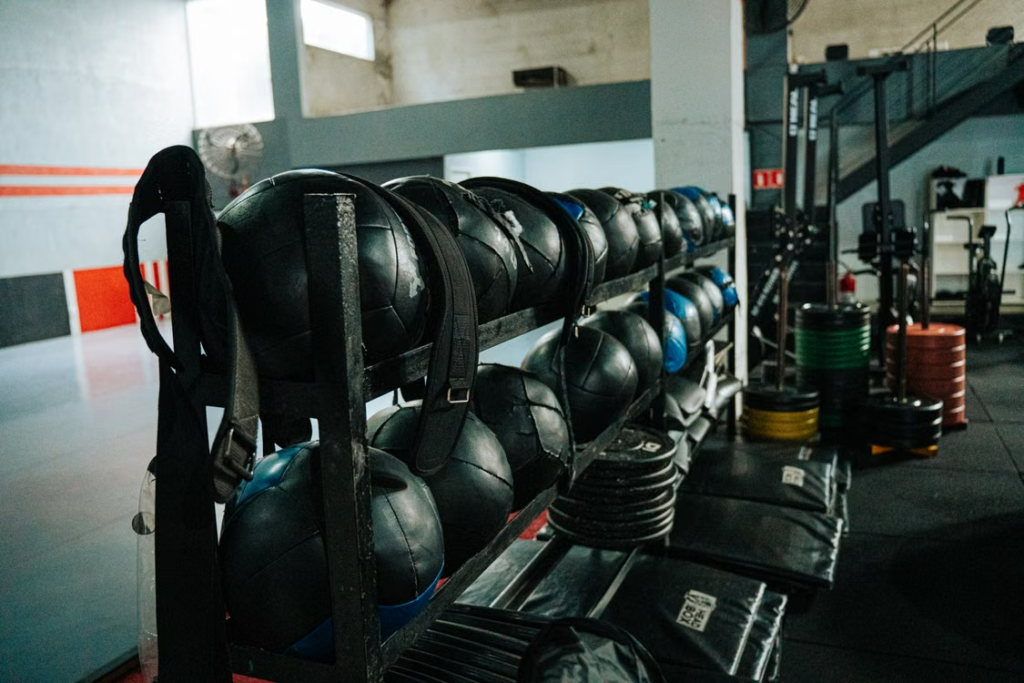
A garage gym has plenty going for it: no commute, no waiting for a rack, and training on your own schedule. The trade-off shows up in summer. A garage that stays cool in March can turn into a sauna by June, and every set feels harder for reasons that have little to do with fitness. Heat and humidity change how the body performs, how quickly it tires, and how safe a session is. They also change what happens to the equipment sitting around you. The sections below cover why garages overheat, what heat and humidity do to the body during training, which cooling and airflow strategies work, how to protect gear from moisture, and how to adjust workouts when conditions are rough.
Why a Garage Gym Runs Hotter Than the House
Most garages were built to shelter vehicles. They usually have thin walls, minimal insulation, a large uninsulated door, and gaps around the edges. A roof baking in the sun passes heat straight down into the space, and a west-facing door absorbs afternoon sun for hours. By evening, the stored heat radiates back into the room.
Humidity adds a second layer. Concrete slabs hold moisture, and humid outdoor air leaks in through gaps. In warm, damp regions such as Florida and the Gulf Coast, the air inside a closed garage can stay near saturation for weeks. A space that feels only moderately warm can still make training miserable when moisture prevents sweat from evaporating.
People generate heat of their own. A resting adult gives off roughly the heat of a small light bulb, and someone doing hard intervals gives off many times that. Add a few training partners, a treadmill motor, or a fan running against stagnant air, and the room warms quickly. Without a way to exhaust that heat, the temperature climbs during the session.
Understanding the sources points toward solutions. Reduce heat entering through the roof, door, and walls. Remove the heat and moisture added by people and equipment. Keep air moving across the skin. Each cooling strategy below addresses one or more of those goals.
What Heat and Humidity Do to Performance and Safety
The body cools itself mainly through sweat evaporation. In dry air, sweat evaporates quickly and removes heat efficiently. In humid air, evaporation slows, so sweat drips off without cooling as well, core temperature rises faster, and effort feels harder. The heat index, which combines temperature and humidity, often reflects strain better than temperature alone.
Performance declines as heat builds. Heart rate climbs at the same workload, perceived effort rises, and strength and endurance both drop. Dehydration compounds the problem. Even moderate fluid loss can reduce power output, concentration, and coordination, which matters when handling heavy loads.
Heat illness covers a range. Early warning signs include heavy sweating, fatigue, headache, muscle cramps, and dizziness. Heat exhaustion adds nausea, weakness, a rapid pulse, and cool, clammy skin. Heat stroke is a medical emergency characterized by confusion, a very high body temperature, and sometimes fainting. Anyone who shows confusion or loses consciousness needs emergency care immediately.
Acclimatization offers real protection. Over about one to two weeks of gradual exposure, the body begins to sweat earlier and more efficiently, plasma volume expands, and heart rate at a given effort falls. Start with shorter, lighter sessions in the heat and build up. People who are older, have chronic conditions, or take medications that affect fluid balance or heat tolerance should consult a doctor about precautions.
Cooling and Airflow Strategies That Work
Fans alone rarely solve the problem in a hot garage, though they help sweat evaporate when humidity is moderate. A better plan layers several measures. Common options include:
- Ductless mini-split systems, which provide efficient cooling and dehumidification without extending ductwork from the house.
- Portable air conditioners, which are easy to install but less efficient and must vent hot air outdoors through a hose.
- Window or through-wall units, a workable choice where the garage has a suitable opening.
- Ceiling or oscillating fans, which move air across the skin and prevent heat from pooling around the lifter.
- Dehumidifiers, which remove moisture and are especially useful when the temperature is tolerable but the air feels heavy.
- Reflective or insulated garage door panels, shade over west-facing walls, and weatherstripping around the edges to reduce heat gain.
Sizing matters. A common guideline is about twenty BTU of cooling per square foot, with additions for poor insulation, big doors, direct sun, and people exercising. An undersized unit runs constantly and never catches up. An oversized unit cools quickly but shuts off before removing enough moisture, leaving the room cool and clammy.
Cooling equipment needs to work reliably through Stuart’s hot, humid summers. When a home’s central system struggles to keep rooms comfortable, or a garage unit seems weaker each summer, a maintenance issue may be reducing its performance. Low refrigerant, dirty coils, and failing capacitors can make a system appear undersized, so homeowners can turn to local HVAC professionals such as Kyzar Air Conditioning to diagnose the problem before deciding whether new equipment is necessary.
Protecting Equipment From Humidity
Gear takes a beating from moisture. Iron and steel rust quickly in damp air, and barbells, plates, dumbbells, racks, and bolts can develop surface rust within weeks. Bearings in cable machines and treadmills can corrode, and rubber flooring can trap water and encourage mildew. Leather straps, wooden accessories, and cloth benches can grow mold.
A simple hygrometer, which costs little, shows the real situation. Indoor relative humidity between roughly thirty and fifty percent is generally recommended for comfort and mold prevention, and readings above sixty percent for extended periods invite problems. If the garage often sits above that range, dehumidification is worth the investment.
Daily habits help. Wipe down equipment after sessions, since sweat contains salt that accelerates corrosion. Apply a light coat of oil to bare metal, store chalk and accessories in sealed containers, and keep bands and straps off damp floors. Lift rubber mats occasionally so the concrete beneath can dry. Avoid hanging wet towels or clothing in the space, since they add moisture to the air.
Air sealing and insulation reduce both heat and humidity at the source. Seal gaps around doors and pipes, and consider an insulated garage door. When performance drops, a service call for AC repair or a comparable local provider before peak season can restore humidity control, and routine care such as coil cleaning and filter changes keeps systems working efficiently.
Adjusting the Workout When Conditions Are Rough
Even with good equipment, the hottest days call for smarter training. Schedule sessions for early morning or evening when the garage has stored less heat, and pre-cool the room before starting, because cooling an already hot space while sweating is much harder than holding a comfortable temperature.
Lower the intensity when heat is high. Expect slower paces, longer rest periods, and reduced loads, and treat this as a normal adaptation rather than a lost day. Break long sessions into shorter blocks, and use rest to cool down in front of a fan. Choose exercises that keep you stationary and avoid prolonged cardio in the worst conditions.
Hydrate throughout the day, not only during the workout. Drink steadily, and consider electrolytes for sessions longer than an hour or with heavy sweating. Pale yellow urine is a rough guide to hydration. Wear light, breathable clothing, and keep a towel for wiping sweat so it does not drip onto equipment.
Know when to stop. Dizziness, nausea, headache, or a sudden end to sweating are signals to quit, move to a cooler place, sip fluids, and cool the skin. Seek emergency help if confusion, fainting, or very high body temperature appears. Avoid training alone in extreme heat without a phone and someone aware of your plans. Keep vehicles, fuel, and solvents away from the training area, and never run an engine in a closed garage.
End Note
A garage gym can work through the hottest months, but only if heat and humidity are managed deliberately. Reduce heat gain, match cooling equipment to the space, control moisture to protect both people and gear, and adapt training to the conditions. Acclimatization, hydration, and attention to warning signs keep sessions safe, and regular maintenance of cooling equipment keeps the whole system dependable. With those pieces in place, summer training becomes a matter of planning rather than endurance.