
Recovery technology has spent the past decade getting better at measurement. Smartwatches, rings, and dedicated sleep trackers can estimate sleep duration, monitor resting heart rate, follow HRV trends, and combine several signals into a daily recovery score.
That information has made recovery more visible, particularly for people who train regularly. It can reveal that sleep becomes shorter during high-volume weeks, that resting heart rate rises during illness or travel, or that HRV moves away from its usual range when training and life stress accumulate.
But measurement has a natural limit. Once the pattern is clear, collecting another score does not change the recovery process. Technology can show that a late training session was followed by poorer sleep; it cannot recover for the athlete.
That gap is driving the next stage of recovery technology. The focus is expanding from what happened overnight to what happens between training, stress, rest, and sleep. Nervous-system regulation has entered that conversation because recovery is not only about how long someone sleeps or how sore their muscles feel. It also involves the physiological transition out of a state built for performance.
Sleep Tracking Made Recovery Easier to See
Sleep tracking remains useful because recovery is difficult to judge accurately from memory alone.
A few poor nights can feel like an entire bad week, while a gradual decline in sleep duration can be easy to miss when training volume is increasing at the same time. Wearables provide a longer record. When used consistently, they can help connect sleep with training, travel, alcohol, work stress, illness, and subjective fatigue.
The value is strongest at the level of patterns rather than individual scores.
Heart-rate variability is a good example. HRV reflects variation between successive heartbeats and is influenced by autonomic regulation, but it also changes with training load, sleep, illness, alcohol, psychological stress, and measurement conditions. Current sports-science guidance therefore favors repeated measurements and changes relative to an individual’s baseline rather than interpreting one morning’s reading as a simple measure of readiness.
Sleep data requires similar restraint. The World Sleep Society recommends distinguishing more fundamental measures, such as sleep timing and duration, from proprietary metrics whose definitions and algorithms vary between manufacturers. Device selection and interpretation should depend on the intended use rather than assuming every recovery or sleep score carries the same meaning.
This leaves recovery technology with a straightforward problem. If six weeks of data already show that hard evening sessions are consistently followed by later sleep and poorer next-day recovery, a more detailed graph may add little. The useful next step is to change what happens around those sessions.
That is also why the category of the smart sleep device is becoming broader. Some products still concentrate on measuring the night. Others are designed to be used during a defined period before sleep or during recovery. These are not better and worse versions of the same technology; they perform different jobs.
Tracking is most valuable when the pattern is still unclear. Once the pattern is established, recovery depends on how the athlete responds to it.
Recovery Starts Before Sleep
Sleep is a major part of recovery, but the recovery process does not begin when someone falls asleep.
Hard exercise creates a physiological state that supports performance. Heart rate and ventilation rise, cardiovascular demand increases, metabolic by-products accumulate, and autonomic regulation shifts to meet the demands of the session. After exercise ends, these systems gradually return toward resting conditions.
Parasympathetic reactivation is part of that transition, which is one reason HRV has become relevant to post-exercise recovery research. It does not mean that parasympathetic activity is a universal “recovery switch.” Muscle repair, glycogen restoration, hydration, temperature regulation, sleep, and autonomic recovery do not all occur at the same rate, and no single metric represents the whole process.
The practical issue is the period between finishing the session and being ready to rest.
This is particularly noticeable when training ends late. An athlete may have substantial muscular fatigue while still feeling alert, warm, or mentally activated. Sleep tracking will show the consequence the next morning, but by then the period that might have been changed has already passed.
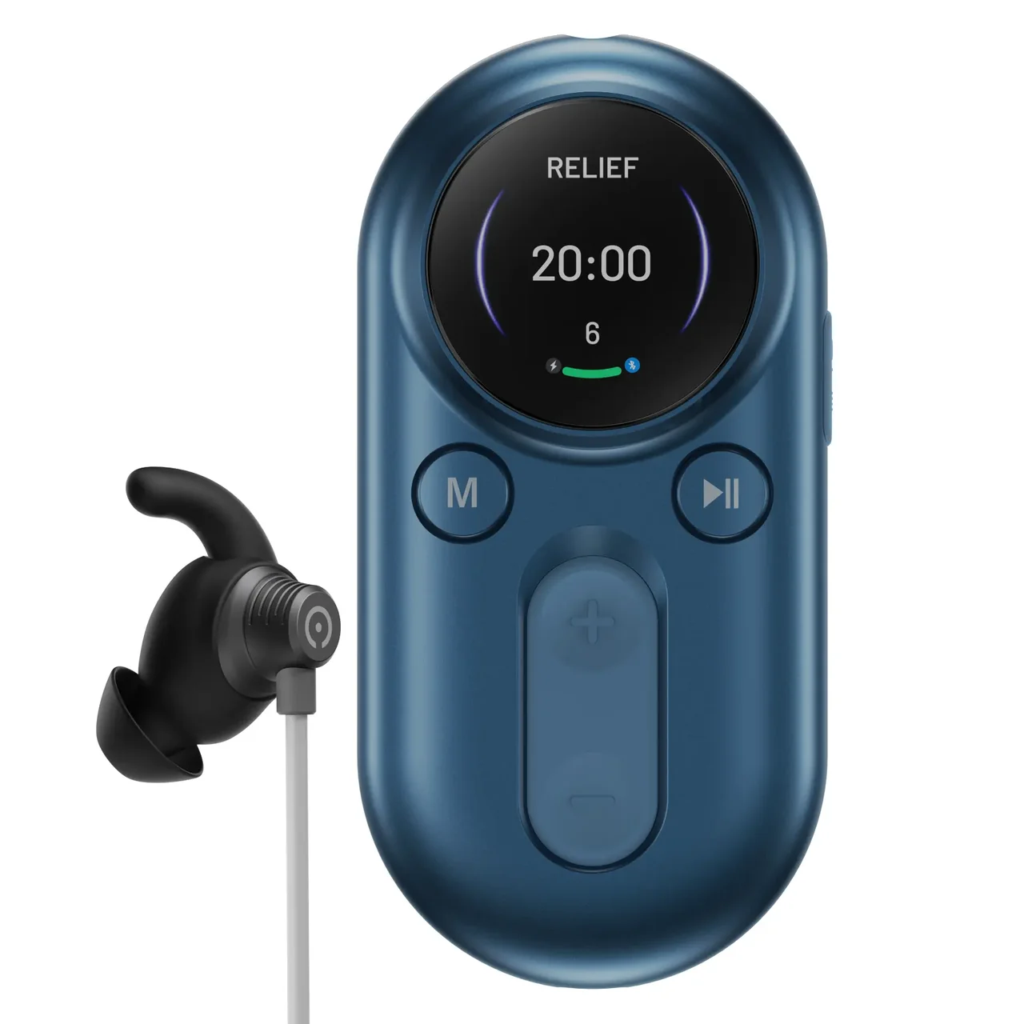
Recovery methods have traditionally tried to influence this period through low-intensity movement, breathing, cooling strategies, massage, or other post-exercise routines. Newer devices are bringing nervous-system stimulation into the same space.
Transcutaneous auricular vagus nerve stimulation, or taVNS, uses electrical stimulation at selected areas of the outer ear associated with the auricular branch of the vagus nerve. It is being studied because vagal pathways participate in autonomic regulation, including the shift that occurs as the body moves away from physical demand and toward recovery.
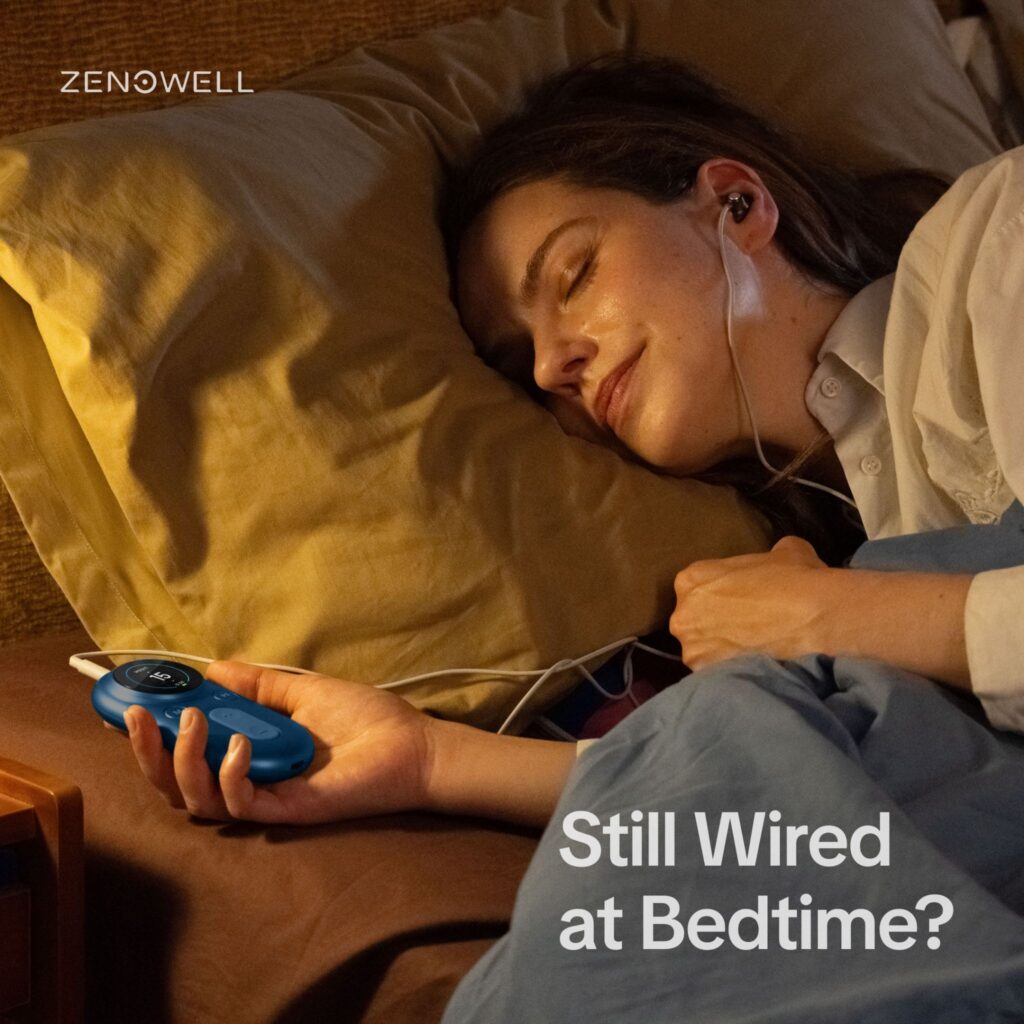
For people comparing vagus nerve stimulation devices for sleep, that physiological rationale is only the starting point. Devices and research protocols can differ in electrode location, stimulation intensity, waveform, session duration, and intended use. The phrase “vagus nerve stimulation” does not make those protocols interchangeable.
Recent exercise research shows why the category is attracting attention while also showing why broader claims would be premature. A 2026 randomized study tested 20 minutes of bilateral taVNS immediately after standardized treadmill exercise in 60 physically inactive young adults. Compared with passive recovery, the taVNS group showed larger reductions in blood pressure, lactate, and perceived fatigue, as well as a greater increase in a composite parasympathetic index. Conventional HRV measures such as RMSSD did not differ significantly between groups.
That is an interesting recovery finding, but it is not yet evidence that taVNS improves recovery in trained athletes after strength training, endurance racing, or competition. The participants were physically inactive, the exercise was standardized, and the comparison group received passive recovery rather than sham stimulation.
The important change is therefore not that recovery technology has “solved” nervous-system recovery. It is that technology is beginning to intervene during a period that earlier wearables mostly observed afterward.
Why Nervous-System Technology Is Different From Another Recovery Score
Once a device moves from measuring physiology to trying to influence it, the standard for evaluating the technology changes.
A sleep tracker needs to show that its measurements are sufficiently useful for the decisions being made. An active recovery device also needs evidence that the intervention itself produces a meaningful effect under relevant conditions.
This difference can get lost in consumer marketing because both types of products may use the same language around sleep, HRV, stress, or recovery.
A watch may report that HRV has fallen below baseline. A breathing device may guide respiratory pacing. A stimulation device may deliver an electrical input through the ear or another site. All three can appear in the same recovery ecosystem, but only the first is primarily measuring the state it describes.
Vagus nerve stimulation is a useful example. Sleep research now includes controlled trials of taVNS in people with chronic insomnia. A 2024 sham-controlled randomized trial of 72 adults found clinically meaningful improvements in patient-reported sleep outcomes after a defined eight-week taVNS protocol.
That finding supports continued research into taVNS. It does not show that any consumer stimulation device will improve an athlete’s sleep, and it does not mean occasional poor sleep after heavy training is equivalent to chronic insomnia.
The evidence needs to follow the exact question being asked.
If the claim concerns post-exercise recovery, exercise-recovery studies are most relevant. If the claim concerns chronic insomnia, sleep-disorder trials matter. If a commercial device uses different stimulation parameters from either protocol, those differences should remain visible rather than being hidden behind the broader phrase “research-backed.”
This is one reason nervous-system regulation should not become shorthand for “resetting” or “optimizing” the nervous system. The autonomic nervous system is continuously adapting to exercise, posture, breathing, temperature, emotion, digestion, and sleep. Recovery does not require forcing it into one permanently calm state.
For fitness technology, the more realistic goal is narrower: supporting an appropriate transition from demand toward recovery at a time when that transition matters.
Better Recovery Tech Should Change the Recovery Process
Sleep tracking is unlikely to disappear from recovery technology. It provides information that is difficult to obtain in other ways, particularly when the same device is used consistently enough to establish a personal baseline.
What is changing is the role that data is expected to play.
A recovery score is useful when it reveals something that changes a decision. Repeatedly shorter sleep after late training may justify changing session timing. A sustained deviation in HRV alongside fatigue and declining performance may prompt a review of training load. A consistent difficulty winding down after evening sessions may point toward a better post-training routine.
The technology becomes less useful when it simply adds another layer of measurement to a pattern that is already obvious.
Nervous-system devices represent one possible response to that limitation, but they are not the only one. Breathing, low-intensity movement, better session timing, adequate nutrition, appropriate training load, and enough sleep remain part of the same recovery process. A device earns a place only when it adds something specific that those existing practices do not already provide.
This also explains where connected recovery systems may become more useful. Combining sleep, HRV, training history, and session data can reduce guesswork if the system helps the athlete interpret a repeated pattern. It becomes less useful when the result is simply a more complicated dashboard.
Recovery technology is therefore moving beyond sleep tracking for a practical reason: measurement alone reaches a point of diminishing returns.
The first generation of wearables helped athletes see recovery more clearly. The next generation is trying to influence what happens during recovery itself.
Whether nervous-system regulation becomes an important part of that future will depend less on how many devices adopt the language and more on whether specific technologies can show that they improve meaningful recovery outcomes under the conditions in which active people actually use them.
References
- Chee MWL, Baumert M, Scott H, et al. World Sleep Society Recommendations for the Use of Wearable Consumer Health Trackers That Monitor Sleep. Sleep Medicine. 2025.
- Esco MR, Fields AD, Mohammadnabi MA, Kliszczewicz BM. Monitoring Training Adaptation and Recovery Status in Athletes Using Heart Rate Variability via Mobile Devices: A Narrative Review. Sensors. 2025.
- Ertürk Ç, Mutuş R. Post-exercise auricular vagus nerve stimulation modulates autonomic and recovery responses in physically inactive young adults: a randomized controlled trial. Scientific Reports. 2026.
- Zhang S, Zhao Y, Qin Z, et al. Transcutaneous Auricular Vagus Nerve Stimulation for Chronic Insomnia Disorder: A Randomized Clinical Trial. JAMA Network Open. 2024.