

Have you ever started an exercise programme, only to give up after a few days? If so, chances are that it wasn’t because of a lack of willpower – more likely you didn’t have the right equipment, your work schedule was too hectic, or there’s a niggle from an old injury that was never properly addressed.
Here are some things to think about when you’re getting started with a remote coach.
Personalised Support
Tailored to You
Fitness goals can be vague and confusing. With personal training you’ll have a personalised and structured programme that works around your habits, abilities, injuries, lifestyle, fitness level and the space you have for training. Your goals and aspirations are the foundation of your programme. An online personal trainer can help structure this approach around your individual needs and circumstances.
A detailed assessment will cover your training history, everyday activity level, sleep, job demands, previous injuries or limitations and the equipment you have access to. Many people will also watch a video of the exercises or attend an initial call so they can observe your movement patterns, mobility, balance, and technique and identify limitations before assigning challenging movements. This way they’ll have a holistic picture of your strengths and limitations and can build an effective, challenging programme for you.
Goals should be specific, realistic, challenging, time-bound and something that excites and motivates you. It’s important to pick goals that aren’t scale-related, e.g., increased energy, feeling strong, improved mobility and endurance, feeling confident, looking/feeling good, improved posture, feeling good in your own skin, sleeping well, etc.
Accountability
Regular contact with your coach helps keep you accountable, as they’re there to hear how you’re getting on, celebrate successes, hear any problems, make changes, troubleshoot and keep the programme interesting, varied, challenging and fun. This means that when things don’t go to plan, you’ve got someone there to help you get back on track before it’s too late and you’ve fallen off the wagon completely.
Flexible Programming

Life can throw a lot of spanners in the works, with poor sleep, muscle soreness, a looming deadline at work, feeling run-down, stress, travel, feeling uninspired, and a busy social calendar…the list is endless! With remote training – as you can learn more at https://www.themanual.com/fitness/pros-and-cons-of-remote-personal-training/ – your coach will be able to assess the situation by reviewing your training log, watching a clip, reading between the lines, assessing how well you’re recovering, etc., and decide whether you should repeat the workout, progress as planned or scale back the training that week. The team at Online Personal Trainer – Peter Nguyen Fitness takes a similar approach.
Missing a workout shouldn’t be seen as failure. This is where remote training comes in, as your coach should make it easier for you to train by reducing the amount of exercises, choosing simpler variations, making the session shorter or restructuring your training for the week. This means that when you’re ready to train again, you’ll be encouraged, motivated, feeling positive and keen to train.
Progress and Safety
Understanding Progression
Progression doesn’t always mean lifting heavier, as it can be using better technique, higher quality reps, less rest, increased range of motion, feeling confident, improved balance and mobility. Your coach should explain how you’ll be progressing and why. It’s important to understand that you don’t need to die on every workout! You’ll be challenged, but you’ll learn to work within your limits and boundaries.
Recovery is an important consideration when training, especially when you’re getting started. It can take the body a couple of weeks to adapt to a new training stimulus. As a guide, if you’re training hard, allow 24 hrs between training the same muscles. Your coach should be assessing whether you’re coping well with the programme and take into consideration unusual tiredness, technique breaking down, persistent muscle soreness or stalled progress, because it’s not always necessary to increase the challenge! Progressing steadily will leave you feeling comfortable with the programme and motivated to carry on.
Technique and Pain
Many people train without supervision for years without realising they’re using poor technique, standing/breathing/posturing badly or training within limited ranges of motion. Your coach should provide instructional videos and cues, watch clips, give you detailed feedback and educate you on common mistakes.
It’s important to learn to feel muscular exertion and understand that this is different from feeling sore. However, if you get a twinge, sharp pain, feel dizzy, have joint pain (see here for more) or something feels ‘off’, stop straight away. If symptoms persist, your coach should signpost you to an appropriate health professional.
Available Space
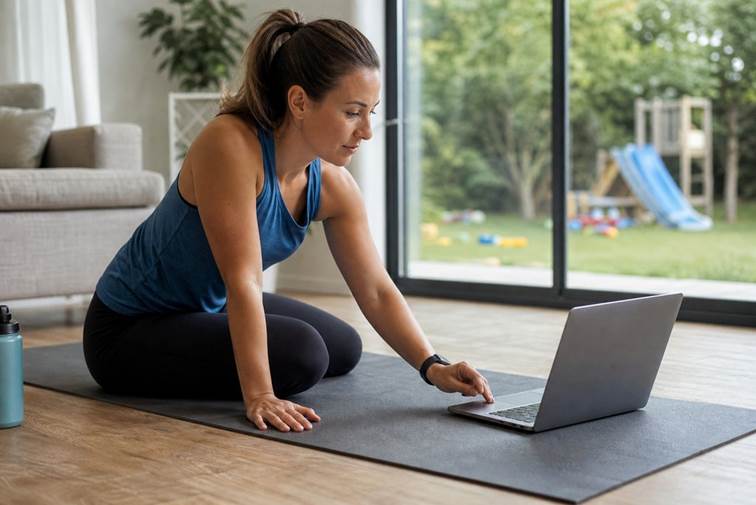
If you’re training at home, chances are you won’t have a sprung floor, a state-of-the-art gym, plenty of space or a high ceiling! This is where remote training comes into its own. A good remote coach will work with the space and equipment you’ve got. They’ll modify exercises, suggest suitable alternatives and tailor your programme accordingly.
Sustainable Habits
Realistic Routines
The best programmes encourage holistic, repeatable, realistic, challenging, fun, enjoyable and sustainable habits around exercise, nutrition, sleep, hydration, stress, everyday activity and mindset. A good coach will empower and educate you around lifestyle changes, explain the ‘why’, listen to your goals, work within their remit and give you broad guidelines so you’re not feeling restricted, limited or guilty!
Depending on your goals, previous knowledge/experience and the amount of support you’re looking for, it might mean learning to prepare a few easy meals, implementing a wind-down routine each night to aid your sleep, introducing regular movement breaks during your working day if you’re on your feet/sitting all day, etc.
However, if you’re living with an eating concern, a medical condition or have specific nutritional needs, it might be best to seek guidance from a suitable professional. A good coach will recognise this and refer you on accordingly.
Questions to Consider
Before starting, it’s helpful to understand how remote training with your coach works, including how they will communicate with you, how often, what format they will send workouts in, how flexible is their programme, how they will receive feedback from you, what happens when you’re away, what happens when you fall behind, and what happens when you have a niggle/injury. How can you make the programme work for you?
Have a think about what equipment you’ve got, how much time you’ve got each week, previous injuries, and your immediate goals.