

Muscle gets most of the attention in fitness, but tendons, ligaments, joints, bone and skin are part of the training picture too.
Fitness conversations tend to revolve around muscle. How much protein are you eating? How heavy are you lifting? Are you recovering well enough to train again tomorrow? Those are important questions, but muscle is only one part of an active body.
Every squat, run, jump, hike and strength session also depends on collagen-rich tissues such as tendons, ligaments, cartilage, bone and skin. That is one reason collagen peptides have moved beyond the beauty aisle and into the routines of runners, lifters and other active adults.
Collagen is not a replacement for complete protein, and it is not a shortcut around smart training. But for someone who already eats enough protein and wants to support the structural side of an active lifestyle, collagen can be a useful addition to the routine.
Fitness Is More Than Muscle
Skeletal muscle may produce force, but connective tissues help transmit and manage that force. Tendons connect muscle to bone. Ligaments help stabilize joints. Cartilage contributes to smooth joint movement. Bone provides the framework that allows the entire system to function.
Collagen is the major structural protein in many of these tissues. Its amino-acid profile is especially rich in glycine, proline and hydroxyproline, which is very different from the profile of a typical whey or complete plant-protein powder.
This difference is important. A traditional protein powder is usually chosen because it provides essential amino acids for meeting total protein needs and supporting muscle protein synthesis. Collagen is better thought of as a specialized protein that is closely associated with connective tissue structure.
So What Are the Potential Benefits of Collagen for Active People?
The most interesting fitness-related collagen research is not really about making muscles bigger. It is about the tissues that help an active body tolerate repeated loading. A 2026 systematic review of randomized trials found that collagen supplementation combined with resistance or plyometric training was associated with favorable changes in some tendon measures, including tendon cross-sectional area and stiffness, particularly in higher-dose protocols. The review did not find an added muscle-strength benefit from collagen, which reinforces the idea that collagen and complete protein serve different purposes.
Earlier research has also explored collagen peptides in physically active adults with activity-related joint discomfort. Several trials reported improvements in measures of joint discomfort, although study populations, collagen products and methods vary. These findings are promising, but they should not be interpreted as proof that collagen prevents injury or treats a medical condition.
For a broader look at the research across skin and connective tissues, this overview of collagen peptide benefits explains why collagen is studied differently from conventional dietary protein and where the evidence is strongest or still developing.
Benefit #1: Supporting the Connective-Tissue Side of Training
A training program creates mechanical stress not only in muscle but also in tendons and other connective tissues. Those tissues adapt to loading over time, which is one reason progressive training is so important.
Collagen peptides provide characteristic amino acids found in collagen-rich tissues. Research is still developing, but this biological connection is why collagen has become especially interesting in sports nutrition when the goal is broader than muscle alone.
This does not mean that taking collagen makes someone injury-proof. Appropriate programming, gradual progression, recovery and good technique remain much more important than any supplement.
Benefit #2: Joint Comfort May Matter More Than You Think
Being consistent with exercise is difficult when every run, squat or long walk feels uncomfortable. Some randomized trials in athletes and active adults have found reductions in activity-related joint discomfort with specific collagen peptides compared with placebo.
That is encouraging for active people, but it is worth keeping the claim in perspective. Joint pain can have many causes, and collagen is not a diagnosis or treatment. Persistent or significant pain deserves appropriate medical evaluation rather than a supplement-only approach.
Benefit #3: Collagen Has Benefits Outside the Gym Too
One reason collagen is unusual among fitness supplements is that interest in it is not limited to exercise. Collagen is also a major structural component of skin, and several reviews have reported improvements in skin hydration and elasticity in trials of oral collagen supplements.
The evidence is not completely uniform. Some recent analyses have raised questions about study quality and industry funding, so it is better to describe the skin data as promising rather than guaranteed. Still, the combination of connective-tissue research and skin research helps explain why collagen appeals to people who want one simple addition that fits both an active and a general wellness routine.
Collagen and Protein Powder Are Not Competitors
A common mistake is treating collagen and protein powder as if one has to replace the other.
If your goal is to meet daily protein needs, maintain muscle or support muscle growth, complete protein should remain the priority. Whey, dairy, eggs, meat, fish, soy and well-formulated plant proteins provide essential amino acids that collagen does not provide in the same proportions.
Collagen can sit alongside those foods rather than taking their place. Someone might use a complete protein shake after training and add collagen to coffee, a smoothie or another meal at a different time of day. The exact timing is less important than having a routine that fits overall nutrition and training goals.
Why Vitamin C Often Appears in Collagen Formulas
Vitamin C has a real biochemical connection to collagen because it is required for normal collagen biosynthesis. That does not mean that more vitamin C automatically produces more collagen, but adequate vitamin C status is important for normal connective-tissue biology.
Many people can obtain vitamin C from fruits and vegetables. Some collagen products include it directly in the formula for convenience. The useful question is not whether a label says ‘with vitamin C’ in large letters, but whether the actual amount is clearly disclosed.
What About Hyaluronic Acid?
Hyaluronic acid is different from collagen. It is naturally present in tissues including skin and joints and is known for its ability to bind water. Some collagen formulas combine the two because they address different aspects of a wellness routine: collagen supplies collagen peptides, while hyaluronic acid is associated with hydration in tissues.
There is no rule that every collagen product needs hyaluronic acid. But for someone who prefers a multi-ingredient formula, it can be a logical addition when the amounts are transparent and the rest of the formula remains simple.

What a Simple, Practical Collagen Formula Looks Like
There is no need for a collagen product to have a long ingredient list. For everyday use, look for a formula that tells you exactly how much collagen you are getting, identifies the collagen source, uses hydrolyzed collagen peptides, clearly lists any additional ingredients and fits easily into foods or drinks you already use.
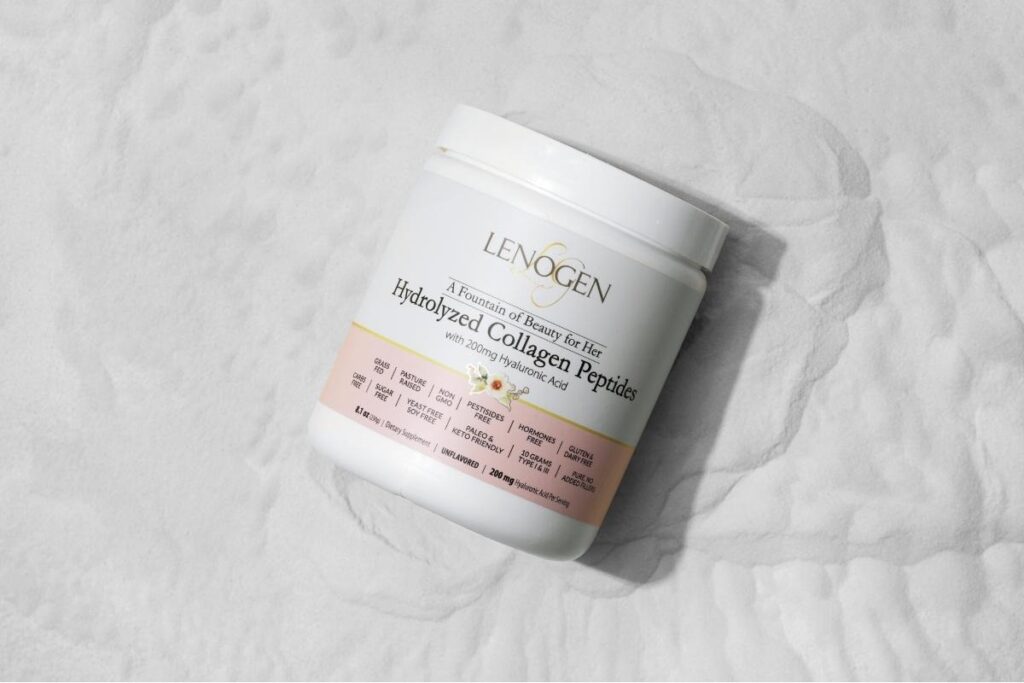
A straightforward example is Lenogen by Lenovie, an unflavored formula with 10 grams of hydrolyzed Type I & III collagen peptides, 200 mg of hyaluronic acid and vitamin C. The appeal of a formula like this is not that it replaces a post-workout protein shake; it is that the ingredient amounts are clearly disclosed and the powder can be added to an existing routine without turning supplementation into a complicated project.
Does Collagen Fit a Keto or Low-Carb Fitness Routine?
Collagen peptides themselves are protein and can fit naturally into many low-carbohydrate routines. The important detail is the finished product, especially if it is flavored or contains added ingredients.
People following keto or a very low-carb diet should check the full ingredient list, carbohydrate content and sweeteners rather than assuming every collagen powder is automatically the same.
If low-carb nutrition is part of your training plan, this guide to choosing collagen for a keto lifestyle breaks down the label details worth checking before adding a collagen powder to the routine.
How to Use Collagen Without Overcomplicating Your Routine
The best supplement routine is usually the one you can repeat without thinking about it. Unflavored collagen peptides can be mixed into coffee, smoothies, oatmeal or other foods and beverages, which makes consistency easier for people who do not want another elaborate pre- or post-workout ritual.
You also do not need to time collagen down to the minute for it to be useful as part of a daily nutrition routine. Some research protocols have paired collagen with exercise and vitamin C around training, but for most consumers the more practical priority is choosing a consistent serving pattern that fits the rest of the diet.
If you already use a complete protein powder, keep using it for the job it does well. Collagen can be a separate addition for people who are specifically interested in collagen-rich tissues and the broader wellness benefits being studied.
Who Might Consider Adding Collagen?
- Strength-training adults who already meet their general protein needs and want to think beyond muscle alone.
- Runners, hikers and other active adults interested in the connective-tissue side of training.
- People looking for a simple protein-based supplement that also has research interest in skin hydration and elasticity.
- Low-carb or keto consumers who want a versatile, low-carbohydrate collagen option and are willing to read the full label.
- Anyone who values clearly disclosed ingredient amounts and a routine that is easy to maintain.
Collagen is still optional. Someone can be strong, healthy and active without taking it. But when the basics are already in place, collagen can be a reasonable addition for people who want to support the broader structural side of an active lifestyle.
The Bottom Line
Muscle may get the headlines, but an active body depends on much more than muscle alone.
Collagen is a structural protein found throughout tendons, ligaments, cartilage, bone and skin. Research on supplemental collagen is still evolving, but studies have produced promising findings for tendon remodeling, activity-related joint discomfort and some skin outcomes. At the same time, collagen should not be treated as a replacement for complete protein, smart training or medical care when pain or injury is present.
The most practical way to use collagen is to keep the role clear: meet your overall protein needs first, train progressively, recover well, and then use collagen as a simple additional tool if connective-tissue and whole-body wellness support fits your goals.
Frequently Asked Questions
Can collagen replace whey or another protein powder?
Not if the goal is to replace a complete protein source. Collagen has a different amino-acid profile and should not be treated as equivalent to whey, dairy, eggs, soy or other complete proteins for muscle protein needs.
Can I use collagen and protein powder in the same day?
Yes. They can serve different roles in the same diet. The important issue is whether your total nutrition, protein intake and supplement choices fit your individual needs.
Is collagen only for skin?
No. Collagen is a major structural protein in connective tissues throughout the body, including tendons, ligaments, cartilage, bone and skin. This is why collagen research spans both beauty and musculoskeletal topics.
How much collagen do studies use?
Research protocols vary widely. Some exercise and tendon studies have used higher daily amounts, while skin and joint studies have used a range of doses. A product label should clearly state its serving amount so consumers can compare formulas accurately.
How long does collagen take to work?
There is no guaranteed timeline. Most clinical studies evaluate collagen over weeks or months rather than a few days, and outcomes depend on the population, dose, product and measure being studied.
Is a longer ingredient list better?
Not necessarily. A useful formula can be quite simple. Clear collagen dosage, source, additional ingredients and serving information matter more than having a long list of extras.
References
- Buchalski A, Jeanfavre M, Altorelli C, Leff G. Collagen Supplementation on Tendon-Related Structural and Performance Outcomes: A Systematic Review. Journal of Functional Morphology and Kinesiology. 2026.
- Khatri M, Naughton RJ, Clifford T, Harper LD, Corr L. The Effects of Collagen Peptide Supplementation on Body Composition, Collagen Synthesis, and Recovery From Joint Injury and Exercise: A Systematic Review. Amino Acids. 2021;53(10):1493-1506.
- Zdzieblik D, et al. The Influence of Specific Bioactive Collagen Peptides on Knee Joint Discomfort in Young Physically Active Adults: A Randomized Controlled Trial. Nutrients. 2021;13(2):523.
- Danessa G, Notario D, Regina R. Effects of Collagen-Based Supplements on Skin Hydration and Elasticity: A Systematic Review and Meta-Analysis. Indian Journal of Dermatology, Venereology and Leprology. 2025;91(6):730-740.
- National Institutes of Health, Office of Dietary Supplements. Vitamin C: Fact Sheet for Health Professionals.