
Quick Answer
Low-impact exercises for seniors build strength, balance, and mobility without straining the joints. Effective options include seated marches, chair stands, wall push-ups, heel raises, and gentle arm circles. Most can be done at home with no equipment, in short sessions of ten to fifteen minutes. Working within a comfortable range of motion, and stopping if pain appears, keeps each movement safe and repeatable.
Introduction
Many older adults want to stay active but worry that a fall, a sore knee, or a racing heart will undo the effort. That caution is well founded.
After roughly age 50, adults lose muscle mass steadily each decade, and reduced strength links directly to slower walking speed and higher fall risk, according to the companion care for seniors research summarised by the National Institute on Aging.
A short daily routine gives families a practical starting point, especially when a caregiver can watch for signs of fatigue and adjust the pace. Indoor exercises for older adults suit any season and any weather, which makes them easy to sustain through a long Calgary winter.
Safe Ground Rules for Low-Impact Exercises for Seniors
Before any movement begins, safety and setup determine whether a routine lasts a week or a year. A clear space, stable support, and a simple way to judge effort turn good intentions into a sustainable habit that holds up over the months that follow.
Set Up a Safe Space
Clear a two-metre square of floor, free of loose rugs and cords. Keep a sturdy chair within reach, and place water and a phone nearby. Wear flat, grippy footwear rather than socks. Good lighting matters more than most people expect, since shadows hide trip hazards and make balance work harder than it should be. A warm room helps too, because stiff joints move more freely once the body is comfortable.
Judge Effort Without a Monitor
Intensity does not require a heart rate strap. The talk test offers a reliable gauge that physiotherapists use with older clients every day. At a comfortable pace, you can hold a full conversation.
At a moderate pace, you can speak in short sentences but not sing. When you can manage only single words, the effort is too high, so ease back until speech returns. Warming up for three to five minutes with slow marching and gentle shoulder rolls before harder movements lowers strain, since cold muscles are far more prone to injury.
Read the Warning Signs
Sharp or spreading pain is a signal to stop, not to push through. Mild fatigue in the muscles is expected and fades within a day. Dizziness, chest tightness, or breathlessness beyond light exertion warrants a pause and a check with a physician. The result is a routine that respects limits while still building capacity over time. For families arranging support, a trained caregiver can watch for these signals, note how each session goes, and adjust the pace as strength returns.
Seated Strength With Chair Exercises for Seniors
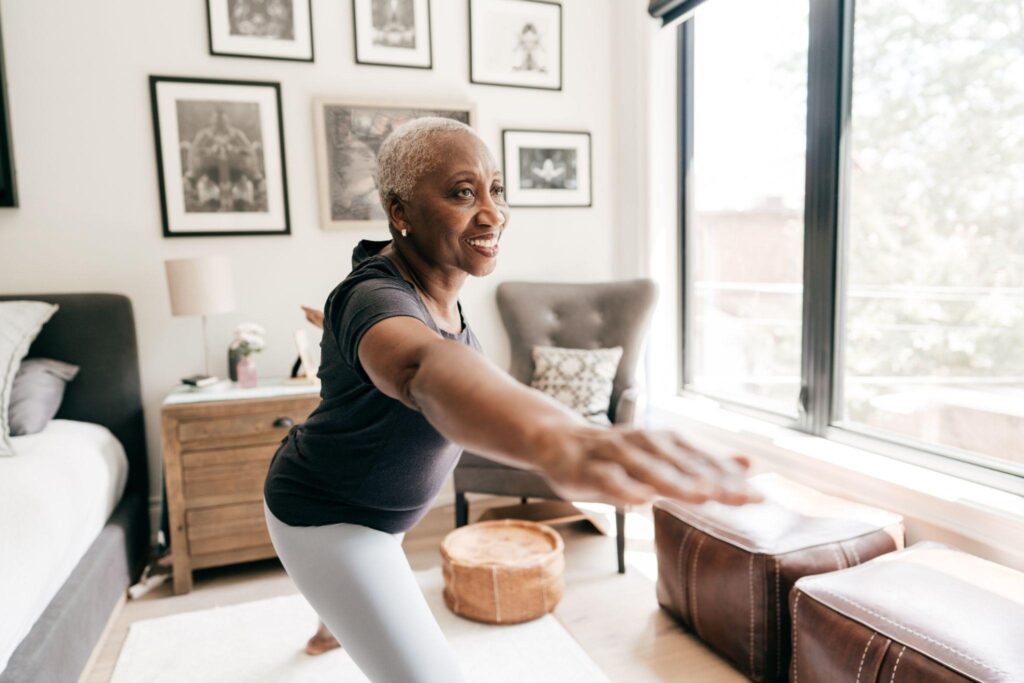
Seated movements form the safest entry point, since the chair removes fall risk while still loading the major muscle groups. A stable seat lets people build power in the legs, core, and arms before any standing balance work begins, which matters a great deal for anyone recovering confidence after a stumble.
Lower-Body Moves
Seated marches, knee extensions, and rise-and-sit repetitions train the muscles that power walking and getting up from a seat. That rising motion in particular predicts independence, because standing without pushing through the arms tracks closely with everyday mobility.
- Seated marches: lift each knee in turn, ten to fifteen per leg.
- Knee extensions: straighten one leg, hold two seconds, lower slowly.
- Rise-and-sit: stand and settle under control, resting between rounds.
Upper-Body Moves
Arm circles, seated rows with a light band, and overhead reaches keep the shoulders mobile and the posture upright. Working within a pain-free arc protects the joints while still building useful strength. Here is how the seated options compare on the demands they place on the body.
| Movement | Primary muscles | Balance demand | Support needed |
| Seated march | Hip flexors, core | Low | Chair only |
| Rise-and-sit | Thighs, glutes | Moderate | Chair, optional rail |
| Seated row | Upper back, arms | Low | Light resistance band |
| Overhead reach | Shoulders | Low | None |
The comparison shows why seated work suits a first phase, since the balance demand stays low while the strength benefit remains real.
Pro Tip: Keep both feet flat and the hips back in the seat. Good positioning turns a gentle movement into a genuine gain and protects the lower back.
Making a Gentle Routine Stick Over Time
Consistency and safe progression separate a short attempt from lasting benefit. The gap most guides leave open is how to raise difficulty without buying anything, and how to order a session so the riskiest work comes last, when the body is warmest.
Add Challenge Without Weights
Difficulty rises through repetitions, tempo, and range of motion before any load is added. Slowing that rise-and-sit motion to a four-second descent increases the work without a single dumbbell. In practice, adding two repetitions each week keeps progress steady and easy to measure against the week before.
Order the Session Safely
Sequence matters as much as content. Putting balance last means the body is warm and least tired when stability is most challenged.
- Warm-up: marching and shoulder rolls.
- Seated strength: the chair-based drills above.
- Supported standing: heel raises holding a counter.
- Balance work, with support always within reach.
Build a Weekly Rhythm
Two or three sessions a week, on non-consecutive days, give muscles time to recover and adapt. Well-chosen senior fitness activities fit around daily life rather than dominating it, which is what keeps people going month after month, a real advantage through Calgary winters.
On the other hand, skipping recovery days tends to cause soreness that derails the habit entirely. Shared routines also bring connection, and a caregiver tracking each visit can flag changes in strength or mood early, which gives families in the local area real peace of mind.
Small Movements, Lasting Independence
Gentle daily movement protects the strength, balance, and confidence that keep older adults living well at home. Seated drills build a base, supported standing extends it, and a careful weekly rhythm makes the gains stick. Done consistently and within safe limits, at-home exercises for seniors offer one of the simplest, most reliable ways to guard mobility and independence for years to come.