
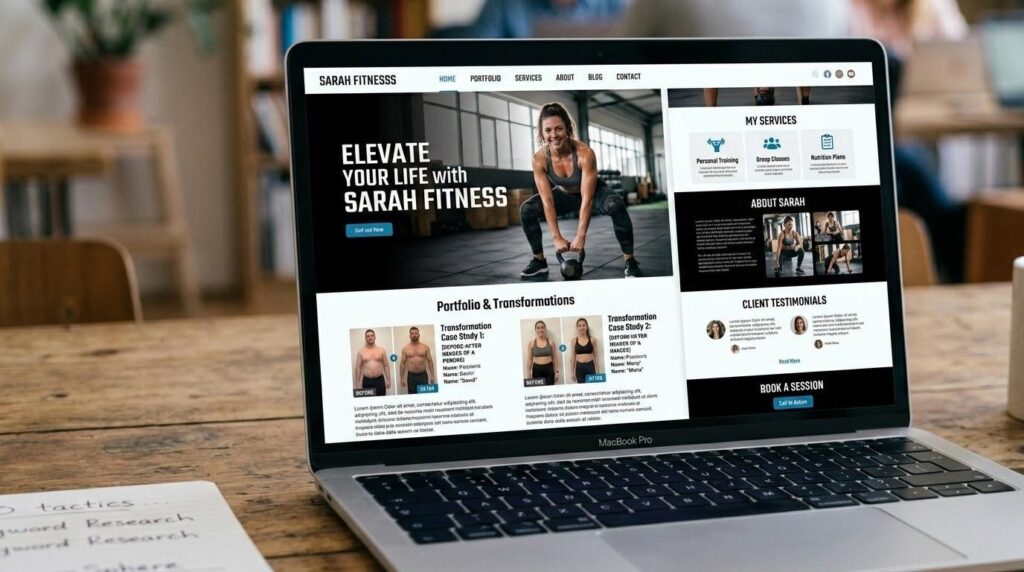
You post daily workout clips, share nutrition tips, and respond to comments, watching your follower count steadily climb. But despite the growing audience, your coaching calendar remains half empty. This gap between having a large social following and actually converting those followers into paying clients frustrates countless fitness coaches. Social platforms are excellent for grabbing attention, but they rarely close the deal on their own.
To bridge that gap, you need a dedicated space that you control completely- a professional anchor that does the heavy lifting of turning interest into action. Wix enables fitness professionals to build a portfolio website that turns their brand visibility into bookable services and paying clients. Having a central hub gives your audience a clear path to follow, moving them from casual viewers to committed athletes.
Your Social Following Is an Audience – Your Fitness Website Is the Business
Social media apps want to keep users scrolling. That means your content constantly fights against the algorithm, ads, and millions of other creators just to be seen by the people who already follow you. Depending solely on a bio link pointing to a messy list of external forms keeps you stuck in content creation mode rather than client management mode.
Owning your own web platform changes everything. You control the message completely, free from the distractions of the feed. You decide what people see first, how they read about your methodology, and exactly what action they should take next. A portfolio website enables fitness professionals to turn their internet footprint into bookable services and paying clients. Instead of hoping a follower stumbles across your pricing in an Instagram story, you guide them through a structured experience designed specifically to build trust and encourage sign-ups.
What Your Fitness Portfolio Actually Needs to Include
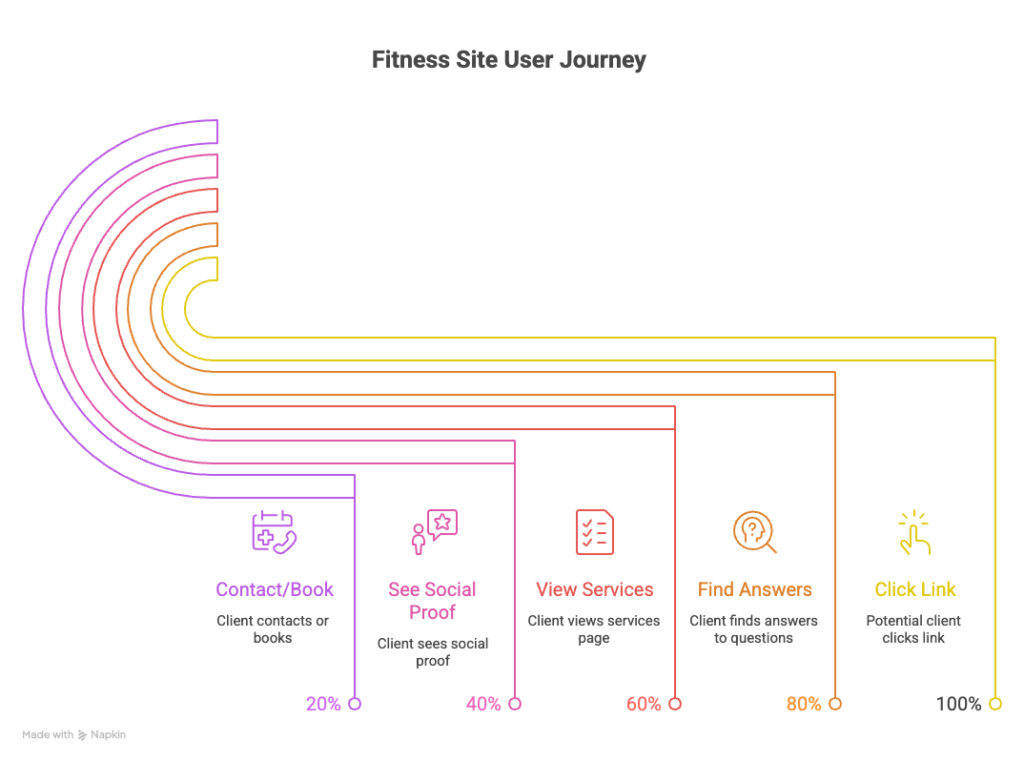
A successful fitness site prioritizes clarity and function over complex design. When a potential client clicks your link, they are looking for specific answers: Who are you? Can you help me? How much does it cost?
Your site must answer these questions immediately. Include a clear services page that breaks down exactly what you offer, whether that involves one-on-one virtual coaching, specialized marathon prep, or group classes. Add strong social proof, such as client transformation stories and written testimonials, to prove your methods work. Make your contact and booking pathways highly visible so a visitor never has to hunt for a way to reach you. Include a brief credential section to establish your authority.
There is a massive difference between a site that merely looks good and one that actively earns trust. Understanding that personal trainers can increase income starts with building a home base that works for you around the clock, automatically capturing leads and processing bookings while you focus on training.
Many trainers make the mistake of trying to appeal to everyone. If your homepage speaks to powerlifters, marathon runners, and prenatal yoga enthusiasts all at once, you will end up confusing your visitors. Structure your site around your specific, ideal client.
Start with a strong homepage headline that speaks directly to that person. If you help busy parents build strength in under thirty minutes a day, say exactly that. Keep your navigation menu simple- Home, About, Services, Success Stories, and Contact are usually all you need. Design your service pages for clarity, making sure pricing, session length, and included perks are easy to understand.
The professional journey you took to create training plans will naturally shape the story you tell on your About page. Share your philosophy, why you train the way you do, and what clients can expect when they sign up. This focused approach makes the right clients feel like they are in exactly the right place.
Visuals That Do the Selling Before You Say a Word
Fitness is highly visual. People want to see the energy you bring to a session and the results you help clients achieve. Photography and video on your site act as crucial trust signals, communicating your professionalism before a visitor reads a single word.
Just as they matter for sponsorships and athletic visibility, the same logic applies to converting clients. The right image instantly builds credibility. Invest time in capturing authentic, well-lit action shots of your training, leading a class, or performing movements with proper form. If your clients give you permission, feature their progress photos or short video clips of them hitting new personal records.
Avoid generic stock photos of perfectly toned models holding dumbbells. Also, skip the blurry, dimly lit gym mirror selfies. Your imagery should represent the actual experience of training with you. A strong, friendly headshot on your About page goes a long way in making you approachable to someone who might feel intimidated about starting their fitness journey.
Stop Waiting, Start Booking – Turning Visits into Clients
The ultimate goal of your site is conversion. Every single page should include a clear Call to Action (CTA) telling the visitor what to do next. “Book Your Free Consultation,” “Start Your 7-Day Trial,” or “View Training Packages” should be visible and easy to click on both desktop and mobile devices.
Set up a simple discovery-call form that asks a few basic questions about their goals, current fitness level, and availability. This filters out spam and ensures you enter the first conversation prepared to help them. Sync your site’s aesthetic- colors, fonts, and tone of voice- with your social presence so the transition from an Instagram reel to your homepage feels perfectly cohesive.
Think of your website as a living, breathing tool. It is never completely finished. As you gain more experience, collect new testimonials, and refine your training programs, update your pages to reflect that growth. Take control of your business, give your followers a clear destination, and start turning those likes into lasting, paying client relationships.