

The weight loss injection craze isn’t slowing down… it’s evolving, and taking the entire fitness and wellness industry with it.
The world of weight management is shifting fast. People who once lived and breathed keto are now debating protein timing and muscle preservation.
Gym owners are asking trainers to build programs for clients who might be losing pounds but not necessarily strength. And while extreme measures like bariatric surgery haven’t disappeared, they’re fading into the background as new tools take center stage.
In an age where trends are measured in TikTok dances and quarterly sales reports, the landscape of weight loss in 2026 looks radically different than even a few years ago. It’s not just about shrinking numbers on the scale anymore.
People want healthier bodies, stronger muscles, and lasting results. And that’s changing everything.
The Rise of Weight-Loss Jabs and Pills
Let’s talk about the elephant in the room: GLP-1 medications. These drugs, originally developed to treat type 2 diabetes, have exploded into mainstream weight loss tools. Wegovy, Ozempic, and their cousins aren’t just in doctors’ offices anymore. They’re in conversations at dinner parties, on fitness podcasts, and even influencing what appears on supermarket shelves.

In the UK and the U.S., usage of these medications has more than doubled in recent years. People are losing significant weight with them, and the trend shows no signs of slowing. Some surveys report that more than one in ten adults is now taking a GLP-1 medication for weight loss—a dramatic shift from just a couple of years ago.
And the innovation keeps coming. In the U.S., health regulators have now approved the first daily tablet version of what used to be an injectable weight loss drug, giving needle-shy clients another option.
This trend is reshaping how people think about weight loss. Gone are the days when diet or calorie counting alone was the default first step. People now have medical tools that directly influence appetite and metabolism, changing everything from what they buy at the grocery store to how they approach movement and exercise.
Supermarkets are rolling out nutrient-dense ranges tailored specifically for people on these drugs. When appetite drops, you need food that packs a nutritional punch in every bite.
But all this popularity comes with complexity. Regulators have issued warnings about unregulated online sellers pushing weight loss injections through social media and dodgy websites, highlighting the critical need for medical oversight and safe sourcing.
Strength Training Gets Its Spotlight Back
Ironically, one of the biggest fitness trends of 2026 isn’t a new gadget or supplement. It’s old-school strength training. As GLP-1 drugs help people lose weight, the fitness community is waking up to a critical truth: losing weight doesn’t automatically make you fitter.
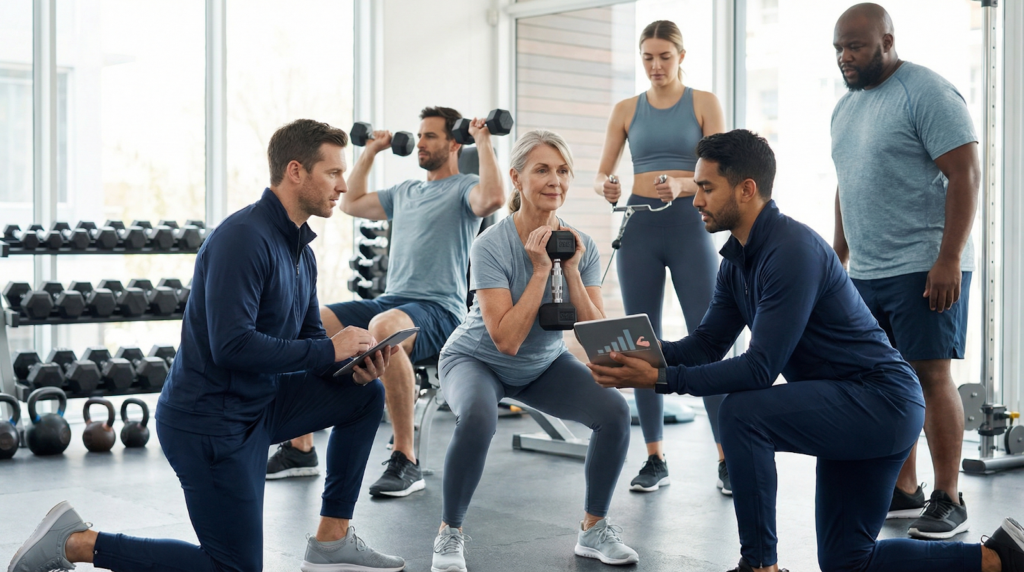
Research and practitioner experience alike show that people on these medications can lose muscle along with fat if they’re not intentional about resistance training and protein intake.
This has repositioned strength training from a niche pursuit to a core pillar of weight loss and health. Trainers are seeing clients who want to preserve and build muscle, support metabolic health, and create a body that functions as well as it looks. The narrative has shifted from “just lose weight” to “get stronger while losing weight”—and that’s a fundamental reframe.
A recent fitness industry survey highlighted that strength training and longevity are now the two biggest opportunities for growth, with many professionals saying that GLP-1 medications are transforming the coach’s role into something more holistic.
People are asking smarter questions now. How do I protect my muscle? How do I lift weights safely? How do I fuel performance while I’m losing weight? Strength is the new trend that matters, and it’s here to stay.
New Diet Waves and Eating Trends
If strength training is the fitness anchor of 2026, diet trends are the ever-rolling tide. The traditional waves of low-carb, low-fat, or plant-based are no longer solo acts. Instead, personalized nutrition is gaining ground. People aren’t chasing a universal diet—they’re experimenting with approaches that fit their biology, lifestyle, and goals.
High-protein menus designed to support muscle during weight loss have become mainstream. Retailers are promoting protein-rich options marketed not just for gym-goers, but for people on medical weight loss plans.
There’s also a push toward nutrient-dense eating in general. When people eat less because a drug suppresses appetite, every bite counts more. That has made nutrient focus a bigger conversation than simple calorie counting. Quality over quantity has never rung truer.
Meanwhile, the conversation about sustainability and ethical eating hasn’t gone away. People want diets that support not only their bodies but the planet. Flexitarian approaches, regenerative agriculture foods, and ethically sourced proteins are all part of the bigger picture.
Where Bariatric Surgery Fits In
With the rise of weight loss medications and lifestyle-based approaches, bariatric surgery has naturally shifted position in the wider weight management conversation. But it would be a mistake to see this as a decline in relevance. Instead, surgery is increasingly understood as a specific and powerful tool for the right individual, rather than a one-size-fits-all solution.
Bariatric procedures such as gastric bypass and sleeve gastrectomy remain among the most effective interventions for significant and sustained weight loss, particularly for people living with severe obesity or obesity-related health conditions. Long-term data continues to show that surgery can lead to substantial improvements in metabolic health, mobility, quality of life, and risk reduction for conditions such as type 2 diabetes and cardiovascular disease.
National averages run between $14,000 and $23,000, yet the Bariatric & Metabolic Center of Colorado lists a sleeve gastrectomy at $12,250. Take the Bariatric & Metabolic Center of Colorado bariatric surgery cost page, which publishes a line-by-line self-pay menu, as an example.

What has changed is the pathway to surgery. In 2026, far fewer people see it as the first or only option. Instead, it sits alongside medication, nutrition, physical activity, and behavioral support as part of a broader continuum of care. For some individuals, GLP-1 medications may delay or remove the need for surgery. For others, surgery remains the most appropriate and effective intervention after other approaches have been explored.
Interestingly, while overall surgery rates have dipped slightly as medication use has increased, clinicians are reporting more nuanced decision-making rather than outright replacement. Surgery is being positioned more carefully for people who need the level of physiological change it provides, especially when weight-related health risks are high and time matters.
There’s also a growing emphasis on pre- and post-surgery support. Strength training, protein intake, and long-term habit building are now recognized as essential parts of successful outcomes. Surgery is no longer viewed as a standalone fix, but as a catalyst that works best when paired with movement, nutrition, and ongoing guidance.
In that sense, bariatric surgery in 2026 reflects the wider trend in weight loss as a whole: less about extremes, more about integration. Less about quick fixes, more about choosing the right tool for the right person at the right time.
The Big Picture for 2026
So what’s the real trend in weight loss this year? It’s a multi-tool approach. Medicine, movement, and nutrition are blending in ways we haven’t seen before. People are no longer chasing fad diets or quick fixes. They want sustainable, evidence-based results. They want muscle. They want health.
Weight-loss medications are massive right now, but they’re not magic bullets. Their popularity affects entire industries, from retail food to gym programming. Strength training is experiencing a renaissance. Diet culture is being replaced by nutrient focus. And surgery, once a dramatic headline option, is finding its place as a thoughtful choice rather than a knee-jerk solution.
In 2026, the conversation is bigger than pounds lost. It’s about quality of life. That’s the trend worth paying attention to.