

Want stronger, more defined glutes in just 4 weeks?
This home workout plan uses progressive overload and compound movements to deliver real results—fast. No fancy equipment needed, just dumbbells (or a barbell) and commitment.
Whether you’re a complete beginner or experienced lifter, this plan scales to your level. Start with bodyweight or light dumbbells, then progressively add weight as you get stronger.
Best part? You only need to train twice per week. That means your glutes get the recovery time they need to actually grow stronger, while you’re free to train other muscle groups or rest.
Let’s get started.

Quick Summary
- Progressive overload + compound movements = faster results
- 2x per week training allows optimal recovery and muscle growth
- Targets entire posterior chain, not just glutes in isolation
- Suitable for all levels – scale with lighter/heavier weights
Importance of Training the Glutes
Training the glutes is incredibly important for all sorts of reasons, so sometimes a dedicated glute workout plan is a great way to kick this muscle group into gear.
The “glutes” refers to 3 muscles:
- Gluteus maximus
- Gluteus medius
- Gluteus minimus
Although glute workouts are often associated with aesthetic benefits, it’s actually the biomechanical benefits that should really excite you. The glutes are a vital component to your “posterior chain” and strengthening them will undoubtedly improve your athletic movement.
The ability to create power from your lower body will become much easier when your glutes are stronger. This can also help support daily activities, such as standing up out of a chair.
A sedentary lifestyle which involves lots of sitting, often means the glutes fail to get efficiently activated during the day… and this means they become weaker, leading to MSK problems such as lower back ache and poor posture.
As a result, including a dedicated glute workout plan without your weekly fitness routine is certainly worth considering if you want to improve your all-round physical movement and ensure your glutes are being sufficiently activated during the week.
Visual Appearances
Glute workouts are often associated with the aesthetic benefits (i.e. a more rounded, toned “derrière”) – but exercise alone won’t overcome a bad diet. For best results on this glute workout plan, try and follow a healthy diet to fuel your body with the nutrients needed to help swap fat for muscle.
4 Week Glute Workout Plan
| Primary Goal | Glute Strength and Muscle |
| Primary Muscles Targeted | Glutes, Hamstrings and Calves |
| Secondary Muscles Targeted | Quads |
| Training Level | Beginner, Intermediate and Advanced |
| Program Duration | 4 weeks |
| Training Days Per Week | 2 Days |
| Required Equipment | Dumbbells (or Barbell) |
| Printable Version | View here |
Workout Schedule
Sample Weekly Schedule:
- Monday: Day 1 Glute Workout
- Tuesday: Rest or Upper Body
- Wednesday: Rest or Cardio (walking, cycling)
- Thursday: Day 2 Glute Workout
- Friday-Sunday: Rest or other training
Progression Guide:
- Weeks 1-2: Focus on mastering form with moderate weights
- Weeks 3-4: Increase weight by 5-10% or add 2-3 reps per set
Workout Duration: Each session takes approximately 30-40 minutes to complete.
Day 1
| Exercise | Reps | Sets |
|---|---|---|
| DB Sumo Goblet Squat | 8-12 | 3 |
| DB Single Straight Leg Deadlifts | 8-12 | 3 |
| DB Bulgarian Split Squat | 8-12 | 3 |
| Bodyweight Hip Thrusts | 15 | 3 |
| Eccentric (Slow) Bodyweight Good Mornings | 10 | 3 |
Day 2
| Exercise | Reps | Sets |
|---|---|---|
| DB Romanian Deadlifts | 8-12 | 3 |
| DB Single Straight Leg Deadlifts | 8-12 | 3 |
| DB Walking Lunges | 8-12 | 3 |
| Bodyweight Single Leg Hip Thrusts | 8-12 | 3 |
| Bodyweight Glute Bridge 10 Second Hold | 8-12 | 3 |
Ideally, space the two workouts out during the week, e.g. You could do Day 1 on Monday and Day 2 on Thursday. This will allow for optimal recovery.
You can also swap out dumbbells (DB) for a barbell or kettlebell if you prefer.
It’s also important to remember to try and increase the weight during the exercises over the 4 weeks. The amount you increase the weight by really depends on your personal progression. Alternatively, increase the number of reps or sets per workout if you do have access to heavier weights.
As well as targeting the glutes, this workout will also heavily engage the hamstrings and calves, as well as the quads. This is because it includes a lot of compound movements, as opposed to just isolating the glutes. This means you really wouldn’t need to train your lower body separately during the week (although over time, you may want to include some variations that prioritize the quads too).
Tips for Building Strong Glutes
Technique
The importance of good technique during compound lifts can’t be overstated.
Good technique will help you progress quicker and avoid injury.
If you’re struggling to maintain good technique, you may have selected weights that are too heavy. If this is the case, simply opt for lighter weights so you can follow correct technique and posture during the exercises.
Key Form Cues to Remember:
- Hip Thrusts: Keep your chin tucked, drive through your heels, and squeeze your glutes hard at the top of the movement for 1-2 seconds
- Deadlift Variations: Hinge at the hips (not your spine), keep the weight close to your body, and maintain a neutral spine throughout
- Squat Variations: Break at the hips and knees simultaneously, keep your chest up, and ensure your knees track over your toes
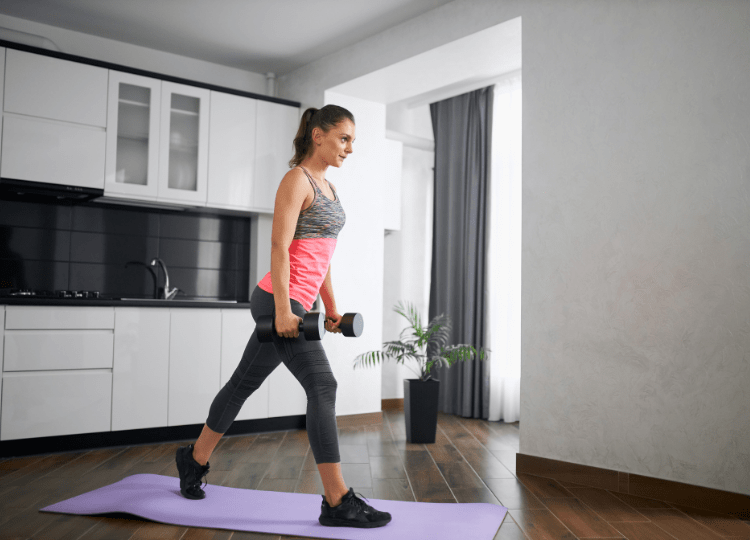
- Lunges: Take a controlled step, keep your torso upright, and push through the heel of your front foot to return to standing
Diet
Diet and exercise go hand-in-hand… and if you want to see tangible results from your workout plan, especially physical results, you’ve got to adopt a healthy diet.
If you want more rounded, firmer glutes, but continue to eat junk food and unhealthy meal options, it’s going to be an uphill battle.
Choosing lean protein, plenty of veg and cutting back on sugar, are simple ways to instantly improve your diet to help you reach your fitness goals.
Over-Training
One of the biggest mistakes we often see is over-training. Whether it’s the glutes, chest or arms… when people have a muscle group in their mind that they want to target, they often simply over-train it.
Over-training isn’t sustainable and often just results in injury… which will actually mean you then stop training altogether.
It also leads to muscular imbalances, which again… can lead to injury.
Rest and recovery is important in any fitness routine, but especially important when you’re lifting weights and doing resistance training. Your muscles and nervous system are being put to the test and need time to rest between workouts.
For this reason, we would only suggest actively training your glutes twice a week.
Equipment
This glute workout plan is designed for home use and consequently focuses on using dumbbells for resistance. This will likely lead to more muscular growth than when using bands alone.
However, you have several options depending on what equipment you have available:
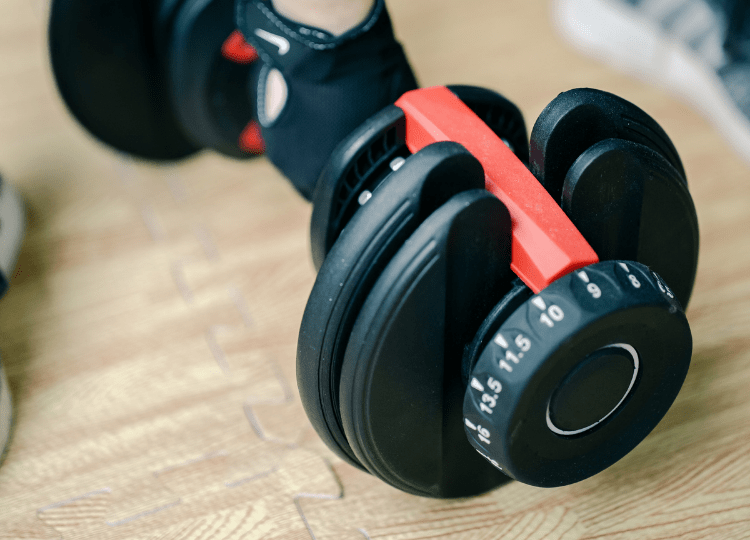
Dumbbells (Recommended): The most versatile option for home workouts. Adjustable dumbbells are particularly useful as you can easily change weights between exercises.
Barbells: Can be substituted for any dumbbell exercise and allow for heavier loads, especially on exercises like Romanian deadlifts and hip thrusts.
Resistance Bands: While not as effective as weights for building strength, bands can serve as an excellent “progression bridge” between bodyweight exercises and weighted movements. They’re also great for warm-ups and activation work.
Household Alternatives: True beginners can start with a backpack filled with books, water bottles, or other heavy items before investing in equipment.
This plan specifically doesn’t use any “glute” equipment (such as the popular BootySprout, or the COBA board) as we wanted to focus on compound movements that will engage and activate your whole lower body to ensure you don’t create muscular imbalances by purely isolating your glutes each workout.
Lots of glute (or “booty”) workouts often prioritize a band… but if you want to see results quickly, dumbbells and barbells are your better option. This is simply because you can create more mechanical tension and force your muscles to work harder through progressive overload.
If you’re looking for some new dumbbells, our buyer’s guide on the best dumbbells for women is worth checking out. This includes some of our top picks for adjustable dumbbells too… which can be useful for home workouts as it means you can adjust the weight between sets and exercises with ease.
Progressive Overload
And that leads us nicely to the core foundation to this glute workout plan… and that’s progressive overload.
It’s a phrase you may hear from Personal Trainers and coaches and simply describes the process of progressively adding more weight to your sets – i.e. you’re continuing to challenge your muscles by opting for heavier weights.
(As well as adding more weight, it could also refer to adding more repetitions or sets during your workout too… which would also be a way to make your muscles work harder).
If you can do 12+ reps of an exercise with ease, it’s probably time you opted for a heavier weight so you can keep your muscles challenged. It’s as simple as that.
If you’re struggling to do a full rep, then you might want to drop it down again and pick a lighter weight.
Similarly, you’ll notice this workout plan is focused on weight lifting… which ultimately is the most effective way to strengthen or tone your glutes. Cardio activities like going for long walks may mean you “feel the burn” in your legs and glutes the next day, but this isn’t going to allow you to build the muscle that will lead to visual differences or improved strength in a short period of time.
Incline Walking
If you do enjoy cardio activities like walking, a simple way to further activate your glutes is to walk on an incline. Whether you can find a hill near where you live, or lots of steps to climb up, or just set a treadmill on an incline, this gradient will require more effort from your glutes and hamstrings (as opposed to your quads).
Hypertrophy
Hypertrophy is a description of strength training that focuses on muscular development.
Although you may think all strength training focuses on building muscle, it’s not necessarily the case. Powerlifting, for example, is focused on lifting the heaviest weight… not necessarily building muscle. Consequently, the type of fitness routine powerlifters follow, compared to that of a bodybuilder, would actually look quite different.
So, what’s the best way to build muscle?
Simply put, aim for around 8-10 reps per set and opt for around 3 sets per exercise. This is very simplified, but will mean you hit the sweet spot for muscular development.
Eccentric Training
Eccentric training is an incredibly underrated aspect of fitness… but it’s actually the secret to building muscle quickly.
Eccentric training refers to the “lowering” phase of a movement, as opposed to the “contracting” phase (concentric training).
The eccentric phase is where more muscle is broken down and built back stronger, so slowing down the lowering phase is a simple way to make your muscles work harder.
Our guide on negative or eccentric pullups explains the science behind this.
Warm Up
If you want to strengthen or tone your glutes, strength training is going to be a key part of your workouts.
Like any form of exercise, strength training requires adequate stretching and warming up beforehand, to ensure your muscles are ready. Failure to warm up properly could lead to injury, as well as reduced workout performance.
Our guides on the best hip adductor stretches and banded hip abduction exercises are great places to start if you want to loosen up and strengthen the hips before you start your glute workout.
Stretches like fire hydrant exercise, bird dog, dead bug and inchworm are all great ways to warm-up before a glute workout.
Avoiding Muscular Imbalance
This workout plan also includes single leg exercises, to ensure one side of your body isn’t overcompensating the other.
A single leg lunge, or single straight leg deadlift, for example, will make it quite clear if one side is stronger than the other… in which case, including more single leg variations of exercises is worth considering, to ensure both sides are getting challenged during a workout.
Identifying Weaknesses
A quick and easy way to spot if your glutes are struggling during an exercise is whether or not your knees start to wobble. This suggests your muscles are struggling to maintain stability. If this is happening more on one side than the other, even if you can lift similar weights, it could suggest muscular imbalance.
Tracking Progress
As with any form of strength training or weight lifting, tracking progress is really useful.
Using a notepad is more than enough to do this. Similarly, there are apps like Fitbod that make tracking progress very easy and will help you visualize your improvements over time. You can input the weight you are lifting, helping you understand when to opt for heavier weights.
You may also benefit from taking photos of yourself, as this is a better indication of muscular transformation than using scales (as muscle is denser than fat).
Common Mistakes to Avoid
Even with the best intentions, it’s easy to fall into bad habits that can limit your results or increase injury risk. Here are the most common mistakes we see:
Not Going Deep Enough: Shallow squats and lunges significantly reduce glute activation. Aim to get your thighs at least parallel to the ground (or lower if mobility allows) to fully engage the glutes.
Rushing Through Reps: Speed isn’t your friend when building muscle. Take 2-3 seconds on the lowering (eccentric) phase of each exercise. This is where the real muscle-building magic happens.
Skipping Single-Leg Work: Bilateral exercises (like regular squats) allow your dominant side to compensate for weaknesses. Single-leg variations force both sides to work equally, preventing imbalances that can lead to injury.
Using Momentum: Swinging or bouncing through exercises reduces time under tension. Control every rep, especially at the bottom and top of each movement.
Bottom Line
This glute workout plan provides a simple but effective way to start seeing tangible improvements in your glutes. It also doesn’t require specialist equipment… meaning there’s no excuses for not giving it a go. After following this for 4 weeks, you should already start to notice visual differences in your glutes as well as improvements in lower body strength.
Next Steps After Completing This Plan:
- Increase your working weight by 5-10 lbs on major lifts
- Explore advanced variations like deficit Bulgarian split squats or single-leg Romanian deadlifts
- Consider transitioning to a 3-day per week lower body split to continue progressing
- Take progress photos to compare with your starting point – the visual changes might surprise you!
As with any new workout plan, if you have any doubts, consult a doctor or healthcare professional for advice based on your personal circumstances.
FAQs
Can I do this workout more than twice per week?
We don’t recommend it. Your glutes need 48-72 hours to recover and grow stronger. Training them more frequently will likely lead to overtraining, reduced performance, and potential injury. Quality over quantity is key.
I don’t feel my glutes working during squats – is that normal?
This is common, especially for beginners. Try these fixes: go deeper, focus on pushing through your heels, squeeze your glutes at the top, and consider adding some glute activation exercises (like glute bridges or clamshells) to your warm-up.
How much weight should I start with?
Start conservatively. Choose a weight where you can complete 8-12 reps with good form, with the last 2-3 reps feeling challenging. If you’re new to strength training, begin with just bodyweight or light dumbbells (5-10 lbs) and progress from there.
Can I do cardio on the same days as this workout?
Yes, but keep it light to moderate intensity. A 20-30 minute walk or easy bike ride is fine. Avoid high-intensity cardio or long runs immediately after your glute workout, as this can interfere with recovery.
Related Articles